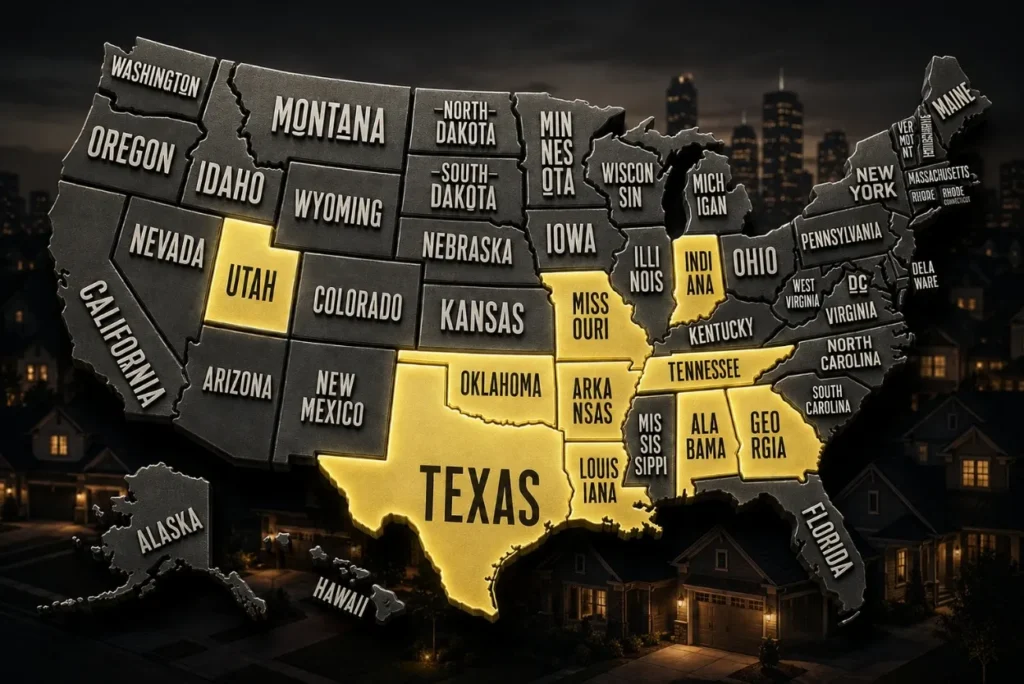
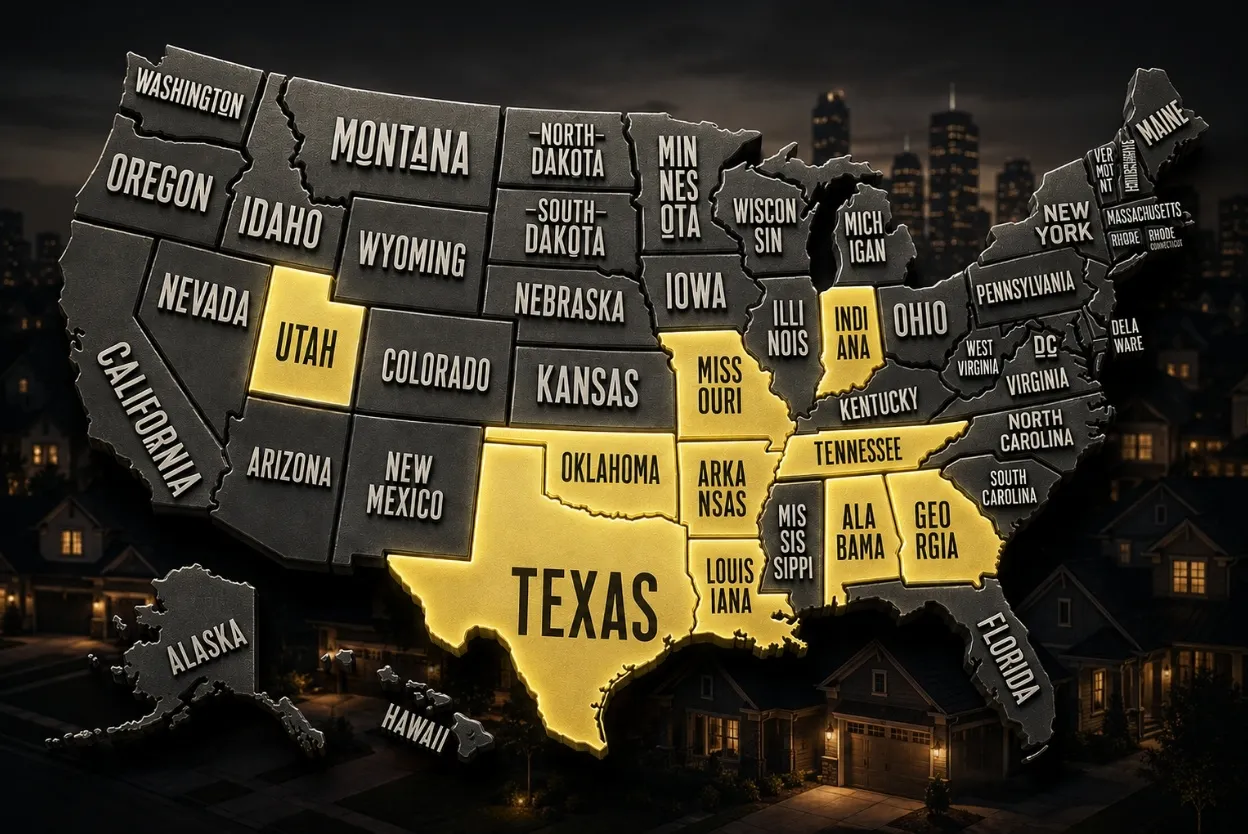

CNBC just named ten states as the worst to live in for 2026.
A closer look at the methodology behind that list revealed something real estate agents in these states can take to heart. CNBC’s own data on cost of living and business growth, combined with recent migration data, shows that buyers are actually choosing to move to several of the states on its list.
And yes, housing affordability is a major factor, but it’s not the only one.
The 10 “Worst States” According to CNBC
Here are the “10 worst states to live” according to CNBC:
- Tennessee (64 out of 290 points on Quality of Life Score)
- Texas (78 out of 290 points)
- Indiana (82 out of 290 points)
- Louisiana (89 out of 290 points)
- Georgia (95 out of 290 points)
- Utah (95 out of 290 points)
- Missouri (98 out of 290 points)
- Alabama (99 out of 290 points)
- Oklahoma (103 out of 290 points)
- Arkansas (103 out of 290 points)
CNBC’s Top States for Business study scores every state across ten categories, and quality of life is one of them. This year, quality of life made up 11.6% of a state’s total score, up from about 10% the year before.
The quality of life score pulled from a specific set of factors:
- Crime rates
- Healthcare access
- Worker protections
- Reproductive rights
- Racial and disability inclusiveness
Ten states landed at the bottom of that particular category, each for its own mix of reasons.
Some of those reasons involve laws and protections that go beyond housing and economics.
- Alabama is one of five states with no public accommodation law protecting people with disabilities against discrimination.
- Tennessee has a law requiring transgender people to use bathrooms that match their sex at birth, and state law prevents individual cities from adopting their own antidiscrimination ordinances.
- Texas was cited for its inclusiveness score, and reproductive rights was listed as a weakness area in the state’s ranking as well.
If you’re operating in these markets, these are things you want to know simply because they impact the people you serve.
The Four Most Affordable States on the List
CNBC’s own cost of living rankings tell a different story for four of the ten states on this list. Alabama, Indiana, Missouri, and Tennessee all rank inside the top 15 most affordable states in the country, based on CNBC’s Cost of Living category.
Here’s how they stack up:
- Alabama ranks 3rd cheapest state in the country for cost of living
- Indiana ranks 6th cheapest
- Missouri ranks 10th cheapest
- Tennessee ranks 15th cheapest
Of course, affordability alone doesn’t build a market. People still have to be moving there.
Alabama is growing at a rate of 36.6 net new residents per 10,000 people, according to Census Bureau data, making it one of the fastest-growing states in the South.
Tennessee gained more than 42,000 residents through net domestic migration between July 2024 and July 2025, according to the same Census data, putting it among the top five states in the country for net migration that year.
So, while Tennessee is getting flagged for its quality of life score, it’s also ranking in the top 15 nationally for affordability and pulling in tens of thousands of new residents in a single year.
Texas: High Net Migration, Built for Growth
Texas landed in the number nine spot on CNBC’s “worst states to live in” list for 2026.
It also ranked 4th out of 50 states in CNBC’s Top States for Business study.
The quality of life score and the business score measure different things. The quality of life score put Texas near the bottom. The business score put Texas in the top five.
Texas ranked near the top of the country across several core business categories:
- 1st for workforce
- 2nd for economy
- 2nd for access to capital
Jobs and capital bring people. Texas gained 67,300 residents through net domestic migration between July 2024 and July 2025, according to Visual Capitalist’s analysis of Census Bureau data, the second highest total of any state that year.
Builders are keeping pace with that growth. Texas and Florida account for 27% of the nation’s new home building permits, according to Visual Capitalist’s analysis of building permit data. That means inventory is getting built to meet the demand these numbers show.
A state can rank near the bottom for quality of life and still rank near the top for housing market strength. Texas is proof.
The Play: How You Change the Conversation
Start with the ranking itself. Quality of life is one category among ten in CNBC’s study, and it measures a specific set of factors like crime, healthcare access, inclusivity, reproductive rights, and worker protections.
It doesn’t measure affordability, business growth, or where people are actually migrating to in greater numbers (relatively speaking).
- A buyer worried about Alabama or Tennessee can hear that both rank in the top 15 nationally for affordability, with real population growth to back it up.
- A buyer or seller in Texas can hear that the state ranked 4th in the country for business and pulled in the second-highest number of new residents of any state last year.
None of this requires you to argue with the headline. What it does is allow you to bring a fuller set of numbers to the table.
The next time a client brings up a “worst states” headline, you’ll have the numbers that tell the rest of the story. Affordability, growth, and demand are all still there, whether or not a ranking captures them.
Pull the data that fits your market and use it in your next conversation.