When AI recommends a top local real estate agent, is it naming the person closing the most deals in that market?
Local Falcon ran 37,500 AI searches across the 100 largest US cities to find out.
Among the highest-volume individual agents in those cities, only 21.2% were cited by any AI platform. Nearly four out of five were invisible.
And among established agents at all levels, 91.5% never got a single mention.
We’re breaking down why so many agents, including top producers, never come up in AI search, and what the agents who do get named are doing that the rest are not.
4 in 5 Top Producers Are Invisible to AI
RealTrends Verified ranks agents and teams by production, measured in sales volume and transaction sides.
Local Falcon looked at the top 10 individual producing agents in each of the 100 cities in this study, which came to 945 agents total, since a few cities had fewer than 10 clearly ranked producers.
- Of those 945, the number who publish a website RealTrends lists: 499
- Of those 499, the number cited by any AI platform: 106
- That works out to a 21.2% citation rate among top producers with a website
On the flipside, nearly nine in ten agents AI names hold no production ranking in their own city, by volume or by transaction sides.
Put another way, only 1 in 10 agents recommended by AI hold any kind of production ranking in their markets.
Local Falcon did name a handful of top producers, though, who prove it can be done:
- Tracy Campion, Boston’s top individual seller, gets cited in AI search
- Katrina Barrett in Phoenix and Kumara Wilcoxon in Austin, both top individual sellers in their markets, get cited
- The Stephanie Younger Group in Los Angeles and the Mike McCann Team in Philadelphia, both the top team in their city, get cited too
91.5% of Established Agents Never Get Named
Among the ranked, website-publishing agents and teams checked in this study, 91.5% were never cited once.
Within the small subset of named agents, one agent alone typically accounts for more than a quarter of all citations (26.6%) in an average city.
Here’s how the pattern holds from the top 1% of agents per city to the top 50%:
- Top 1% of a city’s named agents (typically 1 agent): 26.6% average share of citations
- Top 5% (typically 2 agents): 40.6%
- Top 10% (typically 4 agents): 56.1%
- Top 25% (typically 11 agents): 76.4%
- Top 50% (typically 21 agents): 89.9%
Half of a city’s named agents split what’s left: 10.1% of the citations, spread across the other half of the names AI is willing (or able) to mention.
AI Is Built to Miss Top Producers
Two things explain the disconnect.
#1. AI reads directories, not sales records.
Listing portals and directories supply the vast majority of citations in this study. An agent’s own website accounts for close to one citation in nine.
- Google Business Profile: 36.6% of all citations
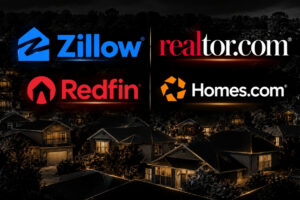
- Zillow: 15.9% of all citations
Each platform trusts a different mix of sources:
- ChatGPT leans on portals and directories more than any other platform. Zillow alone supplies 39.8% of its citations, with Realtor.com adding another 18.0%
- Google AI Overviews pulls from a wider mix: Zillow (13.2%), FastExpert (10.5%), and Reddit (9.6%), a discussion forum that ranks among its top sources
- Gemini draws more from agents’ own websites than any other platform, alongside FastExpert (24.3%) and Zillow (17.7%)
- Google AI Mode relies on Google Business Profile listings for 72.5% of its citations, far more than any web page
- Grok splits its trust across Zillow (16.6%), US News (15.7%), FastExpert (13.8%), and Yelp (13.2%)
Of Zillow’s citations, 86.9% point to the citywide list of every agent in a market. Only 13.1% point to a named agent’s own profile.
So, an agent’s Zillow presence carries less weight than the raw citation count suggests. Doesn’t mean you should neglect your Zillow profile, but it does mean keeping that updated isn’t the only box to check.
#2. There’s no single ranking to chase.
Even when an agent gets named, there’s no guarantee it happens twice.
- Agents cited by exactly one platform and no other: 82.6%
- Agents named by all four platforms that link to agent websites: 1.9% (72 agents nationwide)
Google’s own two AI products don’t agree with each other either. Google AI Overviews returns no agent name at all seven times out of ten.
Also, like any AI answer engine, Google makes mistakes, as Local Falcon’s report makes even plainer.
The Agents Who Win Publish Their Own Best-Of Page
The small number of agents named by AI did something on their websites others did not.
Eighteen of the 25 most-cited agent websites (about 70%) included a headline like “Best Real Estate Agents in [City],” or something along those lines.
Sites carrying this kind of page are a small share of everything cited, yet they pull in a third of all citations an agent website receives.
The agent publishing the page is, with rare exception, the one it names as “the best.” A few real examples from the study:
- “Top Real Estate Agents in Las Vegas 2026 Rankings” on nevadarealestategroup.com
- “Who Is the Best Realtor in Kansas City, MO” on danibeyer.com
- “The Best Tampa Realtors and Real Estate Agents” on 2collegebrothers.com
Pages like these become the AI model’s version of the truth, because plain text is what it can read.
RealTrends publishes production rankings for these same agents. But AI platforms aren’t built to pull citations from that kind of page, the way they pull from portals and the ranking pages agents publish themselves.
What It Takes to Get Named
Production still counts with buyers and sellers. Referrals and reputations built over years can still give you an edge in your local market.
AI search, though, runs on its own rules. You can lead your market in sales and still not be the agent named to a buyer who opens ChatGPT or Google search before calling anyone.
Make checking AI visibility a regular habit. Search your own name, and your competitors’ names, across ChatGPT, Google AI Overviews, Gemini, Grok, and Google AI Mode. See which names appear, and look at what their sites do that yours doesn’t.
Also, don’t think you have to hype yourself as a top agent to get named by AI, especially if there’s no real data to back that up. Eventually, the truth comes out. People catch on, even if AI doesn’t.
Focus on what’s true and what you can control.
A complete, fully filled-out profile on Google Business Profile and the major portals is a start.
Next, a page that states, in plain language, who the best agents are in your city (with real numbers to back up those rankings) puts you in the same conversation as the agents this study found cited most often.
Finally, while AI can help make you more visible to buyers and homeowners in your market, it shouldn’t be the primary driver of your brand awareness. Getting in front of people in your one-on-one conversations and one-to-many marketing will put a face and personality to the name in a way AI can’t match.