

Key Details:
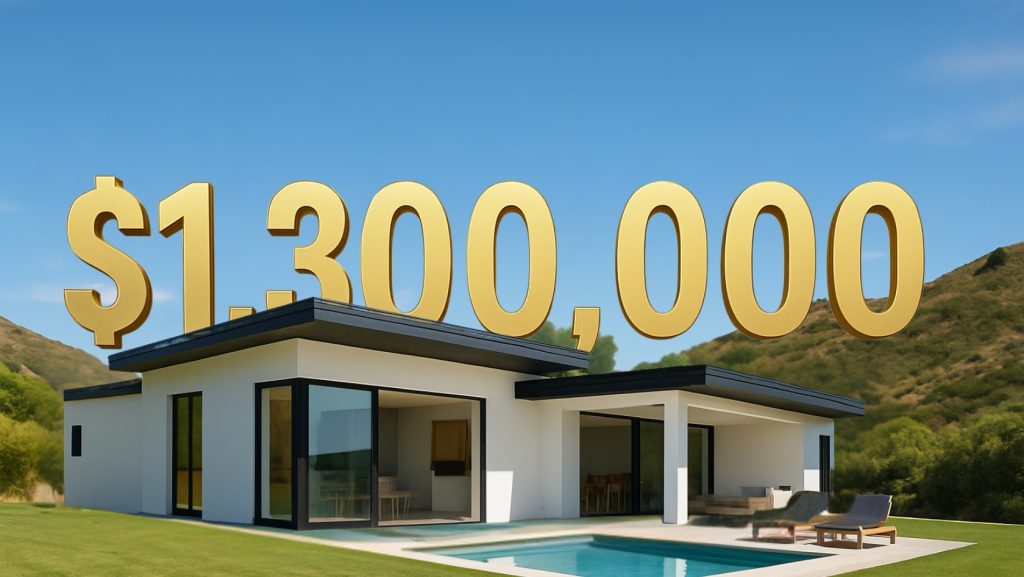
- Realtor.com finds entry-level luxury homes now start at $1.3M, up 60% from $796,922 in 2016.
- Million-dollar homes make up 13% of listings, with the top 10 metros holding 36% of them.
- Rifle, CO leads at $16.5M for entry-level luxury.
Once upon a time, hitting seven figures meant you’d “made it” in real estate. A million-dollar listing was shorthand for luxury.
Fast forward to 2025, and that benchmark doesn’t hold up anymore. According to Realtor.com’s What Is Luxury Report, the entry-level luxury home price has jumped more than 60% in less than a decade, climbing from $796,922 in July 2016 to $1.3 million in July 2025.
Chief Economist Danielle Hale put it bluntly:
“While a million-dollar home still represents an important benchmark, it’s not the luxury marker that it once was nationwide and in many markets.”
The New Definition of Luxury
Luxury isn’t a fixed number, it’s a moving target. Realtor.com defines it by the share of the most expensive homes, both nationwide and by market. That approach highlights just how much things have changed in less than ten years.
- Entry-level luxury, or the top 10% of homes nationwide, now starts at $1.3 million.
- High-end luxury, the top 5% tier, begins at $2.0 million.
- Ultra-luxury, the top 1%, starts at $5.4 million.
Back in 2016, a million-dollar home sat just below the top 5% nationally. Even in the years leading up to the pandemic, it was still enough to be considered top 10%.
Today, that same seven-figure price tag doesn’t make the cut.
The numbers show just how steep the climb has been. Entry-level luxury homes now cost nearly three times the U.S. median home price of $439,450. High-end luxury homes start at nearly five times the median, while ultra-luxury homes climb to more than twelve times the typical price.
For buyers and sellers alike, that shift in multiples reframes what “luxury” really means.
Where Luxury Costs the Most
Coastal enclaves and vacation markets dominate the list of highest entry-level luxury thresholds. These are places where land is scarce, demand is high, and exclusivity drives value. Some of these markets also reveal striking gaps between median home prices and the luxury cutoff.
At the extreme end is Rifle, Colorado, where breaking into the top 10% requires $16.5 million, almost ten times the local median.
Even in smaller markets like Heber, Utah, or Key West, Florida, luxury homes start at several million dollars, four times or more above typical area prices.
Here are the ten metros and micro areas with the highest entry-level luxury prices:
- Rifle, CO (Micro): $16,475,000 | 515 listings | 9.7x median
- Heber, UT (Micro): $6,800,000 | 1,029 listings | 4.0x
- Key West, FL (Micro): $4,500,000 | 713 listings | 2.7x
- Los Angeles, CA (Metro): $3,995,000 | 10,840 listings | 2.4x
- Bridgeport, CT (Metro): $3,950,000 | 587 listings | 2.3x
- Kahului, HI (Metro): $3,900,000 | 724 listings | 2.3x
- Santa Rosa, CA (Metro): $3,499,000 | 587 listings | 2.1x
- San Jose, CA (Metro): $3,495,000 | 1,179 listings | 2.1x
- Barnstable Town, MA (Metro): $3,495,000 | 561 listings | 2.1x
- Naples, FL (Metro): $3,408,844 | 1,880 listings | 2.0x
These numbers make it clear that “luxury” depends on context. A $3 million home in San Jose may just break into the top 10%, while the same price in most of the country would be seen as extravagant.
Where Million-Dollar Homes Dominate
Even if $1 million doesn’t buy luxury anymore, million-dollar homes still carry weight in many markets. Nationally, they account for 13.2% of listings, but in certain metros, the share is much higher.
The ten metros with the most million-dollar listings collectively make up more than a third (36%) of all million-dollar homes in the U.S. That concentration shows where seven-figure living has become the norm rather than the exception.
These are also places with strong job markets, international appeal, and limited land supply, making high-dollar real estate a persistent feature of the local economy.
- New York–Newark–Jersey City, NY–NJ: 11,980 listings | threshold: $2,887,829
- Los Angeles–Long Beach–Anaheim, CA: 10,840 listings | threshold: $3,995,000
- Miami–Fort Lauderdale–West Palm Beach, FL: 10,074 listings | threshold: $2,087,674
- Seattle–Tacoma–Bellevue, WA: 3,147 listings | threshold: $1,927,710
- Dallas–Fort Worth–Arlington, TX: 2,998 listings | threshold: $994,190
- San Diego–Chula Vista–Carlsbad, CA: 2,849 listings | threshold: $2,903,193
- San Francisco–Oakland–Fremont, CA: 2,844 listings | threshold: $2,649,775
- Boston–Cambridge–Newton, MA–NH: 2,546 listings | threshold: $2,603,053
- Atlanta–Sandy Springs–Roswell, GA: 2,485 listings | threshold: $938,150
- Washington–Arlington–Alexandria, DC–VA–MD–WV: 2,457 listings | threshold: $1,451,719
The contrast between metros tells its own story. In Los Angeles, more than half of all listings are priced above $1 million, while in Atlanta fewer than one in ten hit that level. That kind of market-to-market difference is exactly why luxury can’t be defined by a single nationwide number.
The definition of “luxury” has shifted dramatically in less than a decade. That means conversations with clients about value, benchmarks, and expectations need to evolve too.