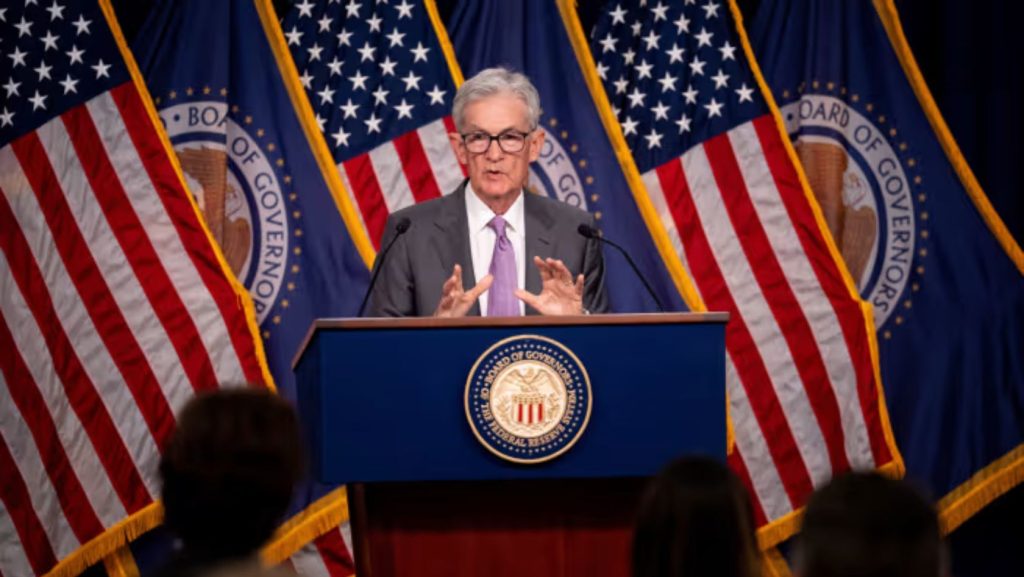
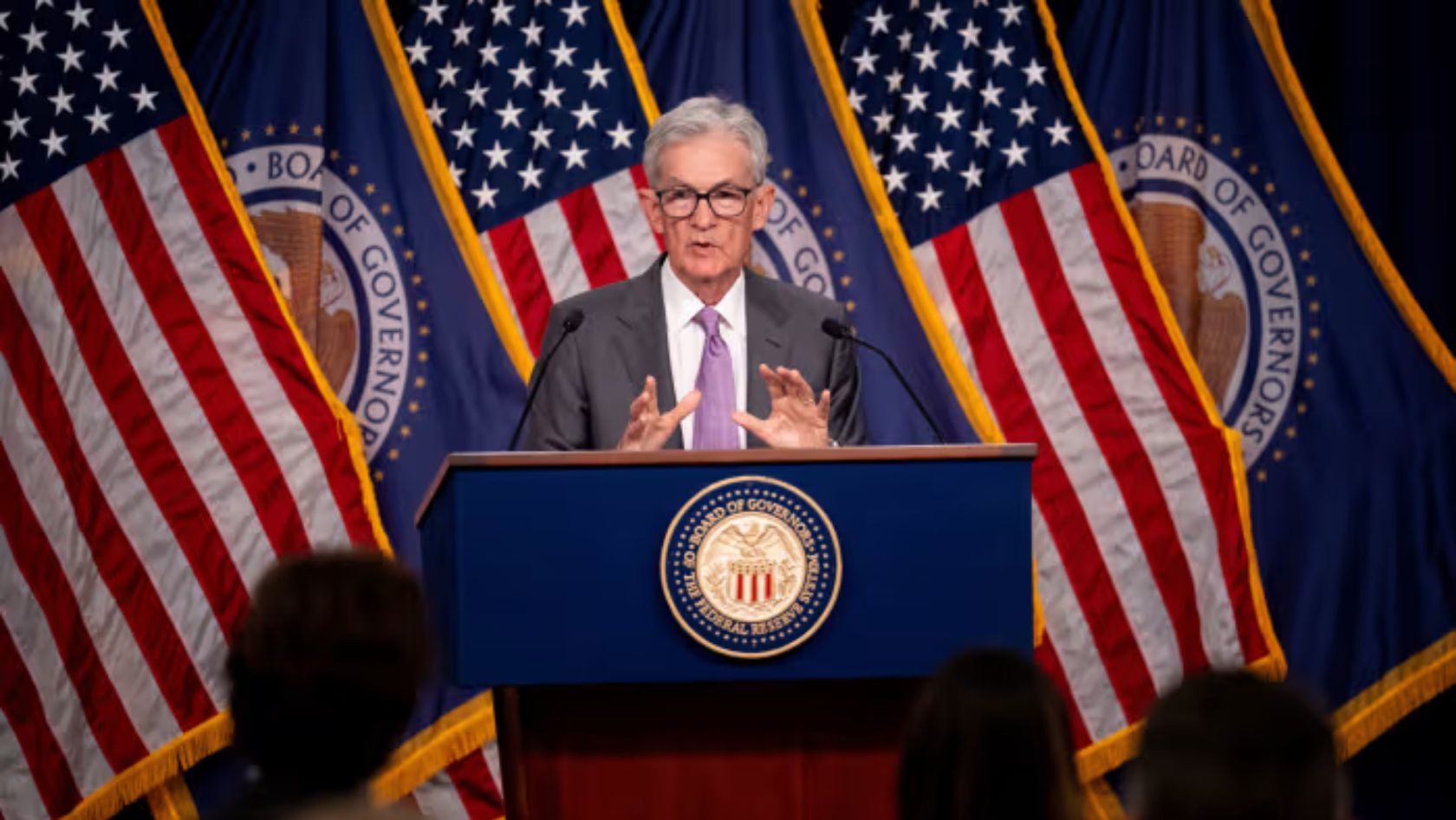

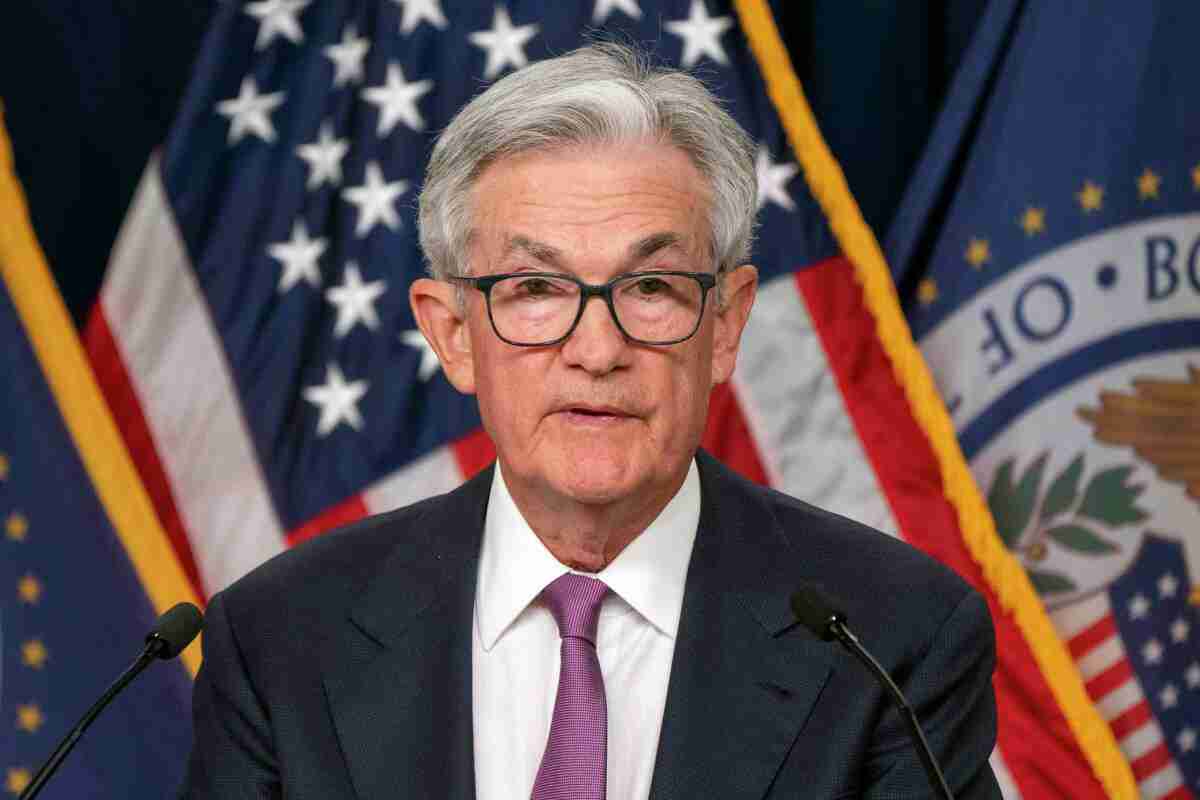
The Federal Reserve announced a one-quarter percentage point (25 basis points) cut to the federal funds rate today, moments before Fed Chair Jerome Powell took the stage for the November FOMC press conference.
In explaining the Fed’s second rate cut of 2024, Powell spoke of recent indicators of economic activity, specifically those tied to the Fed’s dual mandate: employment and inflation.
And while this month’s FOMC meeting took place right on the heels of the 2024 presidential election, Powell, who has always presented the data in an apolitical manner, did not mention the election outcome—nor was he willing to answer questions about it during the Q&A segment with reports.
As Powell put it in his opening statement, labor market conditions “have generally eased” since earlier in the year, and the unemployment rate has gone up but remains low. Meanwhile, inflation has made progress toward the Committee’s 2% objective, though it “remains somewhat elevated.”
The Committee judges that the risks to achieving its employment and inflation goals are roughly in balance. The economic outlook is uncertain, and the Committee is attentive to the risks to both sides of its dual mandate.
The target range for the federal funds rate is now down to 4.5-4.75%. But as we saw in September, a rate cut doesn’t guarantee mortgage rates will fall.
In a Tweet earlier today, Mike Simonsen of Altos Research shared a HousingWire chart on the 10-year Treasury yield, showing its steady climb from 3.6% before the September rate cut up to its current value of 4.46% (as of November 3, 2024).
The 10-year yield since the Fed rate cut in September. pic.twitter.com/ys9YBOI1JU
— Mike Simonsen 🐉 (@mikesimonsen) November 6, 2024
Mortgage rates also increased, making housing less affordable. So, while the newly-elected president, Donald Trump, has made lowering mortgage rates one of the defining goals for his term, for now, rates are driving potential homebuyers toward rentals.
In another Tweet, HousingWire’s Lead Analyst, Logan Mohtashami, responded to another Simonsen Tweet asking, “Are we going to hit 8% mortgage rates by Q1?”
I say no, The podcast link here explains why. Also, we have better spreads in 2024 than 2023 https://t.co/V12JRw0u13 https://t.co/TRcXObPhBG
— Logan Mohtashami (@LoganMohtashami) November 7, 2024
Keep reading for the direct timestamps and transcripts for each of Powell’s housing-related statements, including his answers to reporters’ questions during the FOMC press conference.
And don’t miss Byron Lazine’s full breakdown on Monday’s Hot Sheet.
Housing-Related Comment from Powell’s Initial Statement
Powell made one brief statement related to activity in the U.S. housing market as it relates to overall economic health—specifically in contrast to growth in other sectors.
[03:28] – “Recent indicators suggest that economic activity has continued to expand at a solid pace. GDP rose at an annual rate of 2.8% in the third quarter—about the same pace as in the second quarter. Growth of consumer spending has remained resilient, and investment in equipment and intangibles has strengthened. In contrast, activity in the housing sector has been weak. Overall, improving supply conditions have supported the strong performance of the U.S. economy over the past year.”
Powell’s Statements from the Q&A Segment
Here we’re highlighting Powell’s answers to any housing-related questions posed by reporters, as well as some questions that provide additional context—starting with one of Powell’s most viral moments:
Click on any of the timestamps to watch the conversation on YouTube.
[08:11] – Question from Colby Smith, Financial Times:
“Given the expectation that the election outcome will produce policies that would meaningfully impact the U.S. economy next year, how is the Committee taking these proposals into account for upcoming decisions, including potentially the next one in December? And can you give us any more sense of how proactive or reactive the Fed is prepared to be to changes in economic policies with the next administration?”
[08:34] – Powell’s response:
“Sure. Let me say that, in the near term, the election will have no effects on our policy decisions. As you know, many, many things affect the economy. And anyone who writes down forecasts in their job will tell you that the economy is quite difficult to forecast looking out past the very near term. Here, we don’t know what the timing and substance of any policy changes will be. We therefore don’t know what the effects on the economy would be—specifically whether and to what extent those policies would matter for the achievement of our goal variables: maximum employment and price stability.
“We don’t guess. We don’t speculate. And we don’t assume.
“Now, just in principle, it’s possible that any administration’s policies—or policies put in place by Congress—could have economic effects that, over time, would matter for our pursuit of our dual mandate goals….”
[09:44] – Question from Nick Timiraos, Wall Street Journal:
“Roughly one year ago, when the 10-year Treasury was flirting with 5% and 30-year mortgage rates were near 8%, you noted how higher borrowing costs, if they were sustained, could weigh on economic activity. Given that you’ve said you believe policy is restrictive, and the FED is now dialing back that restriction, are the growth risks presented by higher US Treasury yields today any different from those you identified one year ago when inflation was still meaningfully above your target?”
[10:17] – Powell’s response:
“So I would just say this, we’ve watched the runup in bond rates and it’s nowhere near where it was of course a year ago. I guess the long run rates are well below that level, so we’re watching that things have been moving around and we’ll see where they settle. I think it’s too early to really say where they settle ultimately. I’m sure we’ve all read these decompositions of what and I certainly have, but it’s not really our job to provide our specific decomposition. I will say though that it appears that the moves are not principally about higher inflation expectations. They’re really about a sense of more likelihood of stronger growth and perhaps less in the way of downside risks. So that’s what they’re about.
“We do take financial conditions into account if they’re persistent. And if they’re material, then we’ll certainly take them into account in our policy. But I would say we’re not at that stage right now. It’s just something that we’re watching. And again, these things don’t really have mainly to do with Fed policy, but to do with other factors in the economy.”
[23:19] – Question from Edward Lawrence, Fox Business:
“Thanks, Chair Powell. So with the noise in the jobs reports that we’ve seen, and you look at the Fed’s favorite inflation, PCE inflation —overall, it’s 2.1%, very close to the Fed’s target. But core inflation is 2.7%, and it’s been that way since July. So why doesn’t this data give fuel to a rate pause for this meeting?”
[23:43] – Powell’s response:
“Well, so I think if you look at the three and six month, you’re quoting the 12 month. So we look at all of ’em, right? But if you look at three and six month core PCE, you’ll see they’re around 2.3%. So we look at all of them and we also look at 12 as well. But what it’s telling us is that we really have made significant progress and we expect there to be bumps. For example, the last three months of last year, the core PCE readings were very, very low, probably unsustainably low. So that’s why forecast generally see a couple of upticks toward the end of the year. On the other hand, the January reading certainly looks like an example of residual seasonality, so that we saw last year. So when that falls out of the 12-month calculation in February, we should see a thing down. So it’ll literally be a bump up and then down.
“We understand that, overall, you see the progress on inflation, and you also look at the economy and you say, what is the inflation story now? Where’s it coming from? So I point to a couple of things. One is the non-housing services and goods, which together make up 80% of the core PCE index, are back to the levels they were at the last time we had sustained 2% inflation, which happens to be in the early 2000s for a period of 5, 6, 7 years. So they’re back to that level. What’s not is housing services.
“So let’s talk about housing services. Housing services is higher. What’s going on there is market rents. Newly signed leases are experiencing very low inflation. And what’s happening is older leases that are turning over are taking several years to catch up to where market leases are—market rent leases are. So that’s just a catch-up problem. It’s not really reflecting current inflationary pressures; it’s reflecting past inflationary pressures. So that’s one thing.
“The other thing is I’d say look at the labor market, not a source of inflationary pressures. Where’s it coming from? It’s not a very tight economy. What is the story about inflation? You see that catch up inflation also in insurance and several other areas. So you’re seeing, we’re not declaring victory, obviously, but we feel like the story is very consistent with inflation continuing to come down on a bumpy path over the next couple of years and settling around 2%. That story is intact and it won’t be one or two really good data months or bad data months aren’t going to really change the pattern at this point now that we’re this far into the process.”
[26:20] – Follow-up question from Lawrence:
“So you’re quickly trying to get to that neutral rate that you see, or do you foresee that you have some time to get there?”
[26:26] – Powell’s response:
“Nothing in the economic data suggests that the committee has any need to be in a hurry to get there. We are seeing strong economic activity. We are seeing ongoing strength in the labor market, we’re watching that carefully, but we do see maintaining strength there. And so we think that the right way to find neutral, if you will, is carefully, patiently. Again, that’s not meant to have a specific meaning other than to the extent the economy remains strong. We have the ability to take advantage of that as we try to navigate that middle path between the two risks.”
[34:03] – Question from Andrew Ackerman, Washington Post:
“I just wanted to follow up on the discussion earlier on fiscal policy. Your predecessors, Greenspan and Volcker, spoke up loudly when they thought large budget deficits endangered economic or financial stability. Will you do that too? And right now, we’re in a period of full employment. We have large budget deficits and debt at historic highs and rising. Is that something you’d speak out against?”
[34:34] – Powell’s response:
“So, I have said many times—no more, no less than what the predecessors you mentioned have said. And what that is is that the US federal government’s fiscal policy is on an unsustainable path. The level of our debt relative to the economy is not sustainable. The path is unsustainable. And we see that in you’ve got a very large deficit, you’re at full employment and that’s expected to continue. So, it’s important that it be dealt with; it is ultimately a threat to the economy. Now, I can say that I don’t have oversight. We don’t have oversight over fiscal policy. I’ve said it on many occasions. Just said it again.”
[39:41] – Question from Kelly O’Grady, CBS News:
“We just talked about what you’ve heard from business leaders on the economy, but many average Americans are still not feeling the strength of the economy in their wallets. So what’s your message to them on when they might expect relief?”
[39:57] – Powell’s response:
“So, you’re right that we say the economy is performing well and it is, but we also know that people are still feeling the effects of high prices, for example. And we went through—the world went through—a global inflation shock, and inflation went up everywhere. And it stays with you because the price level doesn’t come back down. So, what that takes is it takes some years of real wage gains for people to feel better. And that’s what we’re trying to create, and I think we’re well on the road to creating that. Inflation has come way down. The economy’s still strong here, wages are moving up, but at a sustainable level. So I think what needs to happen is happening and for the most part has happened, but it’ll be some time before people regain their confidence and feel that.
“And we don’t tell people how to feel about the economy. We completely respect what they’re feeling. Those feelings are true, they’re accurate. We don’t question them, we respect them.”
[41:14] – Question from Nancy Marshall Genzer, Marketplace:
“What is your plan if we start to see stagflation?”
[41:25] – Powell’s response:
“So, the whole plan is not to have stagflation so we don’t have to deal with it. That is actually our plan.
“It’s, of course, a very difficult thing because anything you do with interest rates will hurt one side or the other—either the inflation mandate or the employment mandate.
“I would just say that we’ve been able to see inflation come down a whole lot, much closer to our goal without the kind of sharp increase in unemployment that has often accompanied programs of disinflation. So, knock on wood, we’ve gotten this far without seeing a real weakening in the labor market and we believe we can complete the inflation task while also keeping the labor market strong. And that, of course, is exactly what we’re trying to do.”