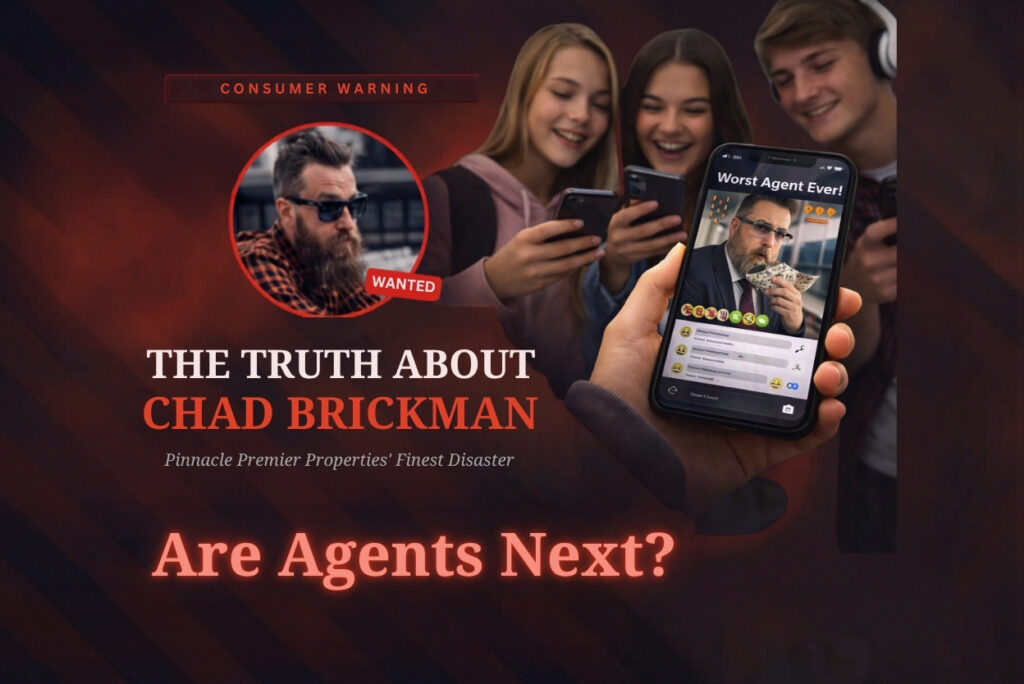

High school students across the country are building what the internet is calling “slander pages,” anonymous Instagram and TikTok accounts that use AI to create fake videos and images of their teachers.
And these aren’t your older brother’s cafeteria rumors.
Kids are using tools like Viggle AI to superimpose teachers’ faces onto disturbing videos, generate fake portraits comparing educators to dictators, and animate still photos into lip-sync skits designed to go viral.
One Texas account racked up over 107,000 likes on a single post. Another depicted a teacher having a fentanyl overdose. Some accounts borrow imagery straight from extremist forums.
When administrators at Crandall High School in Texas confronted a student behind their viral slander page, the kid deleted it, posted an apology… and started posting again days later.
The school couldn’t stop it. The platforms couldn’t stop it. And the teachers are just stuck Googling themselves.
Why This Matters for Real Estate Agents
It takes about 90 seconds to build one of these pages about you.
I know because I built one.
Using Lovable (my favorite vibe coding tools), I created a fully functional consumer warning site targeting a fictional agent named Chad Brickman at “Pinnacle Premier Properties.”
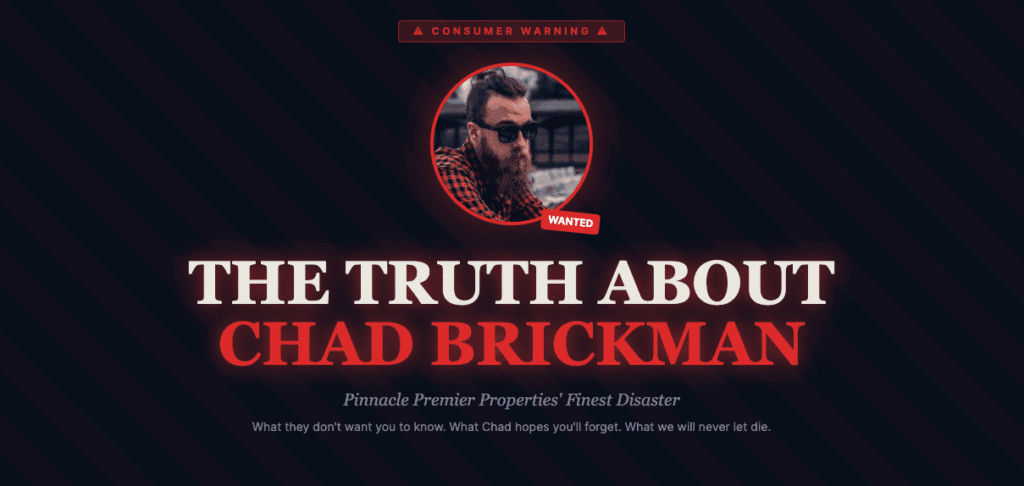
Check out the fake site I built to see how real it looks.
The site has everything: a “CONSUMER WARNING” banner across the top.
A headshot with a red “WANTED” badge.
A real-time “damage counter” showing 347 homes oversold, 891 clients ghosted, and 1,204 dreams crushed.
Fake one-star reviews from “victims” with names and dates.
A full dossier listing Chad’s “awards,” including “Least Responsive Agent” five years running.
There are even fabricated text messages and emails, like the one where Chad admits he left closing documents at a Denny’s in Bakersfield.
It has a “Submit Your Story” form at the bottom. A “Wall of Shame.” An “Evidence Vault.”
It looks absolutely, terrifyingly real.
And the only thing standing between this being a joke and being your actual nightmare is someone swapping “Chad Brickman” for your name and uploading your headshot.
One of the fake reviews reads: “Chad listed my home and the only showing he arranged was his own birthday party. He used my kitchen. He didn’t even clean up. I found a piñata stick in my bathtub.”
Hilarious when it’s fiction. Career-ending when it’s about you and a seller finds it the night before your listing appointment.
How to Stay in Control of Your Online Reputation
The lesson: Your online reputation isn’t just about collecting five-star reviews. It’s about monitoring what AI can fabricate about you.
Here’s how to stay in control of your reputation:
#1: Own your Google presence
Search your name like a client would. What shows up?
If it’s not clearly you (your listings, your content, your reviews), that’s your opportunity.
- Keep your Google Business Profile updated
- Publish content tied to your name
- Consistently collect reviews
The goal: when someone looks you up, they immediately know who you are and what you stand for.
#2: Keep a pulse on your name online
You don’t need to obsess over it, but you should stay aware.
- Set up a simple Google Alert for your name
- Occasionally search yourself on social platforms
- Be aware of what’s out there
Think of this like checking your credit score. It doesn’t need to happen every day, just enough to stay informed.
#3: Create content that builds familiarity and trust
This is where agents already have an advantage.
- Show your face in videos
- Share real client moments and wins
- Talk through your process and how you help people
The more real you are online, the easier it is for people to recognize what’s actually you.
#4: Have a simple game plan (just in case)
You’ll probably never need this, but it’s good to know what you’d do.
- Screenshot anything questionable
- Report it to the platform
- Loop in your broker if needed
No overreaction, just a clear next step if something ever pops up.
The Real Takeaway
The lesson: your online reputation isn’t just about collecting five-star reviews. It’s about monitoring what AI can fabricate about you and controlling the content you put out.
Because if high schoolers can do this to their math teacher, someone can absolutely do it to you.