
Key Details:
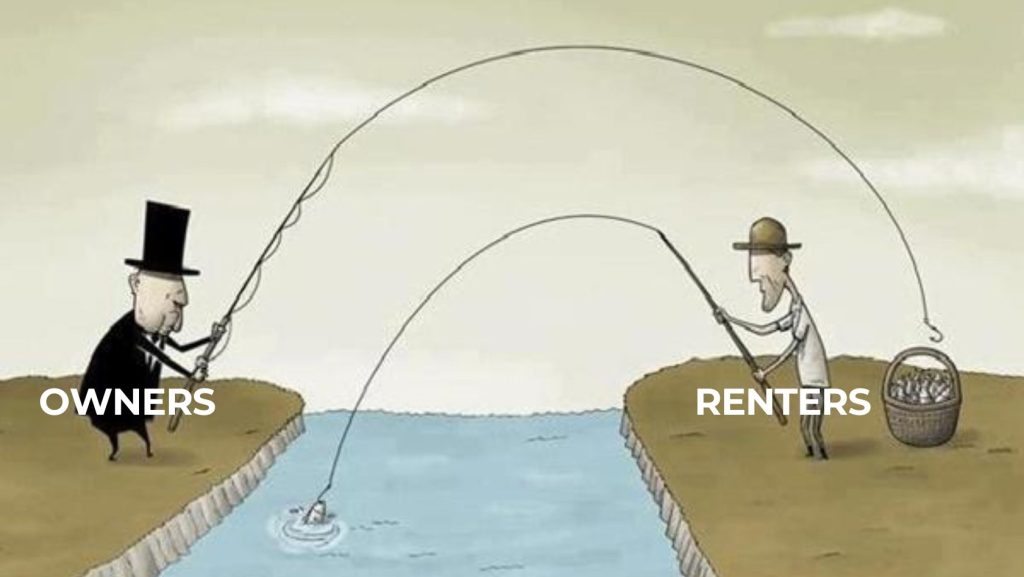
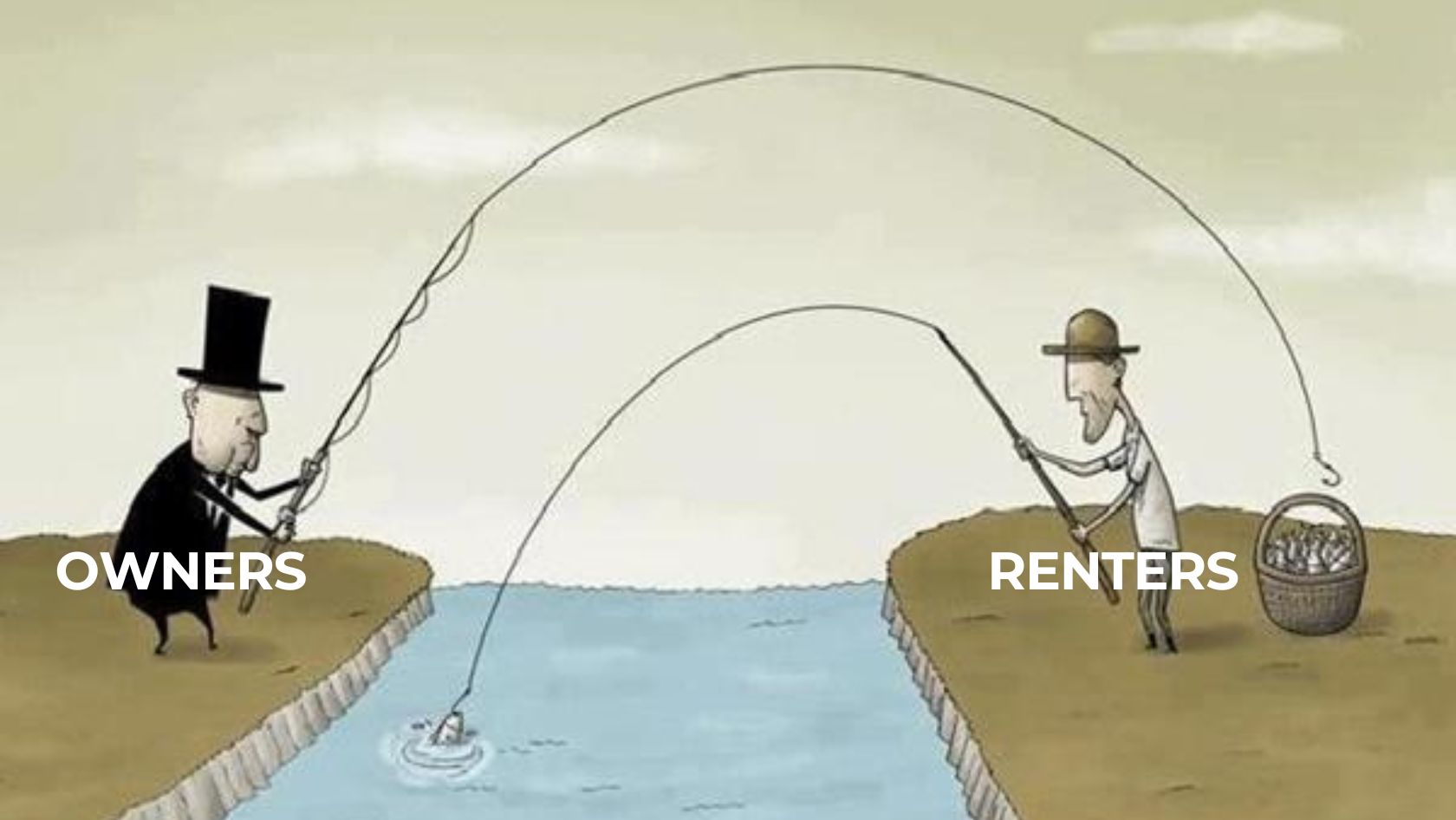
- The Aspen Institute reveals a massive wealth gap: homeowners boast a median net worth of $396,500, while renters sit at $10,400.
- Deepening the divide, nearly 50% of renters spend over 30% of their income on housing, and half were denied credit or offered less than requested in 2023 (compared to 28% of homeowners), with 37% avoiding credit applications for fear of rejection.
- More than 50% of renters earn less than $50,000 annually. On the other hand, 20% earn over $100,000, and this group has been the fastest-growing segment of renters over the past 10 years.
For some, renting is a choice rooted in convenience. For others, it’s a necessity shaped by income disparities, rising housing costs, and systemic barriers to homeownership.
The financial well-being of renters paints a picture of both progress and struggle. Median net worth has surged to a record $10,400, thanks to pandemic-era support and rising incomes. However, that still falls far short of the $396,500 median net worth of homeowners.
Mewanhile, escalating rents and limited access to credit continue to weigh heavily on renters, especially those in the lower-income brackets.
This duality—financial gains on one side and mounting challenges on the other—offers a unique perspective on the current state of renting in America. And that’s the focus of a recent report by the Aspen Institute, which highlights the differences in net worth and financial well-being between renters and homeowners.
For those in real estate, understanding this dynamic is key to supporting renters on their path toward financial stability and wealth-building as homeowners.
Read on for the highlights.
Renters of 2025: A Brief Profile
The renter population in the U.S. has reached a new high of over 45 million households, making up more than one-third of all households.
The renter demographic is younger and more diverse than homeowners, with most renter household heads under 45 years old and one-third under 35. Renters are also racially diverse, with about half identifying as people of color.
This reflects both the lingering effects of discriminatory homeownership policies and the challenges people of color still face in achieving homeownership today.
Income disparities are a defining characteristic of renter households. In 2022, over 50% of renters earned less than $50,000 annually, many of whom face precarious housing situations. On the other hand, higher-income renters earning over $100,000 make up 20% of all renters, and this group has been the fastest-growing segment of renters over the past decade.
Renters are represented across the U.S., with proportions ranging from 26% in West Virginia to 46% in New York. While they are more concentrated in metropolitan areas, renters live in a variety of housing types:
- 31% reside in single-family homes.
- 64.5% live in multi-family housing, including duplexes-to-fourplexes (17.5%) and large buildings with 50 or more units (16%).
Net Worth & Financial Well-Being of Renters
The pandemic brought a rollercoaster of financial changes for renters in the U.S., leaving both notable gains and persistent challenges in its wake.
On the positive side:
- Renters experienced spikes in incomes and savings early in the pandemic via stimulus payments and unemployment insurance.
- Renters benefited from student loan payment pauses disproportionately.
- Eviction moratoria and emergency rental assistance reduced evictions by over 50% in many cities.
- Renters’ median net worth increased 43% between 2019 and 2022, reaching a record high of $10,400.
- Net worth and asset values for renters surpassed pre-Great Recession levels.
As for the negatives:
- Median asking rents rose 27% nationally between early 2020 and August 2022.
- 50% of renter households spend more than 30% of pre-tax income on housing; 27% spend more than 50%.
- Rising housing costs limited renters’ ability to transition to homeownership.
- As of 2023, 55% of renters reported being in a financially solid position, down from earlier pandemic levels.
Renters also face growing barriers to credit and asset-building opportunities. In 2023, 50% of renters were denied credit or offered less than requested—compared to 28% of homeowners—while 37% avoided applying altogether out of fear of rejection.
Renters hold fewer appreciating assets, like retirement accounts and stocks, than homeowners. For low- and moderate-income renters, this gap is stark: only 25% of renters in the lowest income quintile own any appreciating assets, compared to 95% in the highest quintile.
Other financial challenges include:
Cash Flow:
Renters tend to have weaker cash flow compared to homeowners:
- Less than 50% of renters had positive cash flow at the peak in 2020.
- By 2022, the median household earning less than $30,000 annually had only $310 remaining monthly after housing expenses.
- Rising rents, grocery, and transportation costs further constrained renters’ positive cash flow.
Debt and Credit:
- Renters have higher debt-to-income ratios and are twice as likely as homeowners to fall behind on debt payments (18% vs. 9%).
- Among first-time homebuyers, student loans are the second-largest obstacle to saving for a down payment.
Savings:
- Renters’ median savings increased by $700 between 2019 and 2022 but remain well below the $2,400 gain seen by overall households.
- The percentage of renters with sufficient emergency savings rose to 31% in 2022 but still lags behind homeowners significantly.
These numbers highlight the financial tightrope renters continue to walk, even as their net worth improves. While gains in savings and asset ownership are promising, the growing disparity in cash flow, credit access, and homeownership underscore the importance of systemic solutions to create more equitable financial opportunities for renters.
On the local level, you could become the number one resource for renters in your area who aspire to homeownership.
Start with a list of what the renters in your community need to see that path more clearly. Get to know the real situations renters are facing and show them what it will take to become homeowners, as well as what resources are available to them. Be knowledgeable about their options, keeping their best interests at heart.
These are lifetime relationships, so treat them as such.
Homebuying Aspirations and Obstacles for Renters
Many renters aspire to own homes despite these three persistent barriers:
- Income
- Savings (or the lack thereof)
- Housing costs
For many, renting offers a balance of flexibility and convenience. So, while the dream of homeownership persists for most, 57% of renters value the freedom of renting, and 36% simply prefer it over owning a home.
That said, plenty of renters in your market would happily make the switch if they saw a way to it. And that’s where you come in.
Read the full report for more information, including charts and methodology.