


Here’s the quiet cost of homeownership no one’s talking about: property taxes.
According to a new report from Realtor.com®, 40.5% of U.S. homes may be overassessed, with the median homeowner potentially saving $539 per year by challenging their tax bill.
The report also highlights a new tool that helps homeowners identify potential overassessment and access the data needed to file a protest.
Here’s what you need to know to educate your homeowner clients, especially in states where property taxes are rising fast.
The Hidden Cost: Overassessed Homes Across the U.S.
According to Realtor.com’s Property Tax Report:
- 40.5% of U.S. homes are potentially overassessed
- The median potential savings from a successful protest is $539 per year
- That’s more than 15% of the average property tax bill
In many cases, homeowners don’t even realize they can protest their tax bill, let alone how to go about it. Realtor.com’s new feature changes that by making the process more transparent, approachable, and actionable.
Where the Savings Add Up the Most
In some states, overassessment is even more widespread; and the potential savings are bigger than average.
According to the report, here are the top five states where protesting could pay off in a big way:
- Texas
51.2% of homes flagged for overassessment
Median potential savings: $606.66 - South Dakota
48.3% of homes flagged
Median potential savings: $431.23 - California
47.8% of homes flagged
Median potential savings: $1,875.12 - Iowa
47.3% of homes flagged
Median potential savings: $368.91 - Illinois
46.5% of homes flagged
Median potential savings: $629.76
In California, outdated assessments due to Proposition 13 protections can inflate the appearance of overassessment, while in Texas and Illinois, high effective tax rates mean even small adjustments yield big returns.
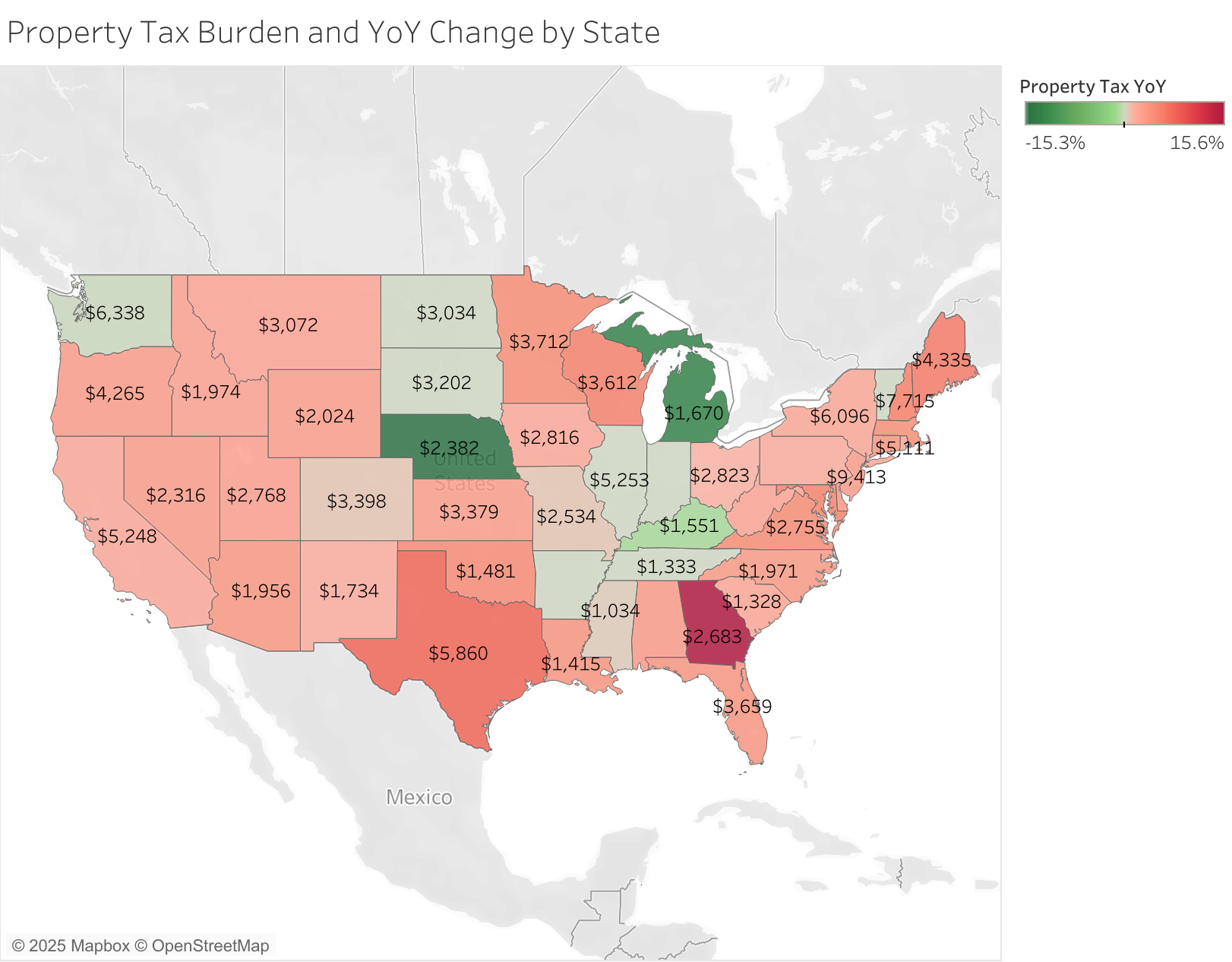
Property Tax Spikes—and Drops—You Need to Know
Realtor.com’s data also shows sharp year-over-year increases in median property tax burdens in several states. Georgia tops the list with a 15.6% jump in 2024, even though home values only rose 4.8%, indicating aggressive local rate hikes.
Other fast-rising states include:
- Texas: +7.8% tax burden, +10.0% assessed value
- Maine: +5.9% tax burden, +0.8% assessed value
- New Hampshire: +5.6% tax burden, 0.0% assessed value
- Wisconsin: +5.5% tax burden, 0.0% assessed value
Meanwhile, some states saw tax relief despite increasing home values. For example:
- Nebraska: -15.3% tax burden, +8.3% assessed value
- Michigan: -12.9% tax burden, +12.8% assessed value
- Washington: -0.2% tax burden, +8.2% assessed value
- Tennessee and Kentucky: 0.0% change in tax burden
What Homeowners Can Do Now
The new tax protesting tool on Realtor.com®, available through the My Home dashboard, offers homeowners everything they need to take action:
- Personalized Savings Estimates: Get an annual savings estimate based on county-specific data.
- Downloadable Evidence Packets: Includes assessed value, local tax rates, and comparable properties formatted to support an appeal.
- Easy Access to Local Comps: Homeowners can view and download comparable properties in their neighborhood and even connect with a local agent to assist.
David Masters, Sr. Director of Product at Realtor.com® explained it this way:
“Most homeowners don’t realize they can protest their property taxes, and even fewer know how to do it. We built this resource to simplify what has traditionally been a confusing and intimidating process.
“By integrating it into the My Home dashboard, we’re giving homeowners a clear view into what they might be overpaying, equipping them with solid evidence, and making it easy to take action. Our goal is to help people feel more confident navigating the protest process, and potentially save money.”
This tool is available now on desktop, mobile web, iOS, and Android.
What This Means for Agents
If you’re looking for new ways to re-engage your database and position yourself as a true advisor, start with property taxes. Most homeowners don’t realize they may be overpaying—and they most likely don’t know how to fix it.
Here are a few key takeaways to help you turn this data into action:
- 40.5% of U.S. properties may be overassessed—your clients could be leaving money on the table.
- The median savings from a successful protest is $539 annually.
- Realtor.com’s new tool makes it easy for homeowners to take action—and for agents to step in and help.
- Use this as a reason to re-engage your database and offer real, tangible value—especially in high-opportunity states like Texas, Illinois, and California.
This is a chance to show your expertise in a way that helps clients now and keeps you top-of-mind when they’re ready to buy or sell.