Imagine for a moment you own a luxury property on exclusive Indian Creek Island, and you’ve decided to list it for $85 million. Now imagine you’ve just sold that home at a discounted price, after being told the seller wouldn’t pay more than $79 million for it.
Your list price is $85 million. But the folks representing the buyer seem like good people. And you have no doubt they can make good on their offer.
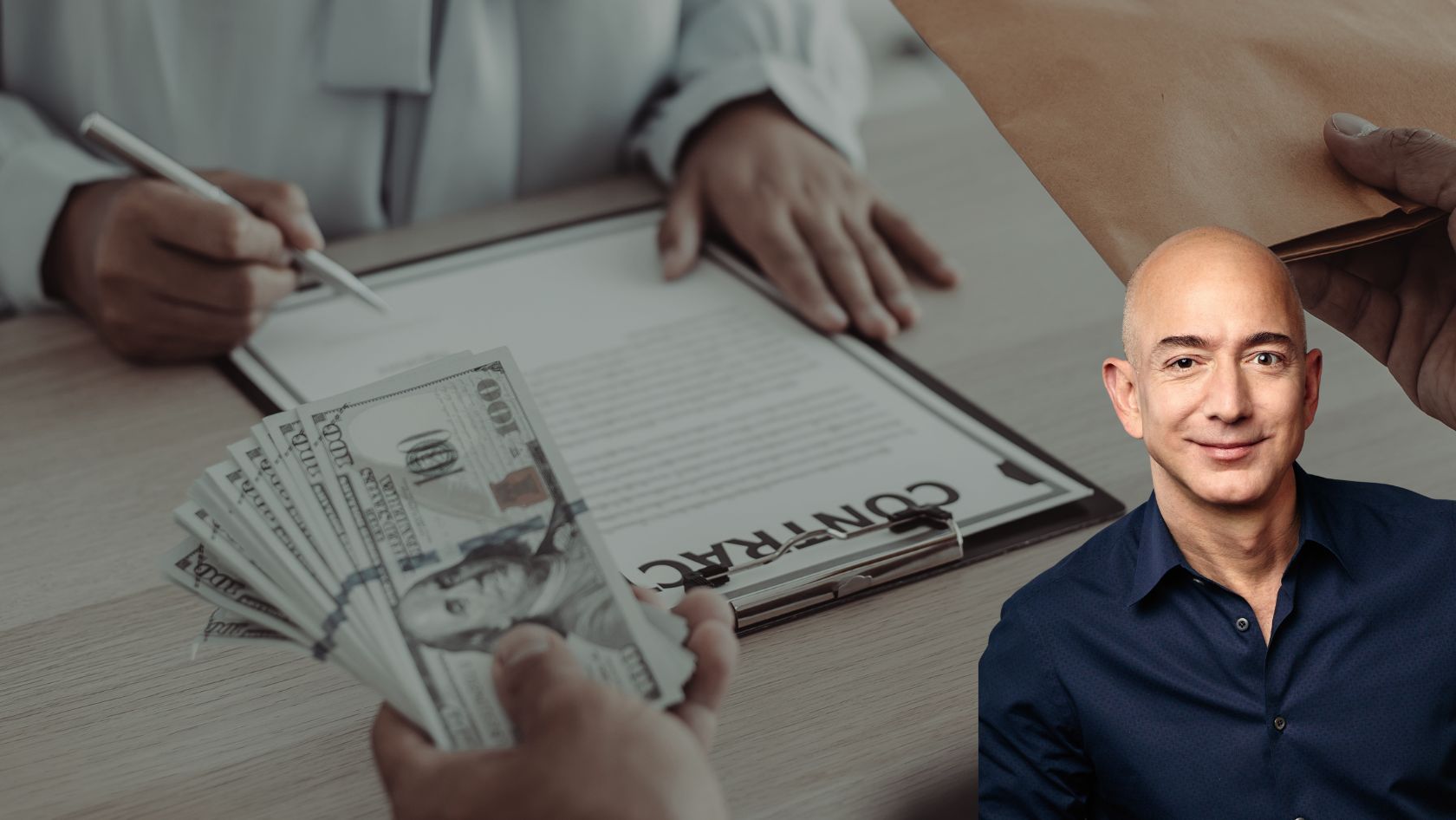
Thing is, you also know Jeff Bezos (yes, that one) recently purchased the property next door. And you have your suspicions he might be behind the $79 million offer. So, you ask your real estate broker, and they assure you, “Nope. Bezos is not the buyer.”
Satisfied, you accept the lowball offer, selling your home at a $6 million (roughly 7%) discount.
Only after the sale do you learn about the ties between the trust that purchased your property and the second richest person on the planet.
What do you do?
If you’re Leo Kryss—businessman and co-founder of Brazilian toy and electronic company Tectoy—you sue the very real estate firm that told you, when asked, that the buyer was not Jeff Bezos.
That real estate firm is Douglas Elliman. And according to CEO Jay Parker—the one who reassured Kryss that Bezos was not the buyer—he, too, was misled as to the buyer’s identity.
Both Kryss and Parker claim they were “led to believe” someone other than Bezos was behind the $79 million offer, which raises a few questions:
- Who was responsible for verifying the information about the buyer—and specifically that the trust representing the buyer had no ties to Bezos?
- Was the trust at liberty to disclose the identity of the buyer they represented, or were they bound by a confidentiality agreement?
- Had Kryss known Bezos was behind the lowball offer, would he have not only refused that offer but also asked for more than the $85 million list price?
Details of the Case
Here are the parties involved, based on what we know so far:
- Leo Kryss – Businessman and co-founder of Brazilian toy and electronics company Tectoy
- Douglas Elliman – The real estate firm involved in the sale of Kryss’ mansion, represented by CEO Jay Parker.
- Tendencia Asset Management (T.A.M.) – The company negotiating on behalf of Kryss.
- Jeff Bezos – Amazon founder and the second-richest person on the planet, with a net worth of $202 billion, and alleged purchaser of the “Billionaire Bunker” property.
The address of the property in question is 12 Indian Creek Island Road, Miami, in the village known as “Billionaire Bunker,” which is also home to retired NFL star Tom Brady as well as Jared Kushner and Ivanka Trump.
Built in 2000, the waterfront Miami mansion has seven bedrooms and 14 bathrooms and sits on a 2.8 acre estate. Kryss originally bought it for $28 million in 2014.
According to the filing, Kryss claims Douglas Elliman CEO Jay Parker misled him as to the identity of the buyer who insisted he wouldn’t pay more than $79 million for the property.
When Kryss asked whether Bezos was the person putting in the offer, Parker allegedly replied in the negative and led him to believe the property was being purchased for the Klepach family. As the Wall Street Journal reports, Celine Klepach, the agent who handled the sale, is the daughter of Benny Klepach, the mayor of Indian Creek.
After the sale, Kryss learned Bezos was, in fact, the buyer behind the offer.
Dana Clayton, an attorney for Kryss, told WSJ:
“Douglas Elliman failed to fulfill their duties to our client. … They knew or should have known who the ultimate beneficial purchaser was and misrepresented that very important fact to our client.”
The question is whether Douglas Elliman was legally obligated to know and share that information—if, in fact, they had accurate information on the identity of the buyer. According to Parker’s testimony, the trust representing Bezos may have protected his identity from both.
After all, it’s common in high-end property transactions for the buyer to be represented anonymously by a trust. Miami real estate agent Danny Hertzberg of Jills Zeder Group at Coldwell Banker is well aware of this practice, saying it’s not uncommon for wealthy individuals to shield their identities—from the initial property showing all the way through closing.
“Billionaires, when they’re purchasing a property, are concerned that when the seller knows their identity they’re going to want a larger number.”
Had Kryss known about Bezos’ involvement as the buyer behind the trust, he would have been conscious of the leverage he had to ask for more than the list price, especially given Bezos’ earlier purchase of the adjacent property.
At the very least, he would have given an unequivocal “No” to the lower offer.
That $6 million discount represents roughly 0.006% of Bezos’ $202 billion net worth. But the difference in wealth has no bearing on the merits of Kryss’s lawsuit claim. Whether he has a real case against Douglas Elliman remains to be seen.