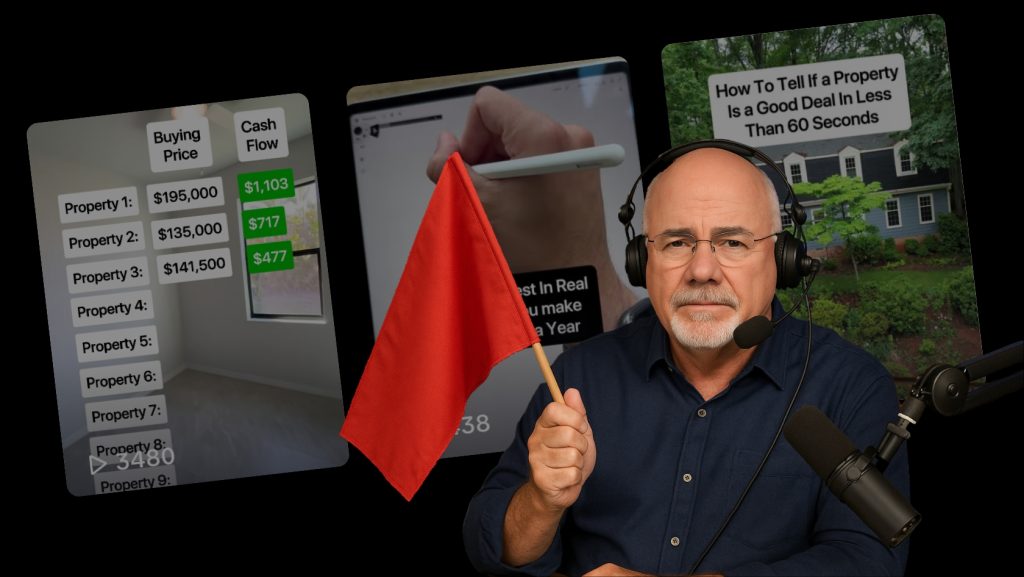


If you’ve been on TikTok lately, you’ve probably seen more than a few influencers promising that real estate investing is the shortcut to passive income.
According to finance guru Dave Ramsey, that’s nonsense. In a recent episode of The Ramsey Show, Ramsey went all in on the “morons” pushing property investment myths online.
His warning is clear: owning rental property is not a get-rich-quick scheme. And if you’re telling clients it is, you’re setting them up for a rude awakening.
Read on for a quick overview of the highlights.
Dave Ramsey’s Reality Check
In an Instagram reel based on his radio show, Ramsey took direct aim at the “passive income” narrative.
“People who say ‘passive income’ on real estate are morons. There’s nothing passive about owning real estate. It’s active.”
Ramsey added that anyone calling rental property “passive income” is probably just selling a “get-rich-quick seminar on TikTok.”
For agents, this is a teachable moment. Many prospective investors are scrolling social platforms for advice, and they’re getting soundbites instead of substance.
Why TikTok Makes Landlording Look Easy
Several industry pros told Realtor.com that social media often glamorizes real estate investing. Miltiadis Kastanis of Compass put it this way:
“Social media thrives on simplifying or sensationalizing for views. Many influencers are in the business of content, not real estate.”
Ron Myers of Ron Buys Florida Homes says:
“They make it look like you can just buy a house, throw it on Airbnb, and cash checks. What they don’t show is the 2 a.m. plumbing emergencies.”
Fred Loguidice of Sell My House Fast Long Island has this advice for would-be investors:
“Before you even look at a property, understand what it takes to be a landlord. Don’t just listen to a TikTokker who sells the dream without showing the reality of the work.”
These voices echo what most seasoned agents already know. Clients see “mailbox money.” Agents see midnight maintenance calls and unpaid rent.
The Work Behind the Income
Ramsey wasn’t the only one dishing out a reality check. Realtor.com highlighted the unglamorous side of being a landlord.
Ramsey’s final word of caution tees them up nicely:
“Do not go into it, folks, with rose-colored glasses thinking it’s going to be easy.”
Myers tells clients: “This isn’t HGTV. This is real life. Toilets break, tenants stop paying, and you’ll lose money if you’re not prepared.” Loguidice adds, “You are the CEO of your property. This includes finding tenants, handling repairs, collecting rent, and managing finances.”
Brian Davis, founder of SparkRental, sold 15 rental properties because of the constant grind:
“There was always something going on: a vacancy, a repair issue, a troublesome tenant. That’s why I sold my rentals and only invest passively nowadays.”
In other words, “passive” is a myth unless you outsource the active parts.
What Passive Really Looks Like
Ramsey’s advice to his listeners was blunt:
“If you want truly passive income, buy mutual funds. They send me a statement in my inbox.”
Still, some experts told Realtor.com there are ways to make real estate income feel more passive:
Seamus Nally, CEO of TurboTenant:
“It’s certainly possible to get passive income from investment properties, but only if you outsource and pay for the actual work of managing them.”
Corinne Smith of Legacy Homes:
“I have a property manager that manages all of my properties. I really don’t need to do much except for yearly maintenance.”
Martin Orefice of Rent to Own Labs: says his rental income now feels passive, but only after nearly a decade of managing it.
“My secret is finding good tenants and keeping them.”
Even the pros who’ve reached that stage admit it took years of trial, error, and effort to get there.
Takeaways for Real Estate Professionals
Agents are often the bridge between viral TikTok advice and the real-life experience of owning property. This is a chance to set the record straight with investor clients.
- Educate clients early about the responsibilities of being a landlord so they don’t expect “mailbox money” from day one.
- Use social media trends as conversation starters. If clients bring up “passive income,” share the reality check and position yourself as a trusted guide.
- Highlight your network of property managers, contractors, and other resources that can help clients manage the active work of investing.
Ramsey’s words might sound harsh, but they hit on a point every agent knows. Real estate investing can be profitable, but it’s not easy money. By helping clients see the whole picture, you position yourself as the professional voice they can trust in a sea of TikTok soundbites.