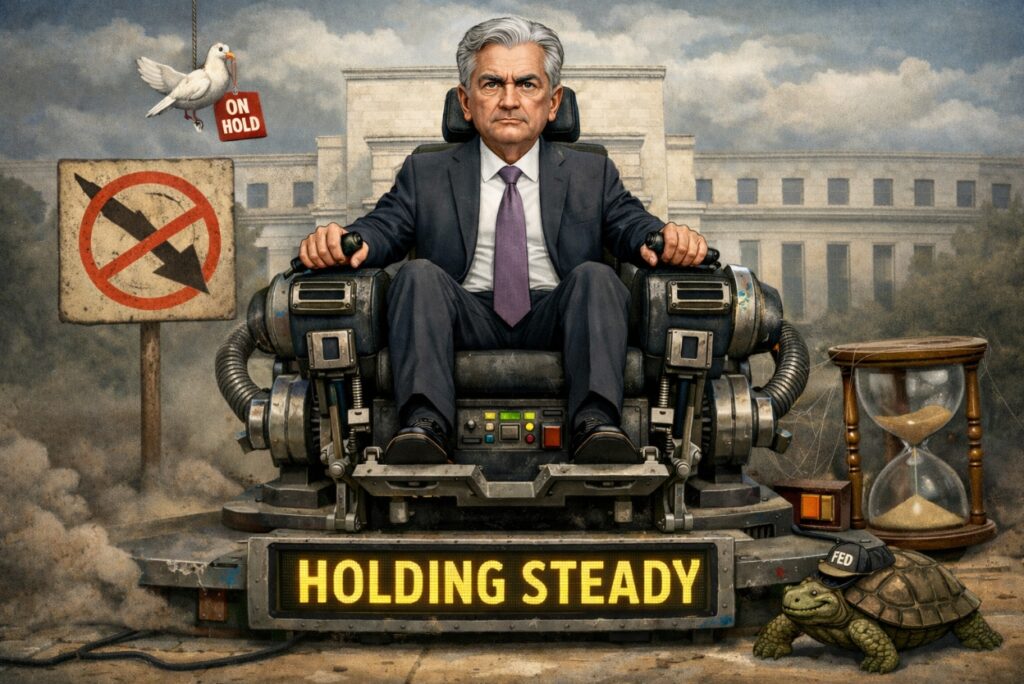
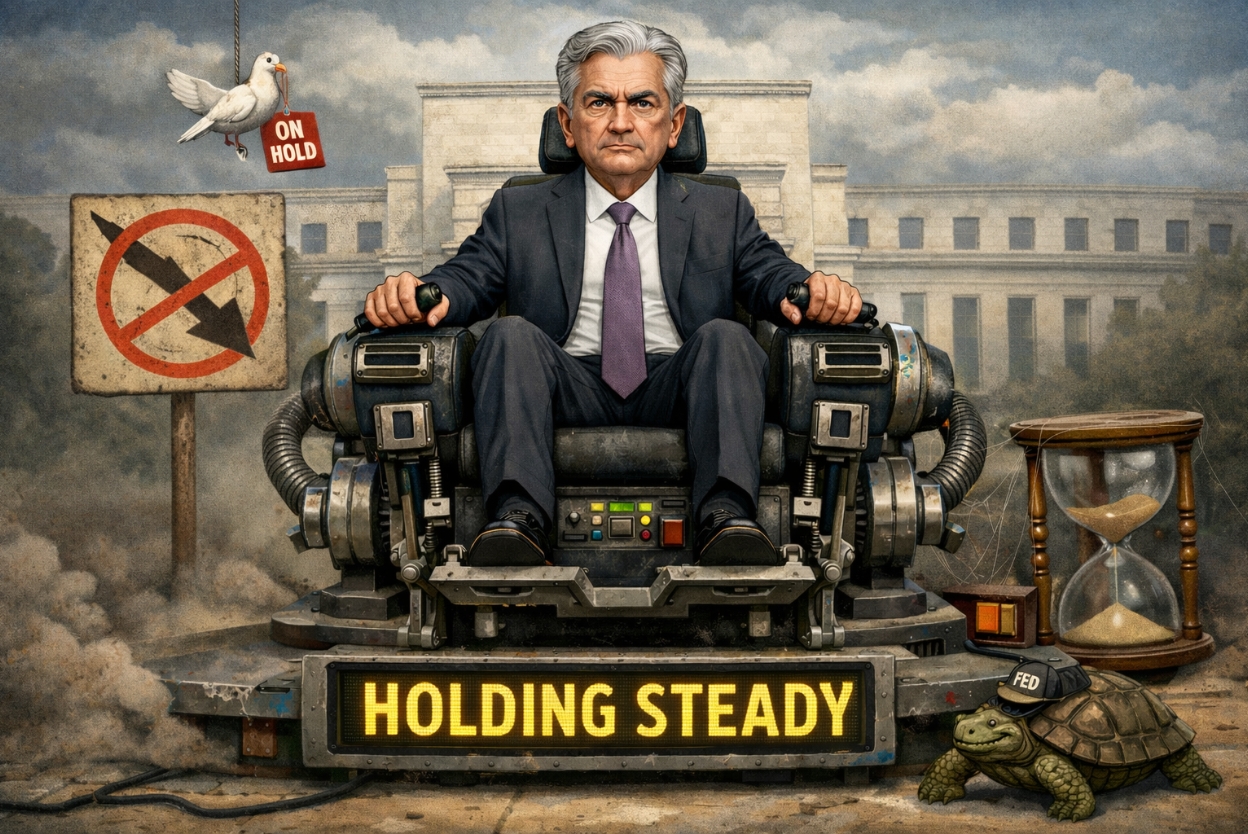

The Federal Reserve hit pause this week, keeping its benchmark interest rate locked in at 3.5% to 3.75% after three straight quarter-point cuts.
Markets anticipated the pause, and the committee’s updated language leaned into stronger economic growth and a stabilizing job market while still calling inflation “somewhat elevated.”
The Fed’s policy decision passed by a 10–2 vote, with Governors Stephen Miran and Christopher Waller dissenting in favor of a 0.25 percentage point rate cut.
For agents watching mortgage rates and buyer affordability, the takeaway is that rates are staying put for now and policymakers aren’t signaling any immediate moves lower.
Housing was mentioned only once during Fed Chair Powell’s opening statement, and for the most part, reporters focused on other concerns, though affordability did come up.
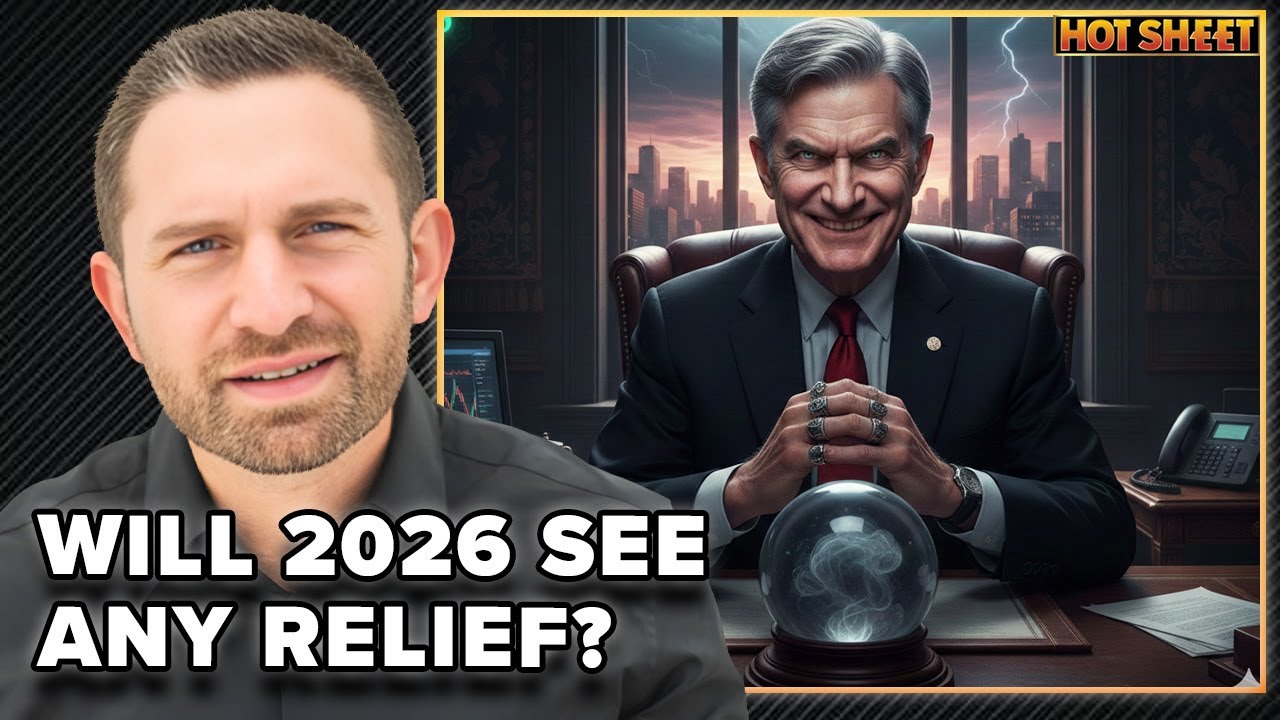
Don’t miss Byron Lazine’s full breakdown on today’s Hot Sheet:
Powell’s Press Conference
At the FOMC press conference on January 28, 2026, Jerome Powell gave an opening statement and answered questions from reporters.
Below are all the timestamps when the Fed Chair answered a question related to affordability and the Fed’s outlook.
From Powell’s Opening Statement:
Jerome Powell mentioned housing once in his opening statement, reiterating the same general message:
(01:08) – “Available indicators suggest that economic activity has been expanding at a solid pace. Consumer spending has been resilient, and business fixed investment has continued to expand. In contrast, activity in the housing sector has remained weak. The temporary shutdown of the federal government likely weighed on economic activity last quarter, but these effects should be reversed as the reopening boosts growth this quarter.”
From Q&A Segment of FOMC Press Conference:
The words “housing” and “mortgage” did not come up during Powell’s press conference, but there were multiple questions on the Fed’s decision to hold the rate steady, as well as what it would take for a rate cut or a rate increase.
To all, Powell responded that the Committee is well-positioned to let the data guide their decisions, with equal attention to both inflation and employment.
He did say upside risks to both inflation and unemployment have diminished.
(05:51) — Follow-up from Chris Rugaber, Associated Press:
“And then just quickly follow on the job market, you mentioned last month that the household survey might be distorted, and you also mentioned the potential for overcounting jobs, which would suggest that we are still in a negative hiring pace. So do you see that drop in the unemployment rate as solid, and what’s the basis for saying that things have stabilized?”
Powell’s response (06:20):
“So yeah, really two questions. One is, so we’re getting through the distortions in the data from the shutdown, however big they were in November. They’re smaller in December, so we’re getting to a place where they’re no longer material, they’re still there, but it’s a tweak here and there.
“The reason why we changed the statement, lemme pull it out, was simply it used to say that judges that downside risks to employment rose in recent months. So we saw data coming in, which suggests some signs of stabilization. I wouldn’t go too far with that, but some signs of stabilization. There are also some signs of continued cooling, and so we thought that was no longer an accurate description of the data.
“In addition, the outlook for economic activity has improved, clearly improved since the last meeting, and that should matter for labor demand and for employment over time. So for those two reasons, we thought we would take that language out of the statement.”
(28:27) – Follow-up from Archie Hall, The Economist:
“One more on growth and the kind of strong growth outlook, your strength and growth outlook. You’re now seeing how much of that is the fiscal stimulus we’re seeing from the beautiful bill, the tax cuts and all of that.”
Powell’s response (28:37):
“So you’re seeing it already, you don’t have much of the fiscal. I think the outlook, you’re right, it’s financial conditions and it’s fiscal policy for ‘26, but you’ve got strong consumption that’s been happening before. Financial conditions have been supportive, but before the fiscal effects really are shown. So essentially, the economy has once again surprised us with its strength, not for the first time.
“Consumer spending, although it’s uneven across income categories, but consumer spending overall numbers are good and we’re benefiting from the AI build-out of data centers. That’s another thing we’re benefiting from. But the economy overall — growth is on a solid footing it looks like. And it’s not just those things, it’s just the consumer is filling out surveys that sound really negative and then spending. So there’s been a disconnect for some time between downbeat surveys and reasonably good spending data.”
Byron commented on Powell’s response regarding the OBB and its impact on the strength of the U.S. economy.
“The growth is only expected to accelerate this year, economic growth, because of—whether you like that Big Beautiful Bill or not. And the debate of ‘is this going to add to the national debt?’ is a real debate. Now, the national debt is, for the first time, going in the other direction because of the tariffs. He doesn’t want to give credit to the tariff thing…and the Big Beautiful Bill is only going to expand economic growth this year…
“And then he says the economy ‘has once again surprised us with its strength.’ So, they’ve been wrong on strength of economy, in their projections, in their feelings. They’ve been wrong all year on this. They continue to get surprised.
“You look at spending, and nobody is spending as if everything’s coming to an end.”
The next question carries on with the thread of consumer spending.
(29:46) – Question from Christine Romans, NBC News:
“You talked about how consumer spending is uneven. The president calls inflation defeated and solved. The FOMC says it’s a somewhat elevated inflation, but you talked about…some consumer sentiment surveys and public opinion polls that show that most families say the cost of living is still issue number one. What is the conversation around the table with your colleagues about how wealthier consumers seem to be driving so much of the economy, and why so many families still feel like they just can’t make ends meet after 5 years of rising prices? What is that discussion like?”
Powell’s response (30:26):
“So, a couple things. One, there’s something to it in that we know that higher income households that tend to own real estate and tend to own stocks, you know, securities, and those assets have been going up in value. And, you know, increases in wealth do support spending over time. And that’s clearly a part of the story.
“We also know that for some time now, for you know, a year or more, we’ve been hearing from retailers, for example, that serve lower income customers, whether it be food or the big box stores or anything. They’re saying the same thing, which is our consumers are looking to economize. They’re trading down from brands, and they’re buying less, and it’s changing their buying habits and that kind of thing. So, we’re seeing that, and that is a reality of what we’re seeing. They’re still consuming, but they’re feeling it in a different way.
“I would say more broadly on affordability. We have a vast network through the reserve banks and also through the board of governors, where we talk to small and large businesses and households. And so we do hear a lot about affordability, and we take that very seriously, and we take it to heart because you know one of our jobs is price stability. And so, you know, the best thing we can do for people who are feeling that squeeze is to keep inflation under control and frankly to finish the job of getting inflation back down to 2%.”
Byron’s commentary included his perspective on where we are right now with affordability, how we got there, and why it will take time for wages to catch up.
“Unfortunately, now, there are people who are struggling with the new price level. And you want to call that affordability, but it’s never going back to 2019 prices… wages have to catch up. Wages have the best chance of catching up if you have these kind of GDP numbers that you saw in Q3 and Q4 (2025). If you let the economy rip, through growth, get rates down, and that’s going to help wages go up. Both those things help businesses get wages up.
“You printed all this money, so, yeah, the dollar’s not going to be worth as much as it was. You already did it. It’s in the rear-view mirror. We can’t go back to 2019. And now, you’ve got to let this kind of thing work itself out.”
(31:56) — Follow-up question from Romans:
“You mentioned the AI buildout as being a positive for economic growth this year. I wonder, as you look at the weakest year last year for job creation of a non-recession year since like 2003, are you concerned about AI maybe supplanting more entry-level work and entry-level jobs, and how does that play into what you’re watching about the labor market?”
Powell’s response (32:17):
“So, everyone, of course, is watching AI and the deployment and trying to understand exactly what’s happening, and there’s a wide range of possibilities. It’s hard to say. And of course, anyone who uses it is amazed at what it can accomplish.
“Every technological wave will eliminate jobs and create other jobs, and it’s always been the case. If you look back, wave after wave after wave, there will be some disruption. But ultimately, technology increases productivity, which is the basis for rising wages. And it may not all happen immediately, but over time, what enables incomes to rise over time is rising productivity.
“And we always ask, well, is it going to be different? And we don’t know. And we may, in any case, see in the short term jobs that are being eliminated by the capabilities of AI. We may see that; we just don’t know what the overall effect is going to be.
“So, how to think about it in macroeconomic terms, it’s very hard. We can look at the aggregate data, we can analyze, for example, there is some connection, it appears, between the low hiring rate for recent college grads and AI, but it’s not the main or only driver. You hear large companies, though…many of them saying that they either won’t be hiring for some time or that they’re hiring less or that they’re laying people off, and they tend to refer to AI when they do that. So we’re all watching and learning, and it could certainly have pretty significant effects on the economy, the workforce in our society. We don’t really have the tools to address the concerns that may arise, but we have a lot of people who focus on analyzing it and try to understand what the macroeconomic implications are, which is our job.”
Byron argued that the AI buildout is going to raise wages, which will ultimately contribute to improved affordability for consumers, even if some jobs get phased out.
“Powell said every technological wave is going to create jobs. It’s always been the case. When you create jobs, you don’t need other jobs, of course… The AI is a huge opportunity. I think it’s part of this GDP growth. And I’m glad that Jerome Powell acknowledged that.”
(45:01) — Follow-up from Nicole Goodkind, Barrons:
“We’ve been talking a lot about tariffs and passing through, and we’ve been talking a lot about them for the past few months. The trade landscape is still in a constant state of flux, announcements, threats, negotiations, they’re all frequently changing. So I’m wondering how you actually track these. What data channels are most critical to follow this in real time?”
Powell’s response (45:24):
“…Yeah, I think our staff has done a really nice job on that. And they’ve kind of put it together in real time. So, as I mentioned, a tariff gets put in place. You can pretty much track its effects on pricing and on everything. And so you build a model up from all of the tariffs.
“At the beginning, it was very much of a forecast. Now, it’s every cycle that goes by, it becomes more informed by actual data. And our forecasts were not far off. What changed was, as I think I said earlier, what changed was what was implemented was smaller than what was announced. In addition, we didn’t see retaliation internationally. And I think people did generally expect that because we saw that in the past, and that really mattered too.
“And then the other thing is that pass-through, didn’t know how fast that was going to be to consumers, didn’t know how much exporters would take, how much companies in the middle would take, and how much the consumer would take. And it turns out it’s a lot of companies in the middle who, by the way, are pretty strongly committed to passing the rest of it through, which is one of the reasons why we need to keep our eye on inflation and not declare victory prematurely.”