
Key Details:
- A new Gallup report shows 21% of adult consumers in the U.S. think it’s a good time to buy a house—the lowest share since 1978. The years 2022 and 2023 are the only times fewer than 50% of Americans have seen the housing market as good for buyers.
- The article also revealed that only 56% of Americans think home prices are going up—down from 70% in 2022 and 71% in 2021 but up from 40% in 2020.
According to the latest Gallup poll on consumer perception of the housing market, 21% of Americans (about one in five) think it’s a good time to buy a house—down from 30% in 2022 and the lowest percentage on record. Readings for 2022 and 2023 stand out as the only ones showing less than 50% of U.S. adults perceiving the housing market as favorable to buyers.
Gallup’s research also revealed the percentage of Americans who expect home prices to rise in the next 12 months. The most recent figure is 56%—down from 70% the prior year.

Of course, this graph highlights consumer perception—which as we know, doesn’t always mirror reality. And in today’s market, many consumers have been misled by inaccurate and confusing headlines, or by someone in their social circle.
The good news? You can make a difference in your local community by explaining the pros and cons of buying vs. renting in your community. When you break down the numbers for a variety of scenarios (monthly payments, length of homeownership, etc.) people can get a deeper understanding of what buying a home means for their personal situation.
The results showcased in this article are from Gallup’s annual Economy and Personal Finance poll, which they conducted April 3–25. According to those results, 78% of U.S. adults now say it’s a bad time to buy a house.
The first year Gallup started asking Americans about their perceptions of the U.S. housing market was 1978, when more than half (53%) believed it was a good time to buy.
Thirteen years later (1991), when Gallup asked the same question, 67% of respondents had the same perception. In 2003—a time when the number of homeowners was steadily climbing, along with housing prices—a record high of 81% saw the market as favorable to buyers.
As home prices continued to climb in subsequent years, Americans grew less optimistic about the housing market and its buyer-friendliness. From 2006 to 2008, 52–58% said it was a good time to buy. In 2009, that figure jumped back up to 71%.
The first year that number fell below 50% was 2022, when 30% of respondents said it was a good time to buy. Cut to the first quarter of 2023, and that figure has dropped nine percentage points to 21%.
One of the biggest misconceptions behind that number has to do with what consumers expect from home prices over the next several months.
Fewer Americans Expect Home Prices to Increase
Gallup also shows consumer expectations of home prices from 2005 to the present.
In 2021, 71% of respondents predicted an increase in home prices over the next 12 months—the highest share recorded, dating back to 2005. In 2022, 70% held that view.
Home prices bore that out by hitting record highs in quarter four of 2022, when the U.S. median home sale price was $479,500.
Since then, home prices have fallen in many areas of the country, particularly in areas that saw explosive buyer demand—and consequent price growth—during the pandemic. The median sale price dropped to $436,800 in quarter one of 2023, as fewer U.S. adults expected an increase in home values in the coming year.
According to Gallup’s most recent reading, 56% currently expect home prices to rise, while 25% expect no change and 19% expect a decline.
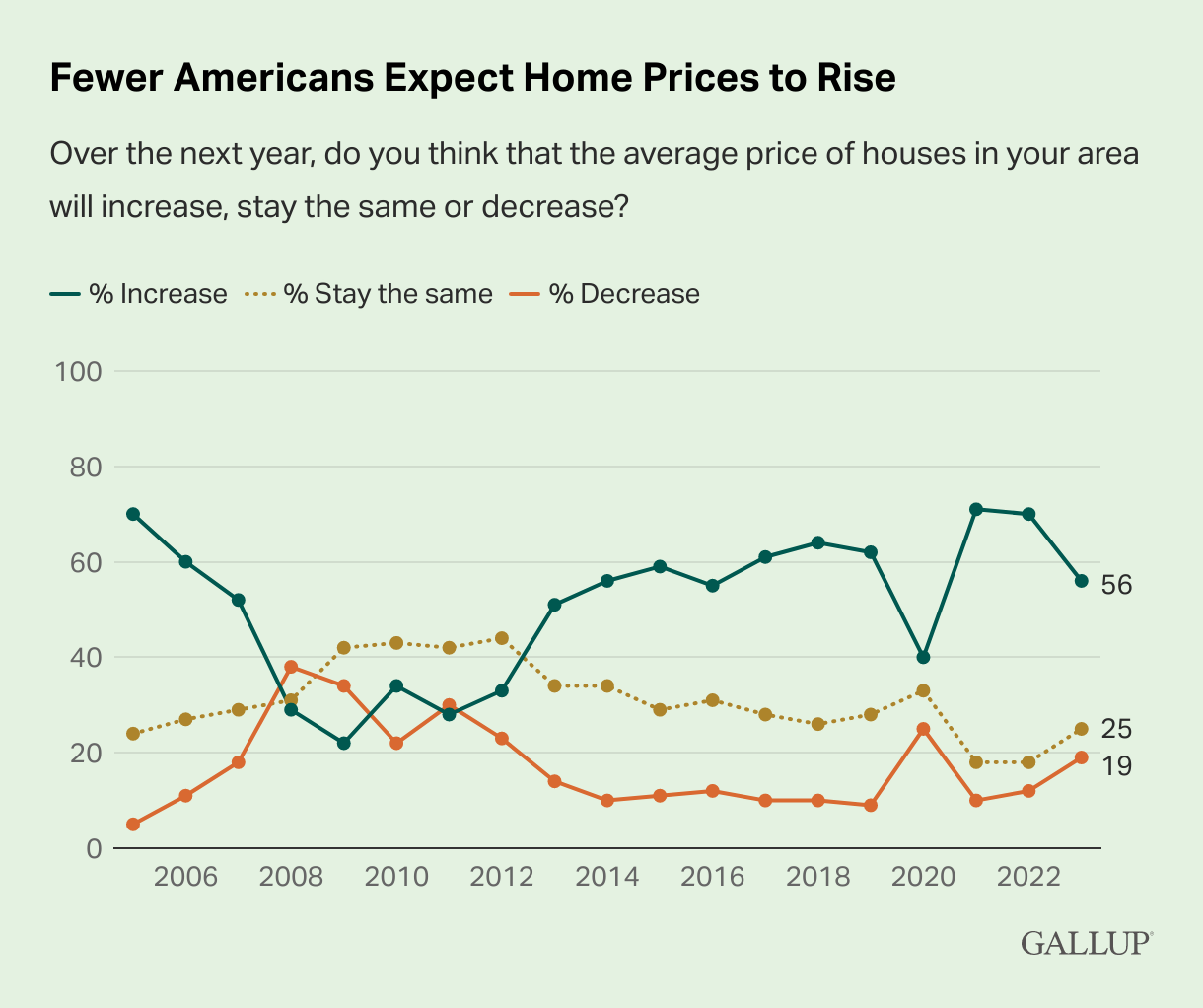
Despite this year’s declines, consumer expectations are still relatively high over the years reflected on Gallup’s chart. In 2020, for example, that figure was 40%. And between 2008 and 2012, the numbers were all below that, with three of those years under 30%.
Pessimism is widespread and linked to affordability
These bleak consumer perceptions of the housing market are fairly consistent across most subgroups of the U.S. population.
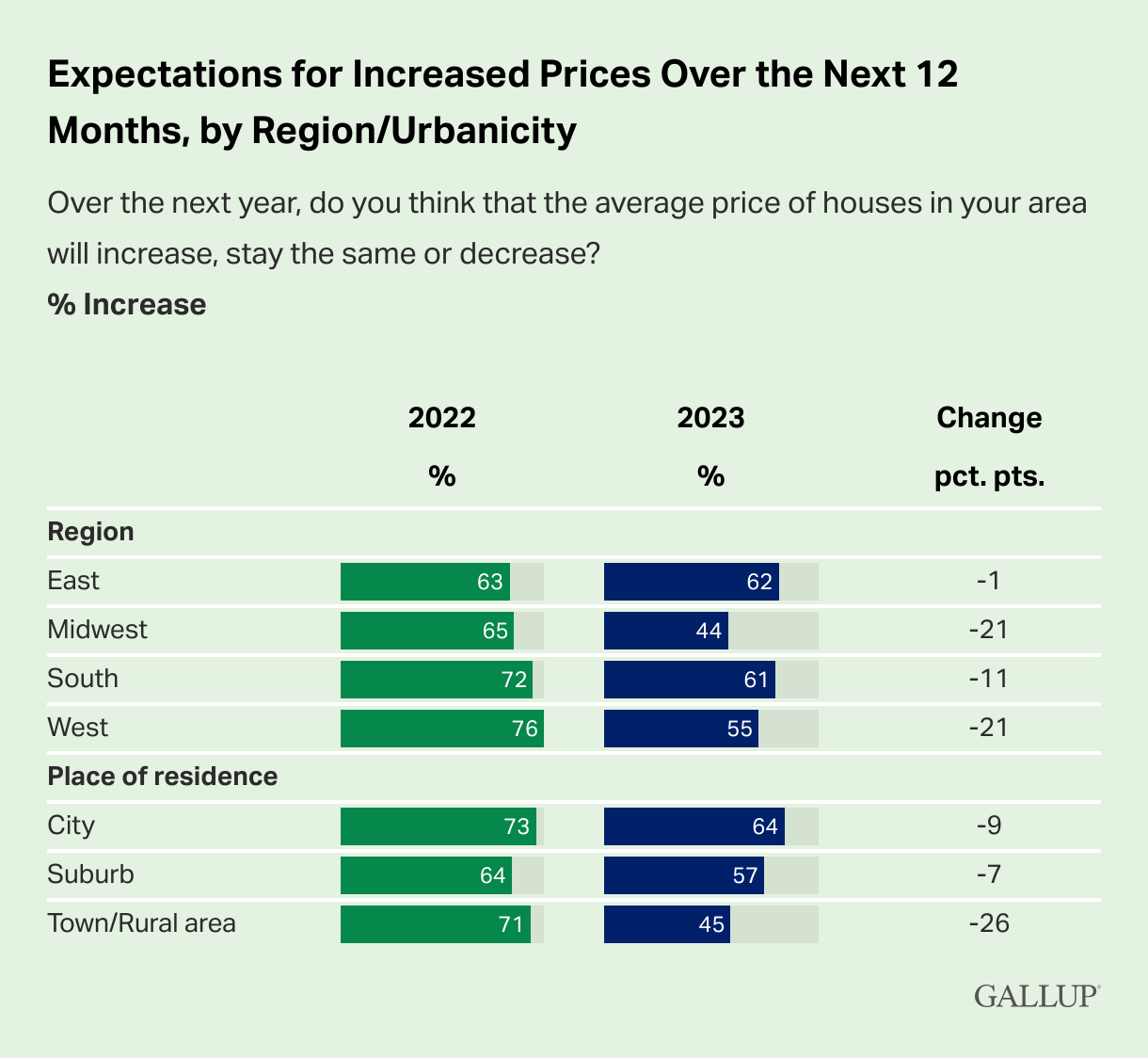
The pessimism reflected in the latest poll is likely due to high home prices and high mortgage rates making monthly mortgage payments less affordable. That pessimism, though, may keep many prospective buyers on the sidelines, waiting for a “better time to buy.”
Why it actually IS a good time to buy a home
In the first segment of Wednesday’s Hot Sheet episode, Byron Lazine highlighted the Gallup article and offered a series of counterpoints to the Gallup charts and recent Tweets simply repeating the news that “Fewer Americans think it’s a good time to buy.”

We, as real estate agents, need to understand that four out of five Americans believe it’s a bad time to buy. So, whether a home shopper is committed to their home purchase this spring or not, four out of five people around them—at work, when they’re going out for tea, when they’re at the family holiday gathering, when they’re at the dinner table—are saying to them, “Oh, you’re buying a house? It’s a bad time to buy right now!”… It’s your job as the real estate professional, a real estate attorney, a real estate agent to be able to educate folks who are going through that home purchase journey on what the future actually looks like. Because we know…that if you’re in this thing for the long haul, the last four decades, real estate has gone UP 30-40%.
The chart below showcases how much home prices have grown by the decade. Homeowners who are in it for the long haul (7-10 years), built equity every decade since 1990. Use this visual when speaking with buyers about their future.

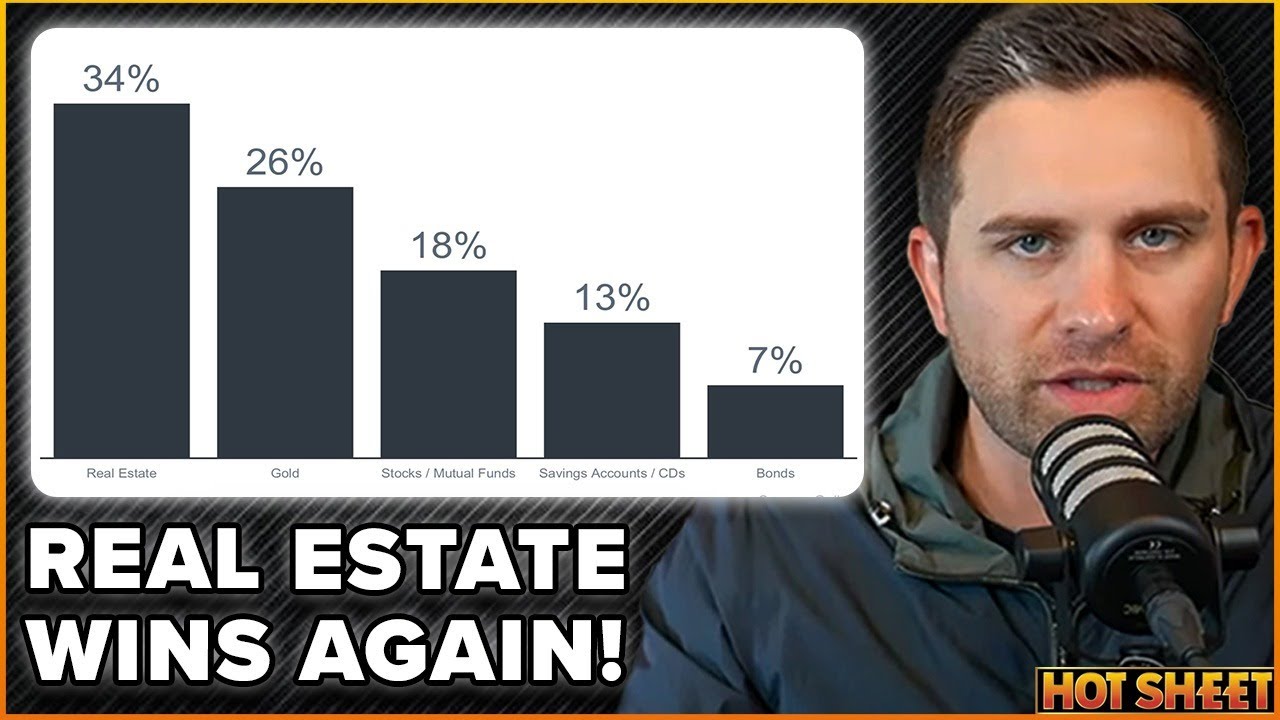
Byron also shared a Gallup chart posted to Twitter by KCM founder, Dave Harney, pointing out that, for the 11th straight year, Americans voted real estate as the best long-term investment, towering over gold, stocks/mutual funds, savings accounts, and bonds.
BTW, the Gallup poll just came out and for the 11th consecutive year real estate was voted the best long-term investment. pic.twitter.com/A7eP9AQQYl
— Steve Harney (@SteveHarney) May 16, 2023
Don’t blame the builders
As pointed out on the Hot Sheet, the problem with the current housing market continues to be exacerbated by our government. The same day the Gallup report came out, the National Association of Home Builders (NAHB) published an article pointing to the latest government-mandated energy codes that will make homes even less affordable.
You can’t expect builders to come out with an affordable product when we continue to do things like this…NAHB is clear that this is gonna make housing more expensive—not more affordable…Before you even put a shovel in the ground, it costs builders $200,000—and that’s on the low side. If you’re talking about a big development, [it’s] way more than that. So, we’re never gonna get to a place where we can provide an affordable product…unless we can incentivize and stimulate the top…New construction, on average, costs $550,000 right now. The median price is $450,000.
Takeaways for real estate agents
As agents, you have a two-pronged approach to improving consumer sentiment on the housing market:
- Educating your clients, prospects, and community on what’s really happening and what they stand to gain by buying or selling in the current market
- Supporting local and national policies and initiatives that would stimulate the construction of affordable homes in your market and across the country.
Do what you can to make housing in your area more affordable for the people living there, so more renters can start building generational wealth. Help prospective sellers in your market understand the benefits of selling their homes right now. And be the resource your community needs to clear up the confusion from misleading headlines and public opinion.