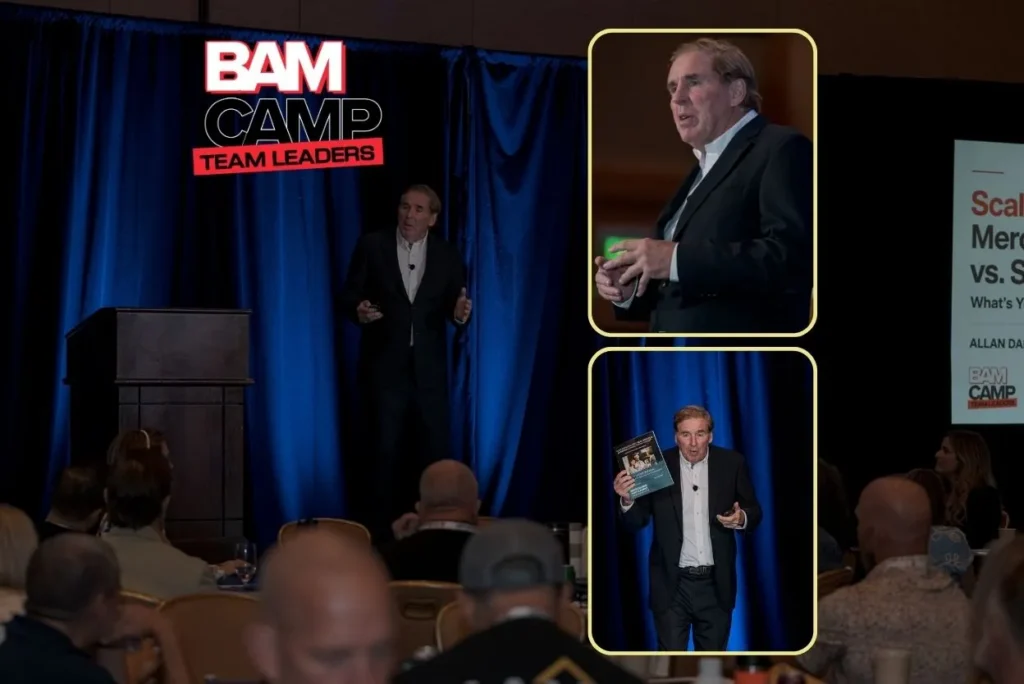
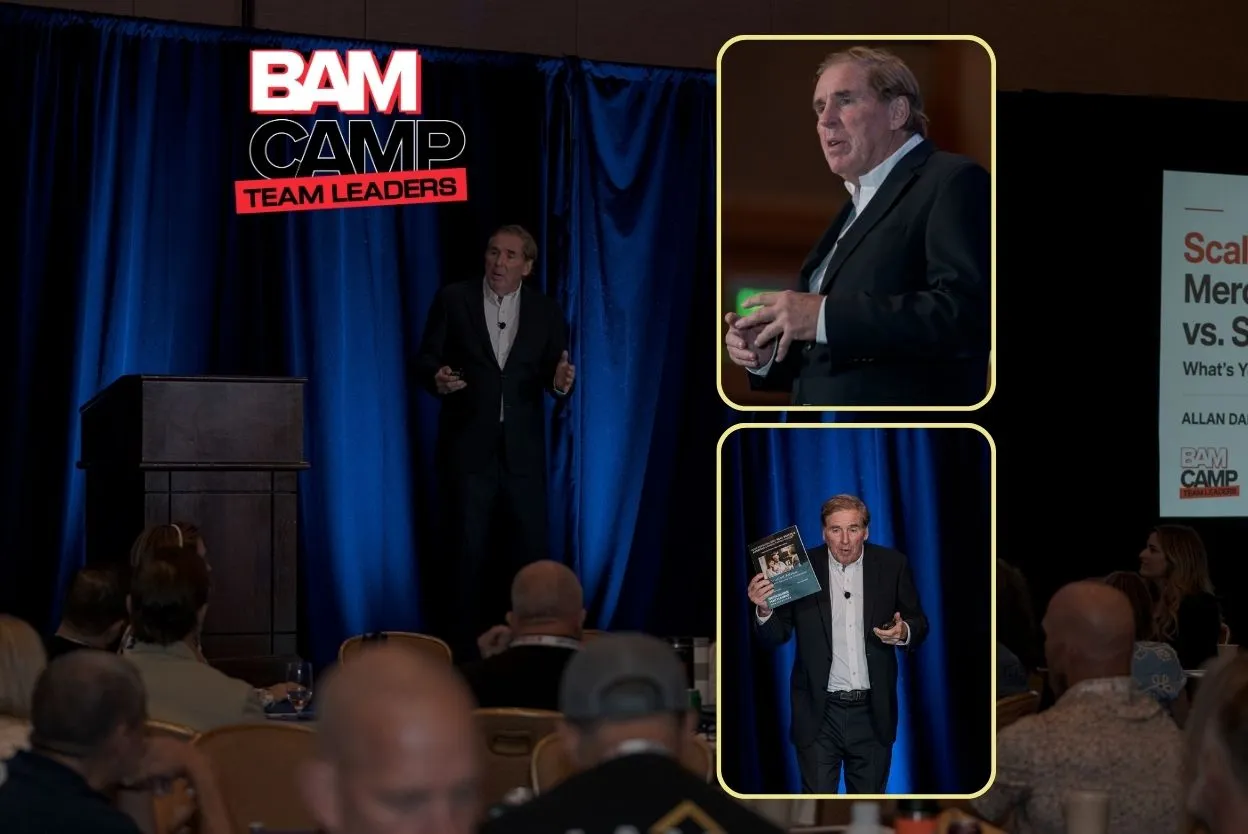
Day 1 of BAM Camp: Team Leaders ended with the entire room on their feet for Allan Dalton, former CEO of Realtor.com and executive at Berkshire Hathaway HomeServices. Take a look:
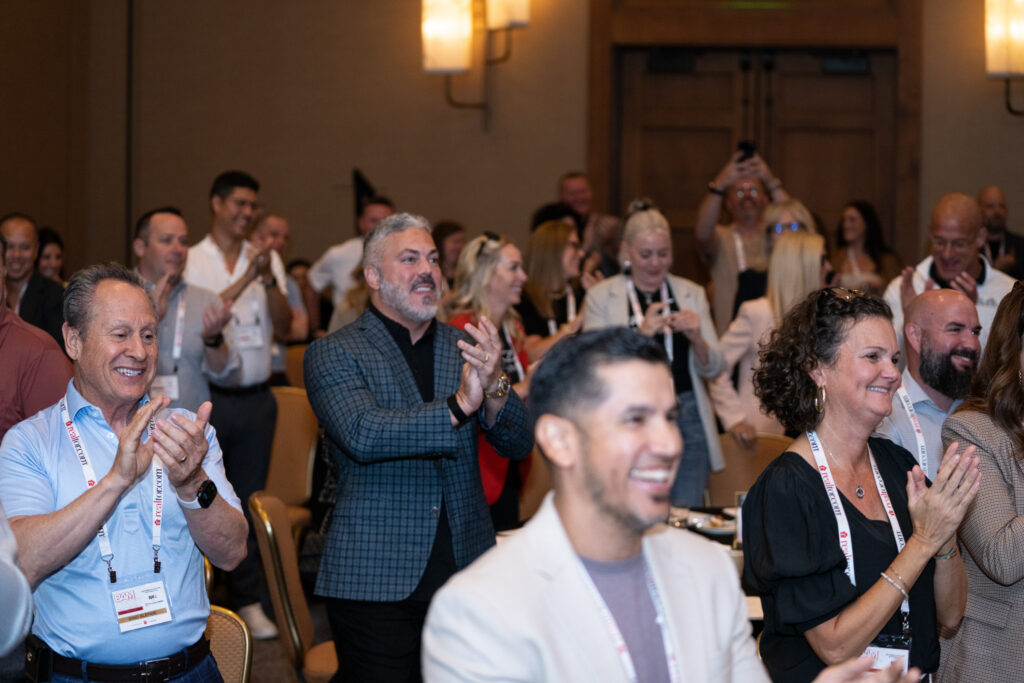
For 60 minutes, Dalton kept the room laughing while pressing on a serious question: How do you make a team’s value clear before a client ever hires you?
His answer was merchandising. The words your agents use shape how clients understand your work. The services you build, name and package give them something to remember. Dalton says that approach helped grow his company from one office to 60 and helped him personally hire 1,500 agents.
Here’s what he wants team leaders to change.
What words should real estate agents stop using?
Dalton went through a list of industry terms that he says undercut agents’ value. He knows people will call it semantics, but he believes it’s serious business.
Sphere of influence
Nearly every agent says it, and almost none have defined it. A true sphere has every point the same distance from the center, and that only happens if everyone in it is a client. Otherwise, you have a sphere of contacts.
“People (say), my sphere of influence, they do three transactions. They’re not influencing anybody. You’ve got as much influence as somebody who died 20 years ago,” Dalton joked.
Past clients
Drop the “past.” Dalton argues that if you treat people as clients before and after a transaction, even ones who won’t move for 20 years, you’ll never need the word.
My database
Anyone can buy voter registration lists and have your whole database by next month. The goal is a client base.
Listing presentation
“Have you ever heard of any consumer ever calling your real estate office and saying, ‘Can somebody come over and make a listing presentation?'” Dalton asked.
When you get a tune-up or an MRI, you and the provider use the same word for it. His replacement is a customized marketing proposal.
Recruiting and retention
He said the only other groups that talk this much about recruiting and retention are the military and prisons. His alternative is selection and development.
Comps
Every time an agent says “comps,” Dalton says the homeowner thinks the same thing: But they don’t have five bedrooms.
His replacement line: “Let’s take a look at properties which buyers will be evaluating at the same time they’re evaluating your home.”
Dalton’s point wasn’t that a new name creates value on its own. The name should make a real service easier for clients to understand and remember. That brings us to marketing vs. merchandising.
Merchandising in real estate
Dalton asked how many team leaders had a director of marketing. Plenty of hands went up. Then he asked how many had a director of merchandising. None did.
Dalton defines marketing as finding the unmet needs in a market and building services to meet them. Merchandising is how you package those services. His argument is that home builders and developers took the “merchandising gene” because they build a finished product, while agents started at sales and marketing.
“Merchandising is more important than marketing,” he said. Your team has a brand, but that doesn’t mean every service you offer carries it. Financial firms give their financial planning its own name, while ost agents call their CMA “my CMA.”
What branded programs should a real estate team offer?
Dalton walked through some of the programs he built over 35 years:
- Renter to Buyer Assistance Program. “There’s no such thing as first-time buyers,” he said. “They’re renters.”
- Corner Lot Marketing System. Started after one agent sold three corner-lot homes. It brought in 20 listings.
- Two-Family Home Marketing System. Built for a market full of two-family properties.
- Move With Pets. He cited 71% of households owning pets and suggested having it on hand at open houses.
- Downsizing and move-up systems, each branded to the team’s name.
He also bet the room that no one had a first-time sellers programing offered $100 to anyone who could email him one. Almost every team has a first-time buyer program, and he says that’s the point: when everyone has something, it doesn’t set you apart.
Here’s the play for team leaders
Dalton gave the room one filter for any new idea, borrowed from the dean of Harvard Business School. What do you do that competitors do, but better? What do you do that none of them do?
Run your team’s language and services through those two questions:
- Audit your scripts. Pull every listing and buyer script, and every training deck, and flag “comps,” “listing presentation,” “database” and “past clients.”
- List your programs. Write down every service you offer. If one is named the same way every other team names it, that’s your first rebrand.
- Find one unmet need. Look at the homes and clients your team sees most, like corner lots, two-families, downsizers or pet owners, and build one branded system around it.
- Define marketing as a team. Dalton suggested asking your agents to define it. “It will blow your mind what people will come up with.”
Your competitors can match your split and copy your ads, but it’s much harder to copy a service that has your team’s name on it.