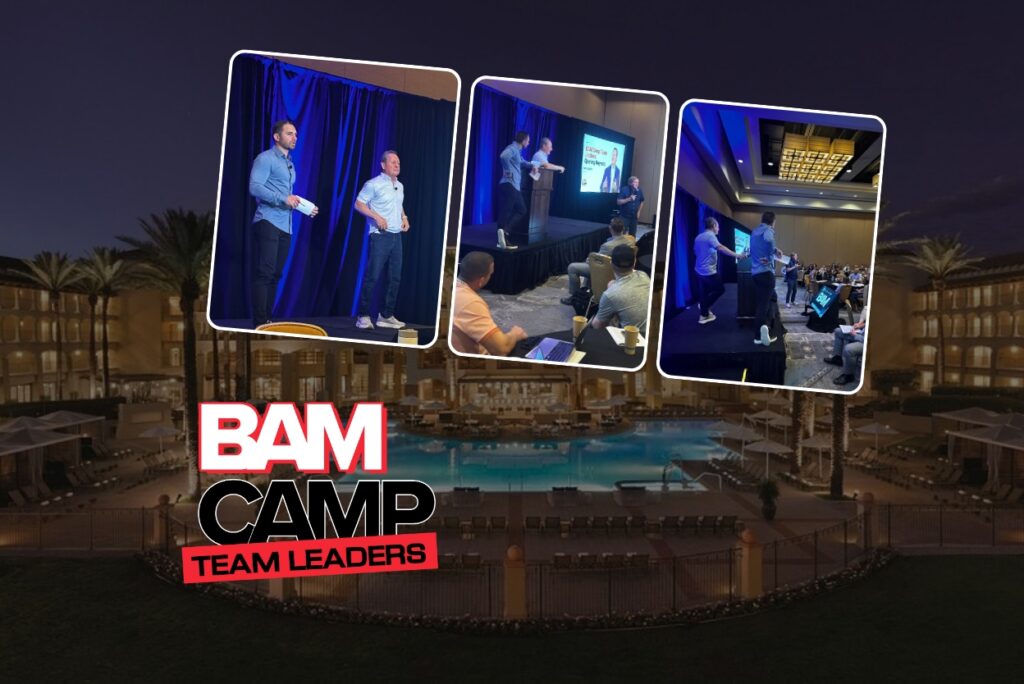


Gino Blefari spends more time speaking about accountability than on any other topic. He said this from the stage today at BAM Camp: Team Leaders. Whether he’s coaching agents or running a workshop, accountability gets more of his energy than anything else.
You won’t find much about it online, though. Blefari said accountability doesn’t get likes or clicks. Coaching techniques and tech stacks get the attention, with vendors spending millions to convince leaders they can’t succeed without the newest tool.
But no tool can make up for the lack of accountability on a real estate team.
Blefari’s approach doesn’t require any new software. It’s a short one-on-one meeting on a set schedule, built around the numbers.
Here’s how he runs it, from who belongs in the room to what to say when someone pushes back.
Why Accountability Works Best One-on-One
Who sits across the table depends on the size of your team. On a larger team, these meetings may be for the people who run parts of the business, such as:
- Your operations manager
- Your marketing director
- Your sales director
The same format works for holding individual agents accountable. Blefari’s description covers both groups, since he talked about getting “your salespeople or your managers” to answer to the numbers.
Blefari said the people who welcome this kind of meeting are the ones doing good work.
“Great agents and great managers, they want to know where they stand. They want to know how they’re doing against their goals. They want to know what the hell they’re doing against their peers.
“You know who doesn’t like accountability? People that aren’t doing their job. They’ll come up with every excuse except the result.”
He keeps accountability out of team meetings.
“Accountability is best one-on-one. You praise in public, you kind of like critique in private… In your sales meetings, yeah, post the scoreboard, celebrate the wins, do all of those things. But when it comes to accountability, it’s personal.”
Put the Meeting on a Monthly Schedule and Keep It Formal
Blefari said a high-performing team needs these meetings on the calendar every month.
“If you want a high performance organization, they got to be regular, formal and scheduled one-on-one meetings. In other words, not optional, not occasional, not when something’s wrong every single month. Okay?”
He explained what each of those three words means in practice:
- Regular: consistent, predictable and non-negotiable
- Formal: a real sit-down meeting, face to face or on Zoom if you have to, with no hallway chats, quick emails or texts
- Scheduled: set in advance and prepared for, with no surprises or excuses
He was clear, too, about what the meeting is for, versus what it’s not:
“This is not a coaching session. It’s not a therapy session. It’s not a space for excuses. It’s just accountability. You just keep it just strictly accountability.”
Blefari called holding people accountable and coaching them two different jobs. A team needs both, and each one gets its own time.
Cover Results First and Activity Last
Every meeting follows the same agenda, and Blefari said the order counts.
“You get your salespeople or your managers or wherever it is to answer three things. Results, pipeline and activity. Those are the only things that they’re talking about. And it’s always best in that order because order does matter. Results first, then pipeline, then activity.”
What counts as results depends on the person’s role:
- For an agent, results might be closed transactions against their goal
- For a marketing director, results might be the lead goals the two of you set
- For an operations manager, results might be the operating targets you agreed on
When the results are strong, Blefari celebrates them and reinforces what’s working.
When results come up short, he asks one question.
“If the results are weak, you ask one simple question. (Name), what happened? Just what happened? And in that moment, something powerful occurs.”
From there, the conversation stays on the numbers compared with the goals.
“Numbers against goals, right? And then you force the person to confront reality. That’s discomfort, but what you all know is discomfort is typically when we grow.”
Five Keys to Running the Meeting
Blefari shared five keys for keeping the meeting on track. The first two deal with who runs the meeting and how long it lasts.
“Number one, this is your meeting, not theirs. So you lead it, you control it, you stay focused, don’t let it drift. Number two, you keep it short and focused. 10 to 15 minutes. It’s not a deep dive, right? It’s not coaching. It’s just accountability.”
His third key is to stay with the facts, with no emotion or confrontation.
“There’s no emotion, no drama, no yelling. I don’t even like it. It’s just facts. Just facts.”
The fourth key covers the pushback leaders hear more than any other.
“Don’t allow the micromanagement excuse. Many times when people aren’t doing what they’re supposed to do, well, this feels like micromanagement. Don’t accept it. Good management is not micromanagement. Okay?
“Here’s a great one for me, of course. ‘Hey, the only reason we’re digging into the activity is because the results aren’t where they need to be.’ Okay? Again, that’s not micromanagement. That’s leadership.”
Blefari said the two come from different places. In his view, great sales management is built on accountability, and micromanagement is built on insecurity.
He told a story about two managers he worked with to make the point. After Blefari’s first company sold and became a Century 21 brand, he created a daily form listing everything branch managers needed to do.
Two managers came to him and told him grownups do their jobs and don’t need to fill out a daily form. Blefari told them they didn’t have to fill it out. But they couldn’t work there if they didn’t.
One left the company. The other went on to become the most accountable manager Blefari ever had.
The fifth key is for your best people.
“Now here’s another one. Never skip these meetings, even with top performers. That’s how you keep your culture. Okay? That’s how you maintain your standards.”
Put the First Meeting on the Calendar
A team leader can get started with a few steps:
- Decide who gets a monthly one-on-one: your leadership team, your agents or both
- Book the next several months of meetings
- Build a one-page format that covers results, pipeline and activity
- Keep each meeting to 10 to 15 minutes
Blefari ended his talk on accountability with this:
“So let me close with this. No tool, no trick, no training program will produce the lift that comes from a leader who consistently does their most important job. And that’s holding people accountable.”