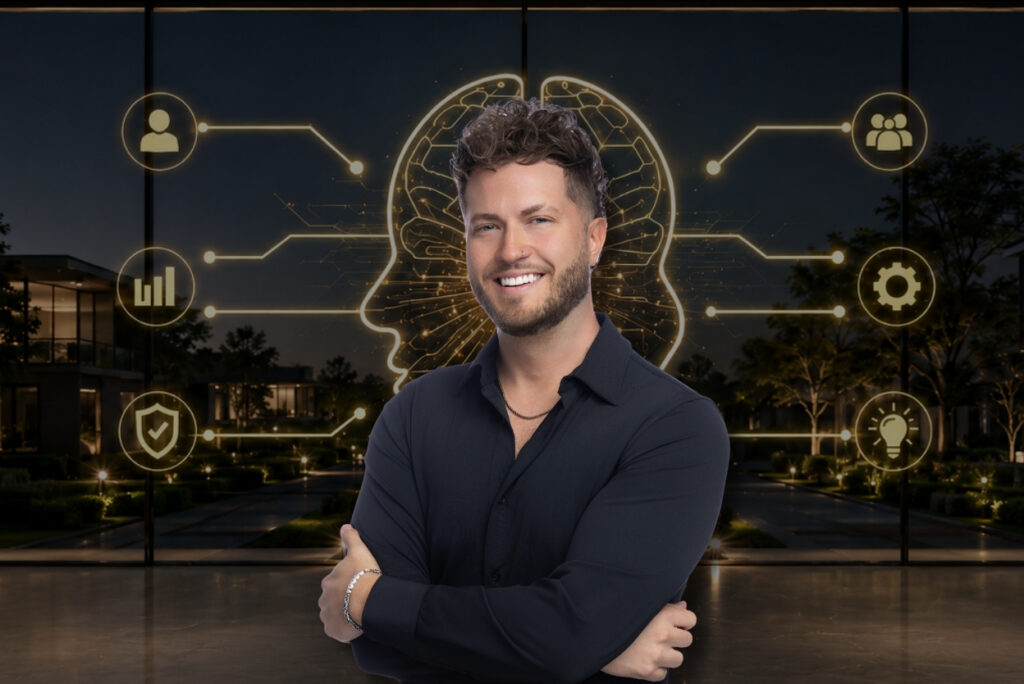
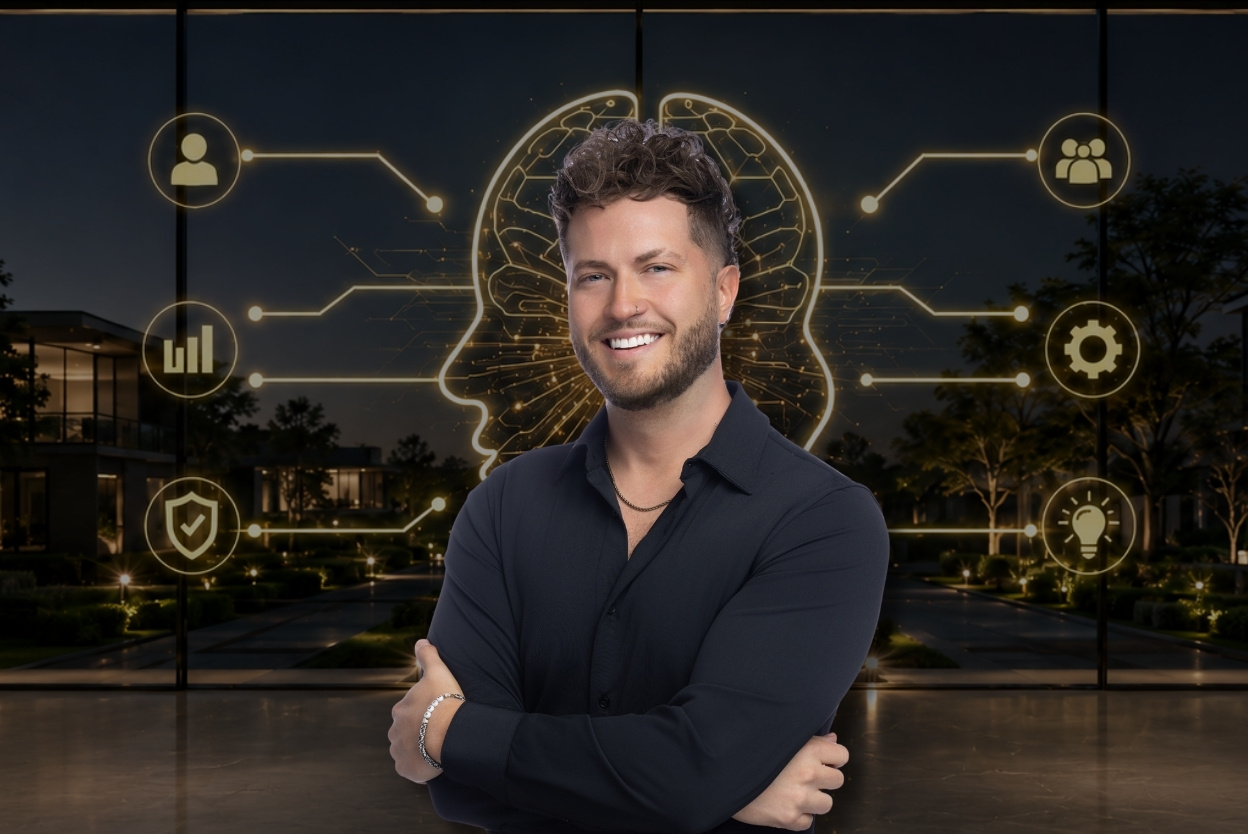

Phil Stringer runs his business with a team of AI agents, including one trained to think like a CFO and another trained to run social media.
Meanwhile, for the most part, real estate agents are still using AI tools as chatbots to sort through leads, draft content for their websites and social media, ask questions, and pull headlines from local news sources.
All useful (to an extent). But this approach still requires maximum human time and effort. And the results? Average at best.
Stringer’s BAM BBQ presentation included the four steps to creating an AI agent for your real estate business. From there, he showed how to build a team of AI agents and why every real estate business owner needs one.
Here’s what he did and what an AI team can actually do for you and your business.
Why the Single-Agent Approach Falls Short
With a single-agent system, one task goes in, and one agent handles it and delivers a single solution. This setup works fine for a lot of easy everyday requests.
Where it starts to break down is when tasks get specialized.
Stringer uses a real example from his own business to make the point, describing what happens when a paid ad task is delegated to an agent that wasn’t built for it:
“We have an agent that is trained on a playbook of what works with paid ads for what we do. So, it would be stupid to just send it to the main agent who’s not trained specifically on paid ads to run a paid ad.”
The same logic applies to the tasks that keep your real estate business running. Ask a general chatbot to follow up with a lead who toured a listing last week, and the message comes back generic. Hand that same task to an AI agent trained on your CRM and past conversations, and it references the exact property and the objection that came up during the showing.
The Multi-Agent Model: An AI Manager and Its Specialists
With a multi-agent system, a task goes to an AI manager or supervisor agent first, and that manager decides which specialist AI agent should take it from there.
Stringer describes the setup like this:
“You have a task, you send it to a manager or a supervisor agent or a director of ops, whatever you want to call it. And based on that task, it says, well, we have a sub-agent who specializes in that thing.”
In his own business, Stringer runs several of these specialists at once:
- A fractional CFO
- A director of ops
- A social media manager built specifically for Instagram
Each one gets its own job description before it starts working. Stringer calls this a role card, and it provides the same kind of role clarity you’d give a human employee.
The Real Estate Agent’s Starter Team
Stringer gave BAM BBQ attendees an actual team to install, built specifically for real estate.
The team includes four agents:
- A director of marketing, who walks the installation process step by step
- A database and referral manager, built to keep past clients and sphere contacts warm
- A content and listing manager, which turns one piece of content into several
- A reputation and AI visibility manager, which tracks how an agent shows up when someone asks ChatGPT or Claude who the best local agent is
Stringer explains what the reputation and AI visibility manager tracks:
“‘Hey, are you showing up in AEO scores so that if someone types into ChatGPT or Claude, who’s the best real estate agent in this city? What’s your score? Are you good?’ And then it tells you things you can do to improve that score. Now this is not just random stuff. There is a playbook of hundreds of different strategies that have been loaded in to work for 2026 right now on these strategies.”
Once you’ve got your team set up this way, every AI agent on it runs on a specific playbook built for how your business operates.
What a Trained Agent Team Can Actually Pull Off
Once a team like this is actually running, it operates like a full department handling work in parallel.
Stringer opened his BAM BBQ session with a real example: everything his agents did after he typed a single sentence, “Let’s run a new live training.”
He explained afterward why he leads with that story:
“And that is from saying, ‘let’s run a new live training.’ Why do I say that? I don’t say that to overwhelm you. I say that because that is 100% absolutely how we use AI and we start it with ‘let’s run a new training.’”
One sentence set off a full sequence, broken into stages.
Promotion went out first:
- Promo emails written in Stringer’s voice and scheduled through his CRM
- A reminder sequence built automatically: day before, morning of, one hour out, and doors open
- Reminder and promo texts sent to anyone opted in
- An Instagram comment and keyword flow set up for automatic DMs
- A paid Meta ad built to drive extra registrations
- The homepage button updated to point to the new event
Registration came next:
- Checkout product built with pricing and any discount codes
- Every buyer tagged by source
- A thank you page built with the Zoom link and pre-event homework
- Purchase tracking turned on so every sale ties back to its source
Before the event started, the team tested every link in the funnel and reported back what was working. The event also got added to a live dashboard Stringer could watch in real time.
Once the event ran, attendance got tracked separately from registration, with a report showing exactly which channel filled the room.
After the event, follow-up ran on its own:
- The Zoom recording downloaded automatically
- The video got edited, with dead pauses and pacing cleaned up
- The edited version uploaded to YouTube with a title and thumbnail already set
- A replay went out to no-shows with a pitch and a deadline attached
None of this required Stringer to lift a finger after the initial prompt. Specialized agents carried every stage from promotion through follow up, each running the piece it was built for.
Your Team Starts With One Hire
Building a full team of specialized agents takes more than one sitting. Start with a single AI specialist before adding the rest.
Stringer already removed the hardest part of that decision for BAM BBQ attendees. He gave away the four-agent marketing team directly, so agents already have a starting point built for them.
This team still runs on top of the four-step process covered in the first post in this series:
- Choosing the right plan
- Moving your memory over cleanly
- Connecting the tools you already use
- teaching your AI at least one working skill
Once that foundation is in place, adding a specialist agent means giving it a role card that spells out its job, then connecting the tools and teaching it the skills that role depends on.
At the end of his BAM BBQ presentation, Stringer shared a link for his AI agent setup guide. Sign up here to unlock it.