
BAM Key Details:
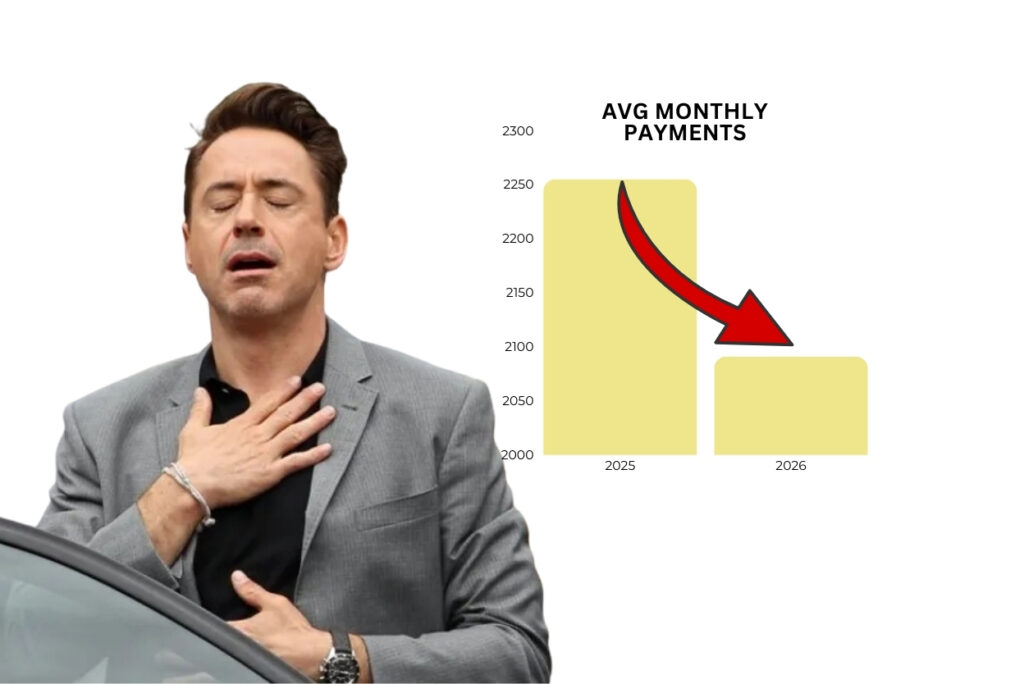
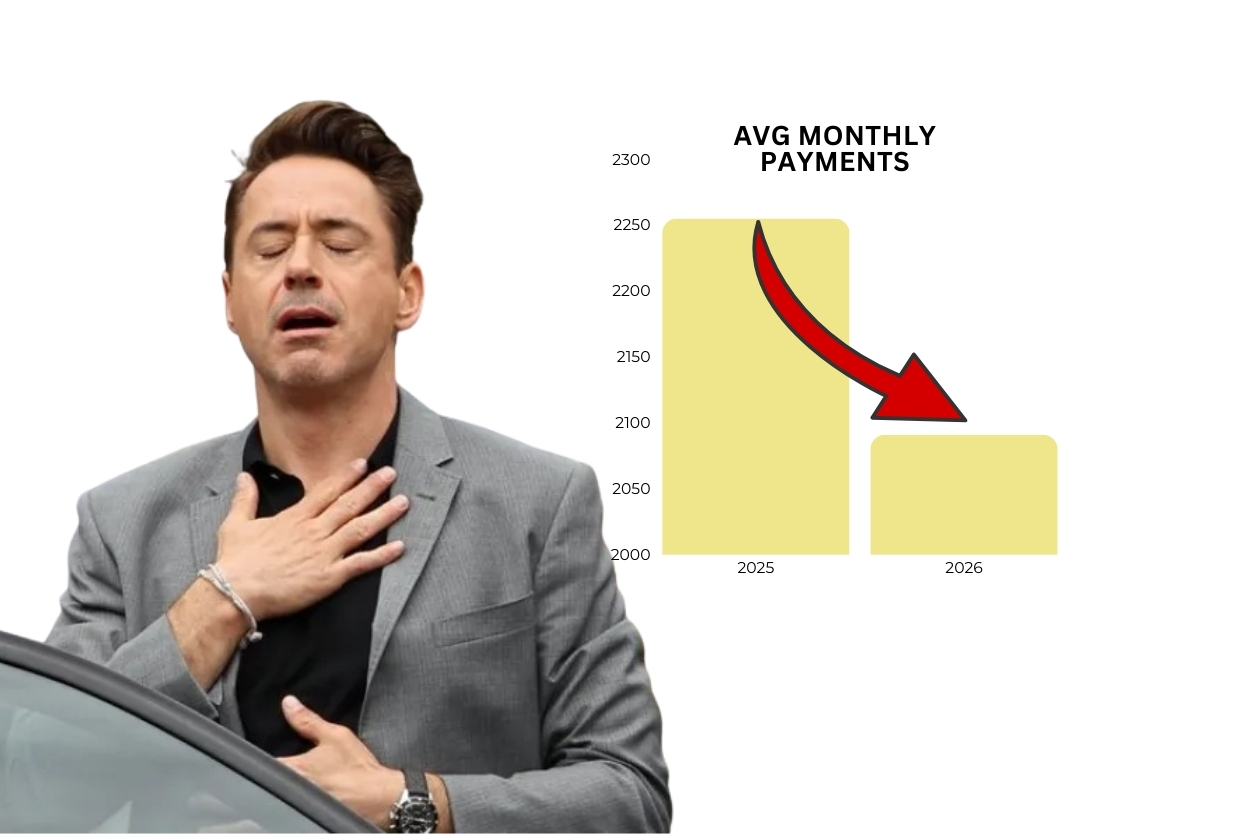
- Intercontinental Exchange reports January housing affordability reached a four-year high as average monthly payments fell $164 year over year to $2,091, lowering the income share needed to buy to 27.8%.
- A brief dip to 6.04% mortgage rates pushed 4.8M borrowers into refinance eligibility, unlocking $1.7B in potential monthly savings.
- Despite the improvement, home price-to-income ratios remain elevated at roughly 4.8:1, and negative equity rose to 1.1M borrowers by the end of 2025.
January brought the best housing affordability reading we’ve seen in four years.
According to ICE’s February Mortgage Monitor, the monthly principal and interest payment on the average-priced home fell $164 year over year to $2,091, dropping the share of median household income needed to buy to 27.8%.
On paper, that’s real relief, especially after years of affordability headlines that only moved in one direction.
But the same report makes clear that affordability gains are uneven, highly local, and still constrained by elevated home prices.
Some metros have returned to long-run affordability norms, while others are still stretched by double-digit income gaps that no rate dip can fix overnight. At the same time, a brief move toward 6% mortgage rates exposed just how sensitive today’s market has become, unlocking refinance opportunities for millions even as purchase demand remains uneven.
To understand what this shift actually means for buyers, sellers, and the professionals advising them, you have to look past the national averages and into the metro-level math driving payments, equity, and behavior on the ground.
Affordability Has Improved Nationally, But Metro Gaps Are Still Wide
At a national level, the math finally moved in buyers’ favor. In January, the average monthly payment fell to $2,091, down $164 from a year earlier. That dropped the share of median income needed to buy to 27.8%, the lowest affordability burden we’ve seen since March 2022, right before rate hikes started reshaping the market.
Then we zoom in locally. And you can probably guess where this is going.
Some large Midwest and legacy markets have quietly worked their way back to long-run affordability norms. ICE points to places like Cleveland, Memphis, Detroit, and Chicago, where slower price growth and steadier incomes have taken some of the pressure off buyers.
Other metros are still very much stuck. In nearly one in 10 major markets, households need at least 10 percentage points more of their income than normal just to afford the average-priced home.
Los Angeles is the most extreme example, with an affordability gap that’s 23 points above its long-run norm, followed by…
- San Diego, CA, +15 percentage points
- New York, NY, +13 percentage points
- Providence, RI, +13 percentage points
- San Jose, CA, +12 percentage points
- Miami, FL, +11 percentage points
- Seattle, WA, +11 percentage points
That gap helps explain why national affordability headlines don’t always match what buyers in your market are feeling. Even with payments coming down and rates briefly dipping into the low-6% range, home prices are still high relative to incomes.
The national home price-to-income ratio is still around 4.8:1, well above the long-run average near 4:1. For buyers in high-cost metros, that’s still the real barrier, regardless of what the national averages say.
Rate Drops Spurred an Increase in Refis
January offered a good reminder of just how rate-sensitive today’s market has become.
When mortgage rates briefly dipped to 6.04% on January 9, refinance eligibility jumped almost instantly. Roughly 4.8 million borrowers moved “in the money” overnight, a 20% increase in refi opportunity tied to a very small rate move.
That’s not normal market behavior. It’s what happens when millions of loans are clustered right on the edge.
Here’s why that sensitivity is so extreme right now:
- About 1.3 million active mortgages carry rates between 6.875% and 6.99%.
- More than 500,000 of those loans were originated in 2025.
- That rate band was the most common among recent originations and sits right near the typical refinance threshold.
When rates slipped, the payoff was immediate. The average refi-eligible borrower could save about $370 per month (money that could go toward savings or a home maintenance fund), which adds up to roughly $1.7 billion in potential monthly savings across the market.
You can see it in the application data, too:
- Refinance activity hit a 17-week high in mid-January.
- Refinances made up 62% of all mortgage applications that week.
- About two-thirds of that activity was rate-and-term refis, not cash-out.
What didn’t move much was purchase demand. Even with better affordability, higher prices and tight inventory still limit how many buyers can jump in.
Refinance activity, on the other hand, reacts almost instantly because it’s tied directly to payment relief and doesn’t rely on listing availability.
Equity Is Still a Strength, But Cracks Are Showing
At a national level, homeowners are still in a strong position. Entering 2026, total homeowner equity stood at $16.9T, with just under $11T considered tappable while maintaining a 20% equity buffer.
Mortgage leverage remains low by historical standards, which continues to support overall market stability. That said, the cracks are getting easier to spot.
Negative equity rose steadily through 2025, ending the year at 1.1M borrowers, or 2.1% of all mortgages, up from 696,000, or 1.3%, at the start of the year. Another 3.2M borrowers, representing 7.9% of the market, now have less than 10% equity, leaving them more exposed to even small price declines.
The risk isn’t evenly spread. In several metros, negative equity is no longer marginal:
- Lakeland, FL, 10.8% underwater
- Cape Coral, FL, 10.1%
- Austin, TX, 9.2%
- San Antonio, TX, 8.8%
- Jacksonville, FL, 6.3%
Loan type matters just as much as location. Negative equity remains limited among GSE and portfolio loans at roughly 0.5% and 1.3%, but it’s significantly higher among low-down-payment products:
- 9.6% of VA loans are underwater.
- 5.7% of FHA loans are underwater.
- Among 2024 originations, more than 25% of VA loans and nearly 17% of FHA loans owe more than their homes are worth.
This data shows how uneven today’s equity landscape has become. National averages matter less than purchase timing and local price movement. For homeowners who bought more recently, especially in markets that have cooled, equity cushions are thinner and more sensitive to further price changes.
That’s something agents need to be ready to explain.