
Key Details:
- On Tuesday, July 16, 2024, President Biden is announcing proposals aimed at lowering housing costs—including a plan to cap annual rent increases at 5% for landlords with more than 50 units, accounting for over 20 million rental units in the U.S.
- Biden’s proposal is unlikely to pass Congress this close to a presidential election.
- The Housing Solutions Coalition (which includes the Mortgage Bankers Association) is pushing back, saying Biden’s plan would hurt renters more than help them.
Today, the Biden administration is announcing a proposal to cap annual rent increases at 5% to improve housing affordability for renters.
The announcement comes as the Republican National Committee revealed its new slogan, “Making America Wealthy Again,” which speaks to Americans concerned about housing affordability and the impact of today’s economy on their household budgets.
President Biden’s plan, which is subject to congressional approval—and is unlikely to get through both houses this close to the presidential election—has two parts.
The first proposal would withdraw tax credits for landlords with more than 50 units who raise rent more than 5% per year, starting this year and continuing for the next two. According to the White House, that would account for over 20 million rental units across the U.S.
President Biden said in a statement:
“While the prior administration gave special tax breaks to corporate landlords, I’m working to lower housing costs for families. Republicans in Congress should join Democrats to pass my plan to lower housing costs for Americans who need relief now.”
Biden’s policy would provide an exception for owners of new construction and buildings undergoing substantial renovations, mainly to incentivize the growth in supply of apartments and homes for rent.
The proposal aims to address the high cost of housing, specifically for renters.
Housing affordability is a top issue for voters
In 2022, according to a report by the Joint Center for Housing Studies at Harvard University, a record-high 22.4 million renters spent over 30% of their household income on rent and utilities.
That’s an increase of two million households over the previous three years.
A recent survey highlighted the importance of housing affordability to voters, especially Zoomers. And a June Gallup poll shows more than one-third of Americans (36%) cited economic issues as the number one problems facing the U.S.
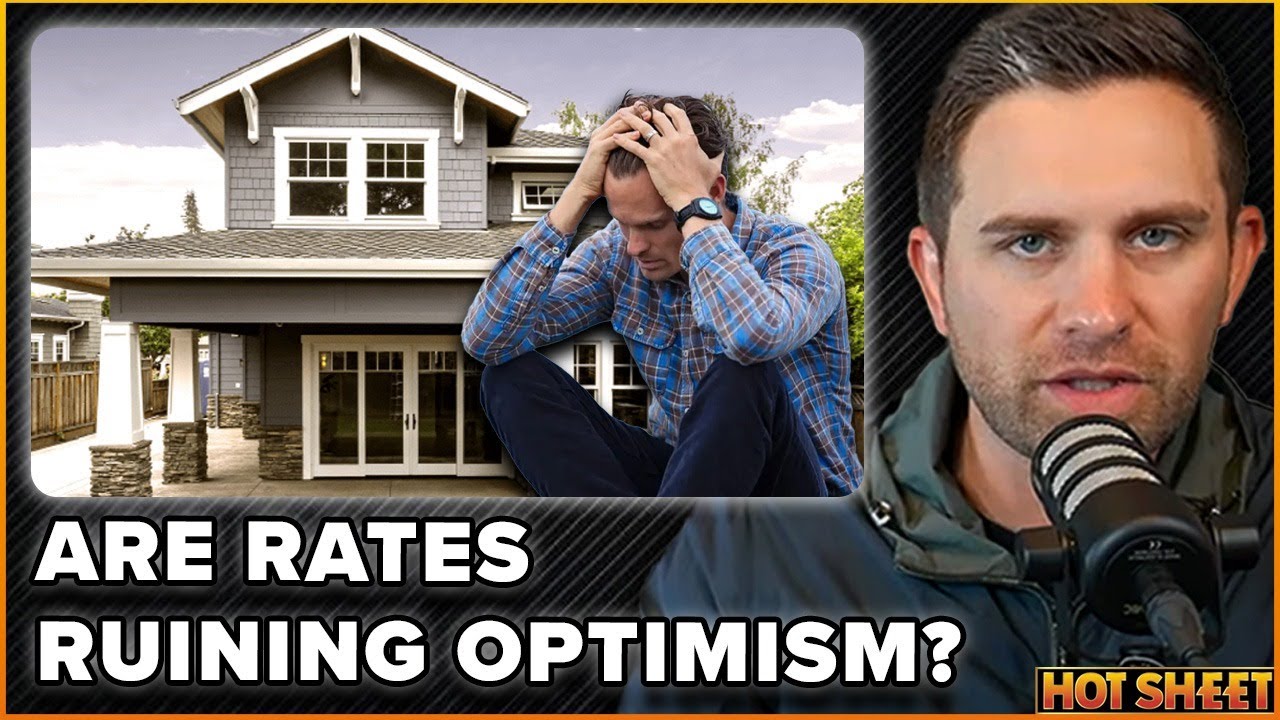
As Byron Lazine put it in today’s Hot Sheet, “Consumers do not feel good about this economy.” But that doesn’t guarantee a warm reception for Biden’s proposal.
June CPI data shows shelter inflation rose at the slowest monthly rate in three years (0.2%). On an annual basis, though, housing-related price hikes rose 5.2%, outpacing overall inflation.
Pushback from major housing groups
During his State of the Union address earlier this year, Biden announced a “mortgage relief credit” to provide $5,000 per year for two years to middle-class first-time homebuyers.
And during the presidential debate in June, Biden hinted at his yet-unannounced plan to address rent increases, saying, “We’re going to make sure we cap rents so corporate greed can’t take over.”
In a statement following the debate, the Housing Services Coalition—an alliance of major housing groups, including the Mortgage Bankers Association (MBA)—said Biden’s rent cap proposal would actually hurt renters rather than provide relief.
“Decades of academic research from across the United States and around the world clearly show that rent caps — more commonly known as rent control — reduce the supply of available housing and fail to target those renters who need help the most while simultaneously harming other residents and the communities they reside in. Rent caps hurt renters and communities.”
A senior administration official clarified that Biden’s plan to cap rents is meant to serve as a two-year bridge until new rental units enter the market, which is expected to bring down rents.
As of May, 1.6 million rental units are under construction in the U.S., according to Federal Reserve data.
Sharon Wilson Géno, CEO of the National Multifamily Housing Council, was equally unimpressed:
“This is not going to create a single unit of housing—which is what is needed to create more housing opportunities for Americans. This is really a campaign-driven piece of rhetoric.”
Most policymakers believe the best way to improve housing affordability across the board would be to facilitate more construction of affordable housing with changes to land use regulations.
Biden plans to announce the rent cap proposal today during his visit to Nevada—less than three months away from the presidential election—at a time when housing costs have been a key driver of overall inflation.
That said, his plan would need strong support in both the House and Senate to become law.
Two additional proposals to improve housing affordability
Biden also plans to announce two additional efforts to improve housing affordability, one of which is to repurpose federal lands for the construction of affordable housing.
To that end, several federal agencies will assess the feasibility of using surplus federally-owned land for that purpose. The Bureau of Land Management plans to open a public comment period on the sale of 20 acres of public land in Nevada—at below-market value—to build affordable housing. Meanwhile, the U.S. Postal Service (USPS) plans to repurpose some of its unused properties for housing.
The proposal is similar to the GOP’s policy platform for 2024, which calls for “the opening of limited portions of federal lands to allow for new home construction.”
Along with that, President Biden and Adrianne Todman (Acting Secretary for Housing and Urban Development) announced $325 million in federal grant funding to seven cities to “build more homes and revitalize neighborhoods.” Those cities include—
- Chattanooga, TN
- Houston, TX
- Miami, FL
- Las Vegas, NV
- Syracuse, NY
- Trenton, NJ
- Huntsville, AL
Biden also mentioned this plan last Thursday (July 11th) at a NATO Summit press conference.
Read the White House fact sheet for more information on the rent cap and other housing affordability proposals.