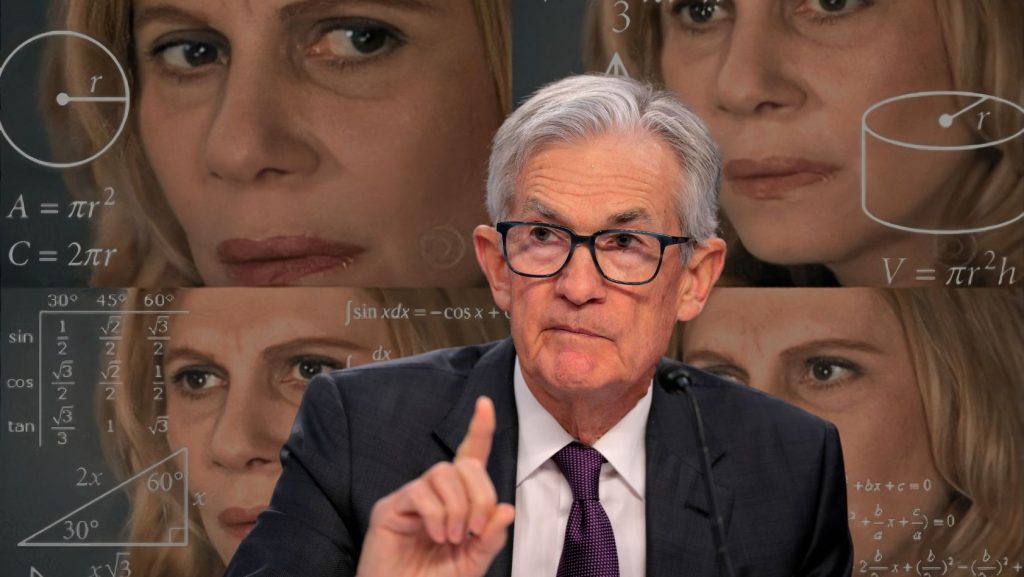

As predicted, the Fed chose to keep rates where they are (4.25% to 4.5%), though Chair Powell maintained that two rate cuts by the end of 2025 are still on the table.
This month’s FOMC had a grand total of two housing references, starting with a brief mention from Fed Chair Powell during the Q&A. In response to a reporter asking about tariff-related inflation, Powell noted (finally) that housing services inflation was improving—and easier to pin down than inflation caused by tariffs.
Another reporter mentioned housing once (in passing), while most reporters focused instead on how the Fed expects tariffs to impact inflation, the economy, and future rate cuts.
The word “uncertainty” popped up frequently in Powell’s statements regarding the U.S. economy—including recession risk and the likelihood of tariff retaliation.
The general impression? Things could–and probably will–get worse.
Judging by a recent Tweet from the administration, President Trump is less uncertain about the economy and the right move for the Fed:
Trump weighs in on the Fed meeting pic.twitter.com/8r7VCyP2UI
— Nick Timiraos (@NickTimiraos) March 20, 2025
Don’t miss Byron Lazine’s full breakdown on today’s Hot Sheet:
Housing-Related Comments from Powell’s Initial Statement
Powell didn’t mention housing in his opening statement at the FOMC press conference.
During the Q&A, housing-related terms came up in two brief instances—more as a related detail than as a central topic in any question or response:
- Chair Powell’s reference, using housing services inflation as an example of improvement and distinguishing it from tariff-related inflation, which is more difficult to pin down.
- Simon Rabinovitch’s (The Economist) question, listing some examples of “growth risks” before asking Chair Powell how confident he was in the Fed’s positioning.
Housing-Related Comments from the Q&A Segment of the FOMC Press Conference
Read on for the specific housing-related comments, as well as some additional statements that provide context.
Click on any of the timestamps below to watch the conversation on YouTube.
27:45 – Question from Rachel Siegel, Washington Post:
“At the beginning you were talking about separating the signal from the noise and tariff inflation from non tariff inflation. Can you walk us through what that looked like over the last couple of months, if there were specifics from the January meeting to now that helped you make those distinctions?”
Powell’s response (28:03):
“So when we say separating the signal from the noise, that’s just a way of saying that things are highly uncertain…The news is full of developments of tariffs being put on and taken off and things like that. Some of that is noise in the sense that it’s not really telling you anything. You’re trying to extract a signal from that. And the signal is what’s going to be the effect on economic activity, on inflation, on employment and all those things. So that’s really when we say signal and noise…
[Regarding tariff vs non-tariff inflation:] “That’s sort of a special case… The idea being, and I do think that the first two months of this year are a great example, you’ve got high readings for goods inflation after a string of readings at average close to zero. And you have to ask, it’s coming during tariffs, but it’s very hard to actually scientifically go back and match up those increases and say, ‘Yes, I can prove that that’s from tariffs.’ But it kind of has to be to some extent.
“Plus [there’s] noise. There can be idiosyncratic readings in various categories of which we’ll shortly reverse. And that happens to, and that could be a big piece of it. I think we’ll know in a couple of months…whether those were where that really was from. But that’s another case where I think it’s going to be very, very challenging to unpack the inflation that we see over the course of this year and be able to say with confidence how much of that came from tariffs and how much of it didn’t. But that’s what we’ll be doing. We’ll be doing that and so will everybody else. And we’ll all be trying very hard to make that assessment. And I’m sure we will make a lot of progress on that and we already have, but it’s going to be a challenge.”
29:45 – Follow-Up Question from Rachel Siegel, Washington Post:
“Do you have a sense yet as to what in your mind would make something cross from noise to a signal what that threshold would look like?”
Powell’s response [29:51]:
“It would depend on what we’re talking about. I mean, obviously you’re looking for direct evidence that particular pieces of inflation are or are clearly not caused by tariffs. For example, it’s something that was in the service sector that was far away from anything that’s tariffed…like, frankly, housing services inflation, which by the way has been behaving well, which for some time was kind of our problem. Now, it’s slow, but it’s definitely moving down in a very good way. It’s more now with goods and to some extent with non housing services inflation.”
40:32 – Question from Simon Rabinovitch, The Economist:
“Several times today you’ve said that you feel you’re well positioned to wait for a greater clarity. At the same time you could point to quite a few growth risks. At the moment, we’ve seen a stock market that’s gone quite wobbly, rapidly cooling housing sales, [the plunge in confidence surveys. Today, not only did the S&P mark down the growth outlook, 17 of 19 see risks to the downside.
“So, my question is how confident are you that you’re well positioned or is that one more thing that you’re uncertain about?”
Powell’s response (41:06):
“I’m confident that we’re well positioned in the sense that we’re well positioned to move in the direction we’ll need to move. I mean, I don’t know anyone who has a lot of confidence in their forecast. The point is we are at a place where we can cut or we can hold what is clearly a restrictive stance of policy. And that’s what I mean. I mean, I think that’s well positioned. Forecasting right now—forecasting is always very, very hard. And in the current situation, I just think its uncertainty is remarkably high.”
Watch today’s Hot Sheet for Byron’s full review with takeaways for agents.