

Alyssa Curnutt’s first lesson in storytelling came before she ever sold a house.
Fresh out of college, she worked for a local newsroom. Her first assignment was one that makes your stomach churn: to cover a candlelight vigil for a missing child. Her task was to find the child’s grieving mother for an interview.
With only her instincts to guide her, she asked the grieving mother to share stories and favorite memories of her daughter. She asked questions about the little girl, aiming to get to know the essence of the child.
At the end of their conversation, the mother embraced her and said, “Thank you for helping to tell the story of my little girl.”
“And it was in that very moment,” Alyssa said, “that I realized that every single person, every single situation has a story.”
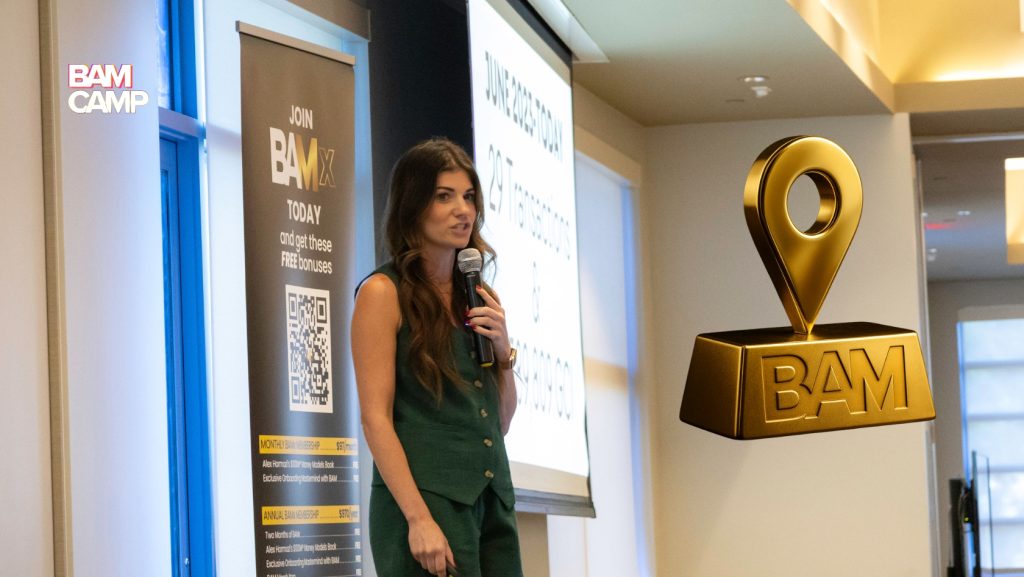
At BAM Camp 2025, Alyssa shared how that moment eventually led her to what she’s known for in today: the queen of hyperlocal content.
Storytelling in Real Estate
Fast forward to her real estate career in Spokane, Washington, where Alyssa admits she initially floundered with video content. She cranked out 56 YouTube videos filled with “tips and tricks” that no one watched.
Later, she leaned into lip-syncs and point-to-text Instagram videos. Again, no traction.
It wasn’t until she turned her camera on her own city, highlighting new restaurants, local favorites, and hidden gems, that things clicked.
Those videos started real conversations with her neighbors and eventually turned into clients.
“I got my very first client from Instagram. And it was not one hyperlocal video that got me these. They had been watching my content for six months, had never liked or commented on anything, but they had been watching.”
Since then, her hyperlocal strategy has doubled her business, fueled 29 transactions, and nearly $400,000 in GCI, all from Instagram leads she had no prior connection with.
Why Hyperlocal Content Works
Real estate videos have their place, but as Alyssa points out,
“People only care about real estate videos, what, every 7-8 years when they’re moving? And even then, do they really care about real estate videos?”
Local content fills the gap. And while people love to complain about their cities, they also care about the positive happenings. They want to know about new restaurants they should try. They want to learn about the hot spots to take their kids. They want to know about new developments being built.
These are the things that people care about. And Alyssa uses that as the never-ending inspiration for her content:
“My goal with my hyperlocal content is to get people to care about what I’m saying all the time.”
By going hyperlocal, every post, reel and story sparks curiosity, encourages sharing, and positions the agent as the trusted local expert.
Instead of talking to everyone in her city, Alyssa narrows her focus to women with children between the ages of two and fourteen who live in North Spokane.
That filter helps her decide what to post and ensures her audience finds her content relevant.
Content Mix: 80/20 Rule
Alyssa structures her feed with a clear formula:
- 80% Local Content → From ‘Breaking News’ on openings, closures, or changes that impact the community, to ‘Business Highlights’ celebrating unique restaurants, family-friendly spots, and places with something special to offer.
- 20% Real Estate Content → Listing videos, home tours, and development updates.
This balance ensures her audience always has a reason to care about what she’s saying, even when they’re not buying or selling.
Sourcing and Shooting Ideas
When it comes to generating content ideas, Alyssa uses a mix of simple, replicable tactics:
- Pay for local newspaper or business journal subscriptions to find stories before the public catches on.
- Subscribe to newsletters and accounts her ideal audience already follows.
- Tap into public permit portals to spot new developments.
She keeps an “idea bank” in Google Docs and batches her shooting days, filming three to four videos at a time. “Nobody really cares what you’re wearing,” she joked. “Just shoot the content.”
Her videos don’t require fancy gear or a production crew. A phone, a wireless mic, and a conversational tone are enough.
“Try not to make these videos super stuffy. You want them to be like you’re talking to a friend.”
Conversion Happens Behind the Scenes
The videos bring visibility, but Alyssa stressed that the real conversions happen after people watch.
“The reels is where you’re getting your wide reach. Your stories are where people are getting to know you. And then the DMs: This is where you’re taking your followers and turning them into clients.”
She recommends two practical steps for building those conversations:
- Welcome Messages: Send a quick note to new followers, saved as a shortcut on her phone for efficiency.
- Poll Follow-Ups: Respond personally to anyone who engages with polls, especially on real estate-related content.
These small actions show prospects that there’s a real human behind the account. In one case, a simple DM turned into a client who sold their home with her team.
Alyssa’s final reminder cut through the noise of vanity metrics:
“The content matters. The strategy behind it all matters. The DMs matter. But at the end of the day, hyperlocal content is not about going viral. It is about providing value to people and connection.”
Alyssa’s story is proof that you don’t need a newsroom background or a videographer to build influence and grow your business. As she pointed out on stage, all you need is three things:
- Your city
- Your phone
- Your point of view
Start there, be consistent, and remember that the goal isn’t just attention. It’s trust.