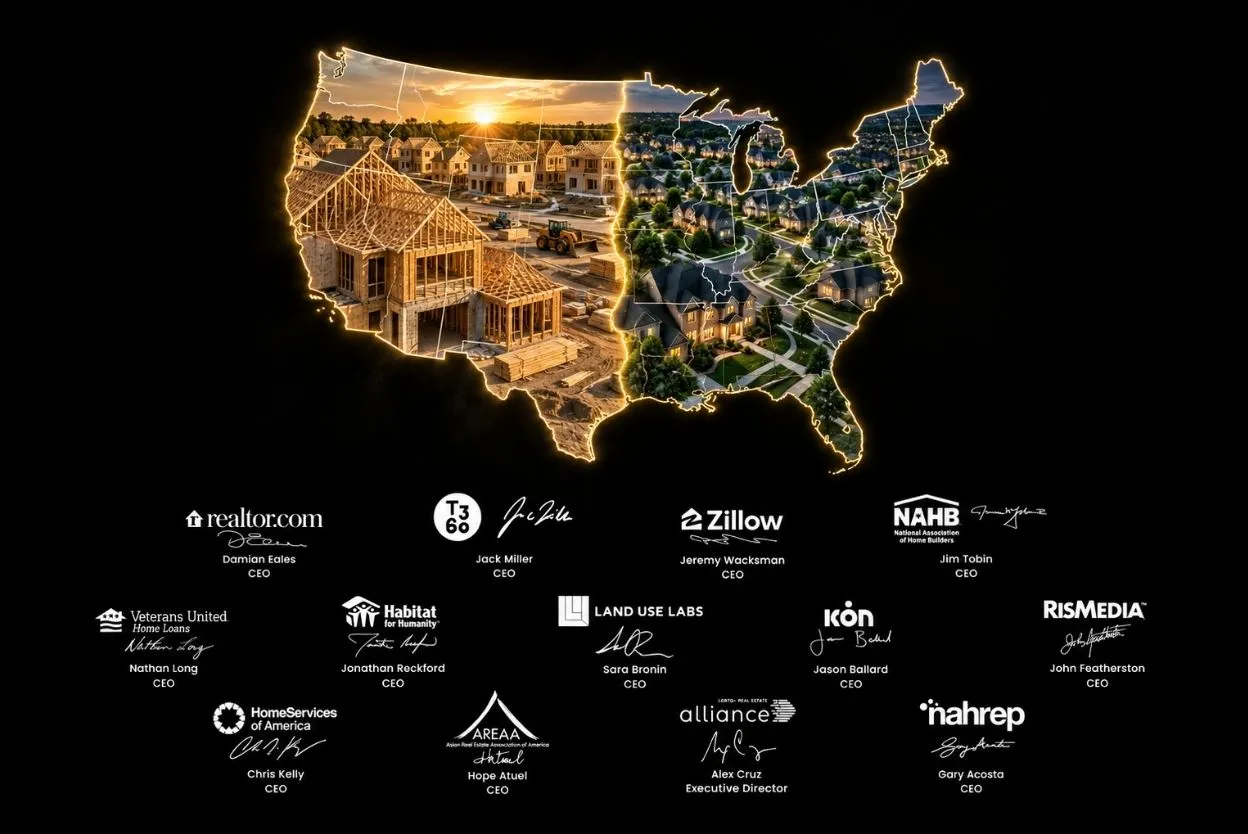

This week, fourteen of the biggest names in real estate agreed on one thing: America needs to build more homes, and the industry needs one voice to make that case.
Realtor.com, Zillow, the National Association of Home Builders, eXp Realty and NextHome, and at least ten other organizations launched a joint campaign called Let America Build on September 15, 2026, out of Austin, Texas, with more expected to join the movement.
The campaign centers on raising public awareness about how local rules decide whether new homes get built, not on any single piece of legislation or candidate.
Here’s a look at what the campaign says, the numbers behind it, the law it’s tied to, and the people who signed on.
What Let America Build Is
Let America Build is a national public awareness campaign, and the organizations behind it agree that if the U.S. wants more homes, someone has to build them, and local rules make that harder than it needs to be.
The campaign has three goals:
- Inform the public about the housing shortage and what’s driving it
- Make housing supply a priority in local communities, not just a national talking point
- Push conversations based on facts about what local governments can do to make building easier
All of it lives at LetAmericaBuild.org, where visitors can find real-world examples of local zoning and permitting changes underway across the country, plus resources on land use, permitting, housing types and construction.
The campaign builds on a smaller effort Realtor.com introduced at SXSW in 2025. This version brings competitors, builders, nonprofits and professional associations under one banner instead of one company alone.
One other thing the group behind the campaign agreed on: Let America Build doesn’t endorse or oppose any candidate, party or ballot measure.
The Housing Numbers Behind the Push
The campaign leans on numbers instead of opinions, and the numbers explain why 14 competitors decided to work together.
- Realtor.com’s research puts the country’s housing shortfall at 4.03 million homes, the difference between how many homes exist and how many people need them
- Government regulation, taxes, fees and other costs add more than 26% to the price of an average new single-family home, according to the National Association of Home Builders
- More than 300,000 small vacant lots are listed for sale across the country, and Zillow’s research found that building one home on each of those lots could cut the national housing deficit by 6.3%
Together, these numbers say homes cost too much to build, and land that could hold new ones is sitting unused.
Built on the 21st Century ROAD to Housing Act
Let America Build follows the passage of the 21st Century ROAD to Housing Act, a bipartisan law that gives states and local governments new tools and incentives to support housing.
The law rests on the observable fact that housing progress happens at the local level, not in Washington. State and local governments control the details that decide how fast homes get built:
- What can get built
- Where it can get built
- How soon a project moves from an approved plan to a finished home
Who’s Behind the Campaign and What They’re Saying
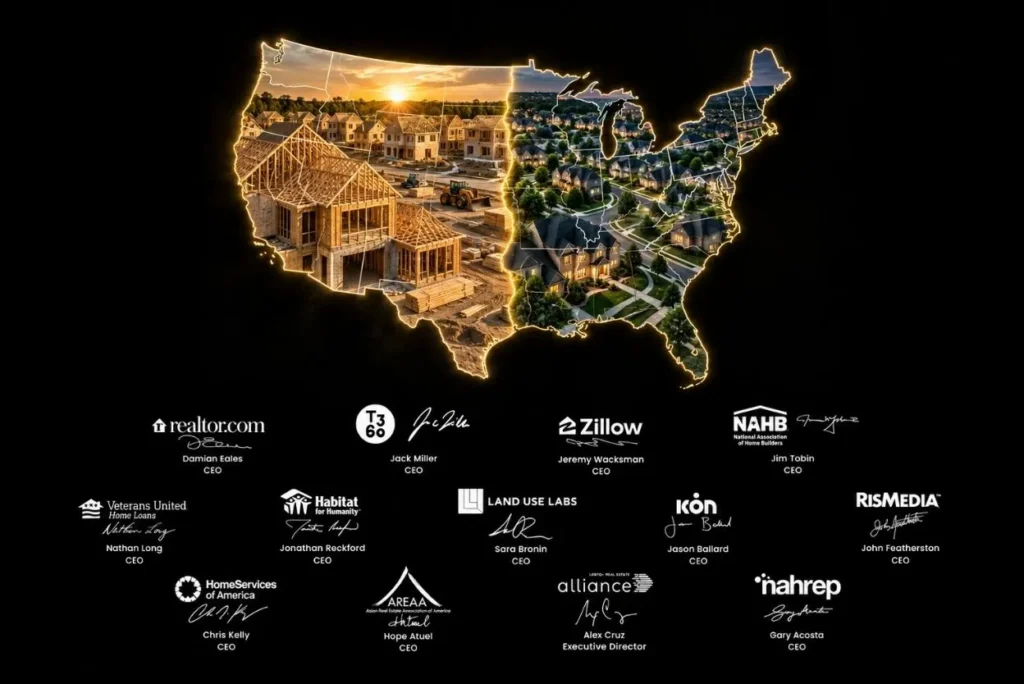
Fourteen organizations signed on as founding participants, and they come from every corner of the industry:
- Marketplaces and brokerages: Realtor.com, Zillow, eXp Realty and NextHome
- Consulting and media: T3 Sixty, RISMedia
- Builders and construction: National Association of Home Builders, ICON
- Nonprofits: Veterans United, Habitat for Humanity
- Policy and land use: Land Use Labs
- Diversified real estate services: HomeServices of America
- Professional associations: Asian Real Estate Association of America, LGBTQ+ Real Estate Alliance, National Association of Hispanic Real Estate Professionals
Nine of those leaders spoke on the record about why they joined.
Damian Eales, CEO of Realtor.com, framed the campaign as the result of a challenge he issued to the industry earlier this year.
“If you want to go fast go alone, if you want to go far, go together, and with a problem as big as America’s home shortage, it is time we go together. Earlier this year, I challenged the industry to come together and unify. Let America Build is a result of that call. Now after the 21st Century ROAD to Housing bill has become law, elected officials have the opportunity to make housing supply a visible community priority. This campaign aims to help Americans engage in real conversations about how their communities can create more housing opportunities.”
Zillow CEO Jeremy Wacksman pointed to permitting and zoning as the two areas he wants fixed first.
“America’s housing shortage is pricing renters and buyers out of the communities they love. We know what’s driving it and we know what will fix it: streamlining permitting, modernizing zoning and unlocking land that’s already there. The ROAD to Housing Act is a real commitment to getting this right, and Zillow is proud to stand with these partners through Let America Build to meet the moment and help more people get home.”
Jack Miller, President and CEO of T3 Sixty, said the timing gives the industry a chance to put affordability and supply at the center of the national conversation.
“Affordability and supply are the biggest issues facing our industry, and this fall we have a real chance to make them part of the national conversation. That’s why T3 Sixty is joining Let America Build, an industry-wide effort to raise awareness of the practical, local solutions that get more homes built. A stronger housing market is the foundation everyone in real estate builds on.”
Leo Pareja, CEO of eXp Realty and NextHome, connected the campaign to how his own companies operate.
“We didn’t build eXp and NextHome around a one-size-fits-all model, because we know entrepreneurs and consumers alike do better when they have choice. America’s housing shortage demands that same thinking at the local level: more options, fewer barriers, faster paths from plan to reality. That’s why we’re proud to join Let America Build.”
Jim Tobin, CEO of the National Association of Home Builders, named the specific barriers his members run into.
“Let America Build brings industry stakeholders together with officials at every level of government to address the nation’s housing affordability crisis by removing inefficient zoning rules, unnecessary regulations, permitting delays and other barriers that keep builders from delivering more affordable, attainable homes. The campaign builds on the momentum of the 21st Century ROAD to Housing Act and advances practical solutions to help builders expand the nation’s housing supply.”
Sara Bronin, CEO of Land Use Labs, added a number from her own organization’s research.
“Our team, which has sifted through 1.4 million pages of zoning codes, sees the consequences of red tape up close, day in and day out. We’re proud to stand with a campaign that shares our belief that the status quo is broken, and we need significant reforms to unlock more housing and more opportunity.”
Alex Cruz, Executive Director of the LGBTQ+ Real Estate Alliance, spoke to the barriers LGBTQ+ homebuyers face on top of the broader shortage.
“Homeownership remains out of reach for too many Americans, and LGBTQ+ people continue to face unique barriers on the path to owning a home. Addressing our nation’s housing shortage is an important part of changing that. The LGBTQ+ Real Estate Alliance is proud to join Let America Build because expanding housing supply, removing unnecessary barriers to development, and creating more housing choices can help open the door to homeownership for more people and more families in every community.”
Read the full Let America Build launch announcement for more.
What Agents Can Do Next
Let America Build gives agents a resource to point clients and colleagues toward when the conversation turns to why homes cost what they cost, or why so little gets built nearby.
LetAmericaBuild.org has the local examples and data behind the campaign, and agents can share it without wading into political territory, since the campaign takes no side on candidates or ballot measures.
The real work happens away from the campaign’s website, in the local meetings where zoning and permitting rules get decided:
- City council meetings
- Planning commission hearings
- Zoning board votes
Attending those meetings, and helping clients follow what’s on the agenda, turns the campaign’s message into local action.
The next few months will show whether 14 competitors agreeing on one message is enough to change how homes get built in their own communities.