

President Trump officially made his tariff announcement yesterday, placing a 10% blanket tax on all foreign imports, plus a 25% tariff on cars and a sliding scale for individual countries. In a Rose Garden speech, he called it a “declaration of economic independence.”
What followed? Stocks dipped. Bond yields fell.
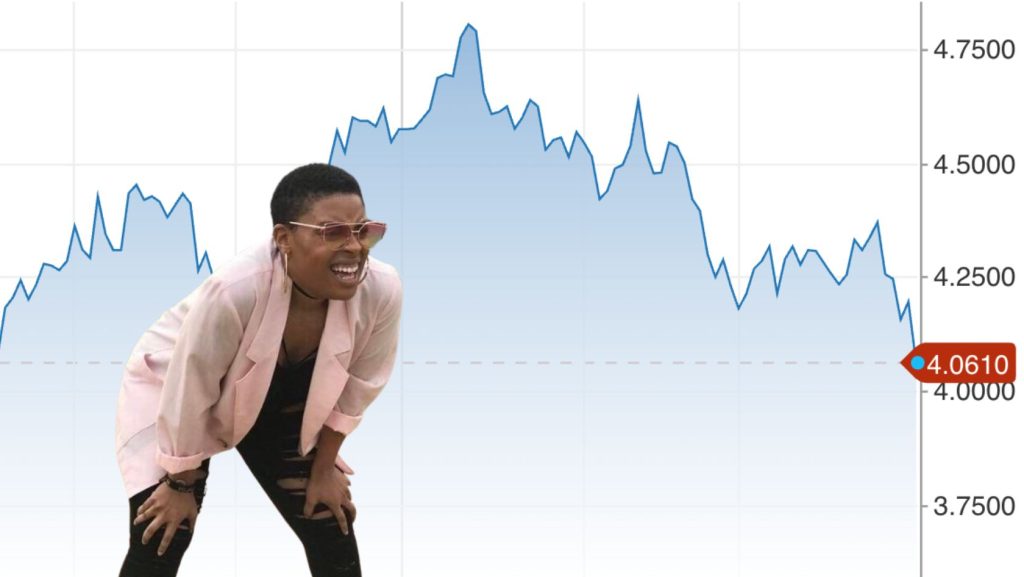
While tariffs typically stir inflation concerns, the housing market will want to pay close attention to the 10-year Treasury Yield. Yesterday, it dropped from 4.23% to 4.11%. Today, it has dipped even further (4.062% at the time of this posting).
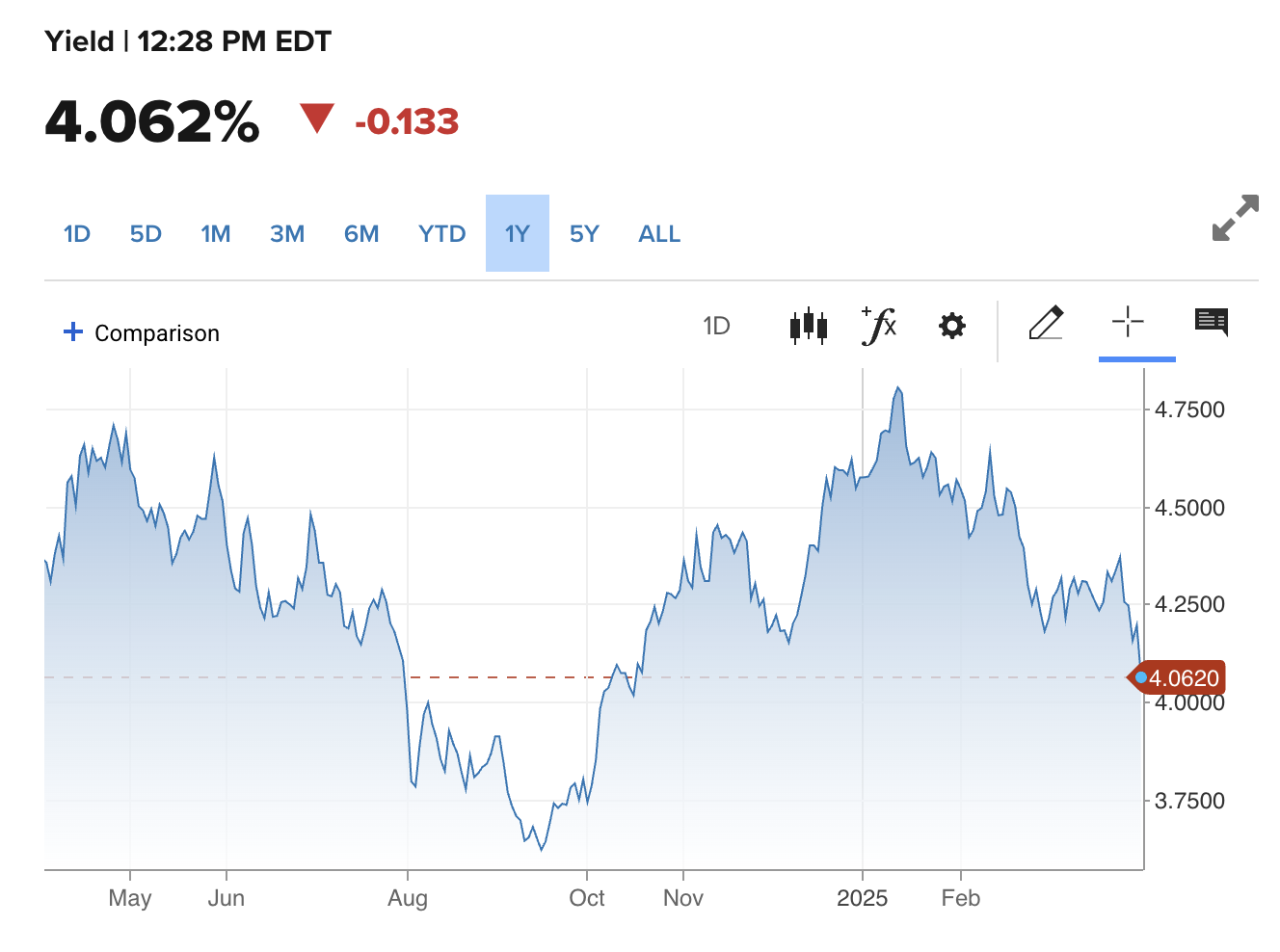
First the Bonds, Then Mortgage Rates
When the 10-year yield drops, mortgage rates tend to follow. After yesterday’s decline, HousingWire’s Logan Mohtashami wrote:
“Since we believe in the close relationship between the 10-year yield and mortgage rates, we expect mortgage rates to decrease (today) if bond yields continue to decline.”
That statement held true today, as mortgage rates dropped to the lowest they have been all year: 6.63%, according to Mortgage News Daily.
Inflation vs. Tariffs
But wait…don’t tariffs raise prices? The answer is more nuanced than a simple yes or no.
Howard Lutnick, U.S. Secretary of Commerce, explained the difference between inflation and tariffs on a recent All-In Podcast:
“Inflation comes from printing more money. Okay, let’s say the United States of America had one trillion dollars. That’s all we had. That’s it, no more…and I want to buy a bottle of water and you want to buy a bottle of water. One came from America, and the other one came from Fiji, right? And I tariff Fiji. Then that water is $1.25, and this water is $1. That’s not inflation.… Here’s inflation: snap my fingers, now we have two trillion. That water’s $1.50, that water is $1.25, everything is more expensive.
“Inflation without tariffs is: everything is $1.25. Inflation with tariffs is $1.25 and $1.50. You have to understand that inflation doesn’t come from tariffs.”
As Lutnick shared, tariffs can drive up the cost of imported goods, which is bad news for homebuilders relying on foreign-made lumber, steel, appliances, and fixtures. The National Association of Home Builders (NAHB) is already calling for exemptions, and some builders are reportedly preemptively pricing in cost increases.
How much more expensive will it be to build new homes? NAHB found that builders are expecting to see the average cost of new home construction increase by $9,200.
Cotality Chief Economist Selma Hepp estimates an increase in construction costs by “4% to 6% over the next 12 months. Add in current inflation costs, and she expects that “there will be an estimated 10% increase in material prices, broadly averaging around a $17,000 to $22,000 increase in construction cost per home.”
While tariffs will raise prices on some goods, that’s not the same as across-the-board inflation, which the Fed really cares about when setting rates.
If tariffs don’t trigger broad inflation, the Fed may not need to counter with higher rates — and that’s part of why bond yields dropped instead of spiking.
What to Watch Next
Mortgage Rates
If the 10-year yield keeps falling — and the market doesn’t freak out over Friday’s jobs report — mortgage rates could keep sliding. And remember, below that 6.64% threshold is where demand has previously picked up.
Builder Confidence
Higher construction costs are a real threat. But if rates drop far enough, builders may be able to offset the tariff hit with more buyers entering the market.
Retaliation Risks
Reciprocal tariffs could invite retaliatory tariffs from other countries, creating longer-term economic turbulence. That could spook investors, hit supply chains, and inject more volatility into rates.
For a full breakdown, watch today’s Hot Sheet with Byron Lazine:
Editor’s note: This post was updated after mortgage rates dropped today.