
Key Details:
- According to Realtor.com, U.S. supply reached 5.0 months in August, the first balanced summer since 2016.
- But delistings surged 57% YoY in July, inventory growth slowed to +20.9% YoY, and homes spent 60 days on market, up 7 days from last year.
- Seven major metros, led by Miami at 9.7 months, shifted to buyer’s markets.
National balance makes a nice headline, but agents know local realities tell the real story. Delistings, slowing sales, and longer timelines are shifting the ground under buyers and sellers.
According to Realtor.com’s August monthly housing report, supply hit 5.0 months last month, marking the first balanced summer since they began tracking the metric in 2016.
But behind that balance is a sharp rise in delistings and frustrated sellers walking away.
Byron Lazine broke down the numbers on Wednesday’s Hot Sheet.

Read on for the highlights.
Balance Conceals Local Extremes
Formally, a balanced market falls between 4 and 6 months of supply. Below 4 months favors sellers, while more than 6 months tilts toward buyers.
In August, Realtor.com recorded exactly 5 months, the sweet spot of balance.
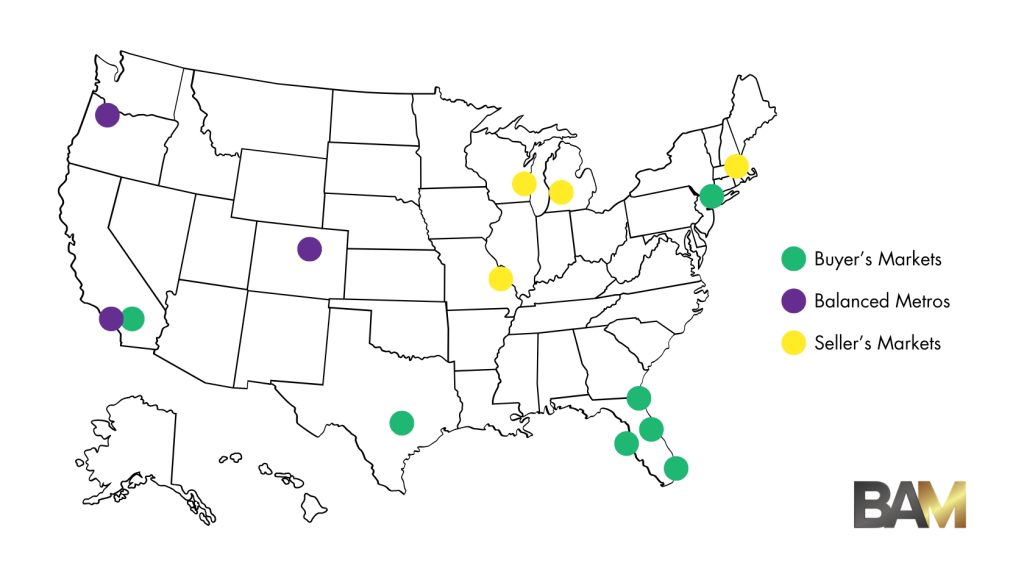
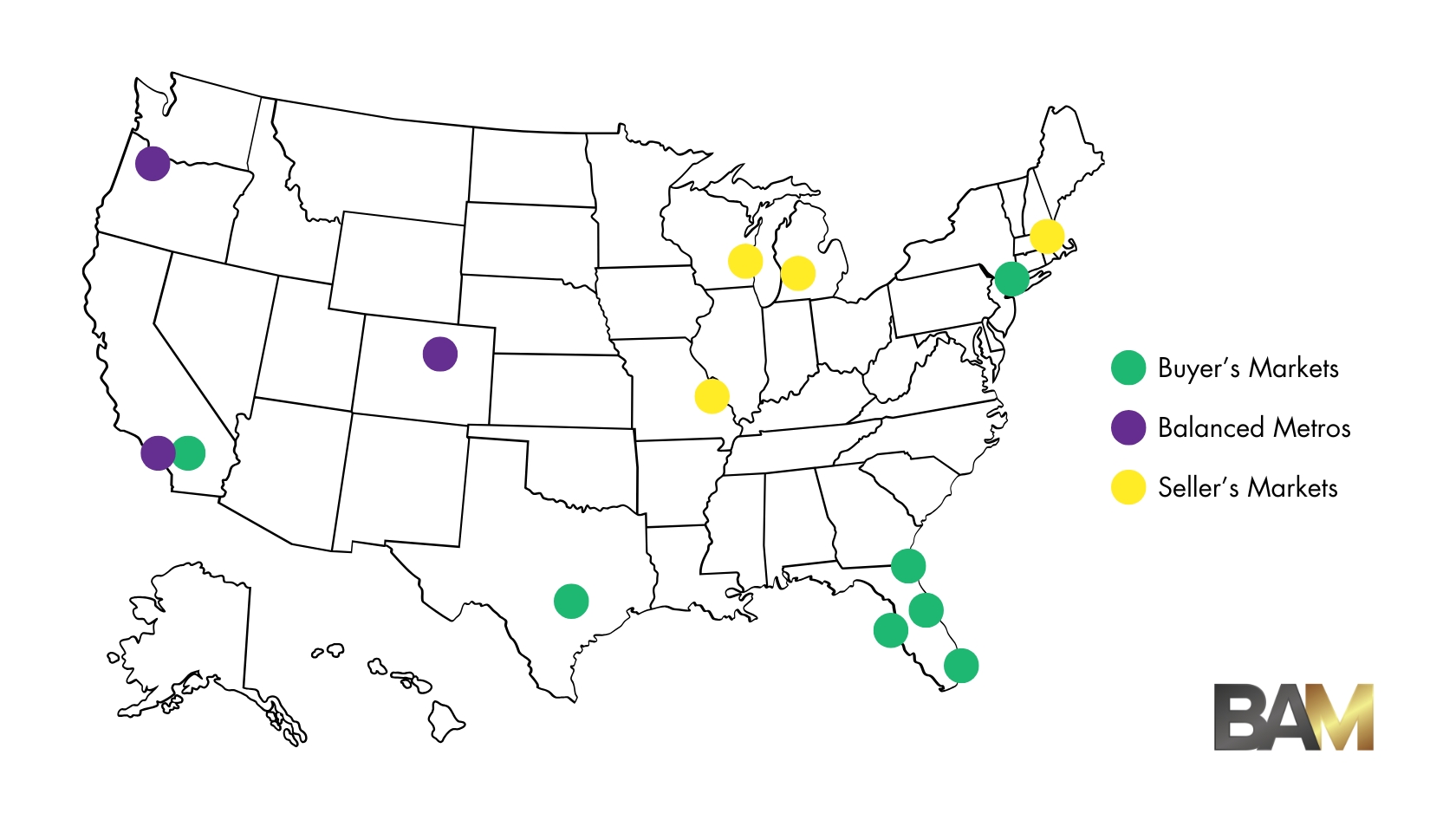
But that balance is hiding sharp divides across metros:
Buyer’s markets:
- Miami, FL (9.7 months of supply)
- Austin, TX (7.1)
- Orlando, FL (6.9)
- New York, NY (6.7)
- Jacksonville, FL (6.3)
- Tampa, FL (6.3)
- Riverside, CA (6.1)
Balanced metros:
- Los Angeles, CA (5.0 months of supply)
- Denver, CO (4.9)
- Portland, OR (5.1)
Seller’s markets with the lowest months of supply:
- Milwaukee, WI (2.7 months of supply)
- St. Louis, MO (2.9)
- Grand Rapids, MI (2.9)
- Boston, MA (3.0)
Markets with more than six months of supply saw prices fall in August, while those with fewer than four months recorded stronger growth. Regionally, the South and West are leaning toward buyers, while the Northeast and Midwest remain seller-friendly.
Danielle Hale, chief economist at Realtor.com, put it this way:
“The national housing market is now more balanced between homebuyers and sellers at five months of supply, but that balance conceals a wide range of local realities.”
Delistings Surge 57%
In July, delistings surged 57% compared to the same month last year. On a year-to-date basis, they’re up 41%. That surge has now outpaced overall inventory gains, showing sellers are increasingly unwilling to accept current pricing or conditions.
The delisting-to-listing ratio climbed to 0.24 in July. That means for every 100 new listings hitting the market, 24 other homes were removed unsold.
A year ago, the ratio was just 0.17.
Metros with the highest delisting-to-listing ratios:
- Miami, FL: 57 per 100 new listings
- Phoenix, AZ: 45
- Riverside, CA: 34
- Tucson, AZ: 33
This pullback from sellers could push inventory down later in the year, limiting buyer choice just as market momentum slows.
Inventory Growth Stalls
For buyers, the silver lining has been more homes to choose from.
Active listings rose 20.9% year-over-year in August, marking the 22nd consecutive monthly gain and the fourth straight month above one million listings.
But growth is slowing.
In May, inventory was up 31.5% year-over-year. By August, that pace cooled to 20.9%. Nationwide inventory is still 14.3% below 2017–2019 norms, wider than the 12.9% gap in June.
The numbers by region:
- West: Up 26.7% YoY, now up 6.6% above pre-pandemic levels
- South: Up 21.8% YoY, up 3.6% above pre-pandemic
- Midwest: Up 15.6% YoY, still down 39.3% below pre-pandemic
- Northeast: Up 14.2% YoY, still down 50.9% below pre-pandemic
Eleven of the 50 largest metros now sit at least 25% above pre-pandemic inventory, led by:
- Denver, CO (+64.2%)
- San Antonio, TX (+53.4%)
- Austin, TX (+50.2%)
Softer Demand Meets Slower Sales
While sellers are pulling back, buyers aren’t exactly charging in.
Pending home sales dipped 1.3% year-over-year in August. New listings grew just 4.9%, marking the fourth straight month of slowing momentum.
Homes are also sitting longer. In August, homes spent a median 60 days on market, up seven days from one year ago and above pre-pandemic norms for the second straight month. That 7-day bump is also the 17th consecutive year-over-year increase.
Regional breakdown of time on market:
- West: +8 days
- South: +8 days
- Midwest: +3 days
- Northeast: +2 days
Twenty-seven of the top 50 metros now have homes lingering longer than pre-pandemic averages. Nashville leads with a 21-day increase, followed by Miami at +16.
Prices Flat, But Cuts Rising
The national median list price held at $429,990 in August, unchanged from last year but down 2.2% month-over-month.
As for regional differences:
- Northeast: Up 1.1% year over year
- Midwest: Zero change year over year
- South: Down 0.1% year over year
- West: Down 2.1% year over year
Price cuts are spreading. In August, 20.3% of active listings had a reduction, up from 19.2% last year. Cuts are concentrated in the South and West, where inventory is loosening fastest.
The Bottom Line
The U.S. housing market may technically be balanced, but the numbers tell a more nuanced story. Rising delistings, slowing inventory growth, and lengthening time on market are the numbers your clients want to know.
This is a critical moment to educate consumers on what’s really happening and what it means for them.
- Buyers should know that more homes are sitting and more sellers are cutting prices.
- Sellers should understand that delistings and price reductions are becoming common, and local conditions will determine their leverage.
Balance may be the national headline, but the real story is local. And your clients will be looking to you to explain it.