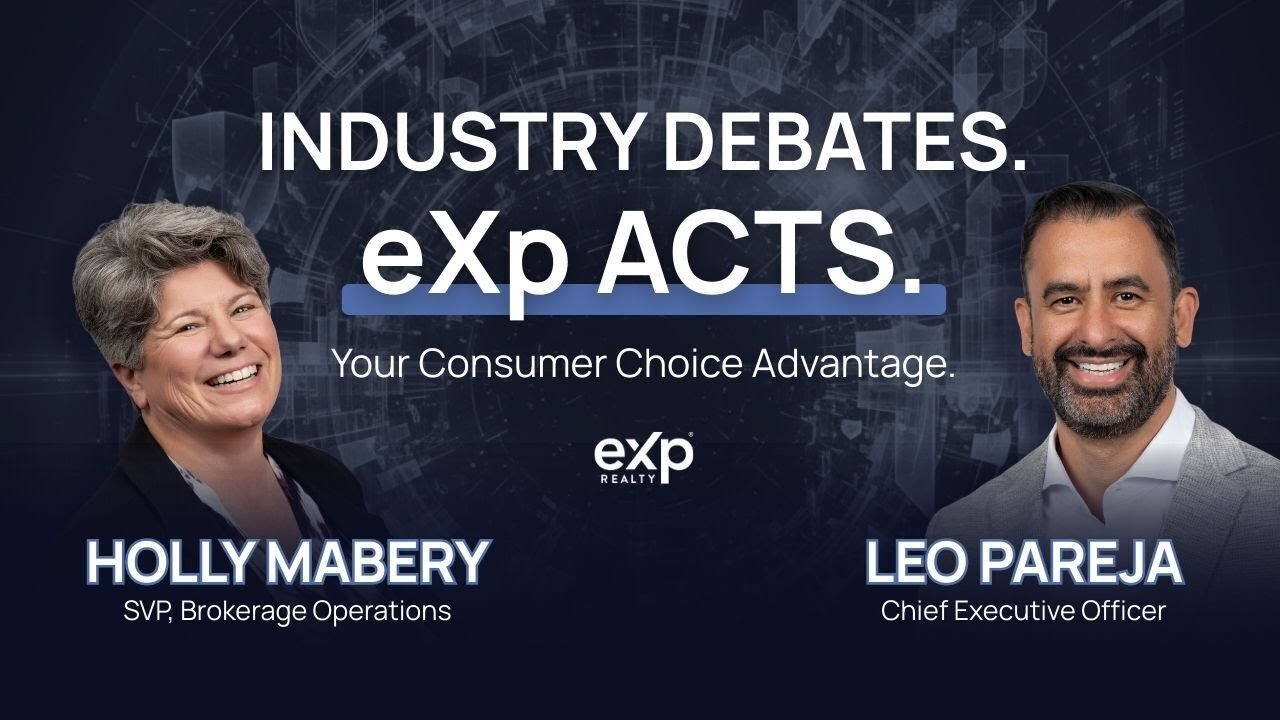


Last week, eXp announced new disclosures for referral fees and consumer choice.
And yesterday, during a live webinar, eXp CEO Leo Pareja and SVP of Brokerage Operations Holly Mabery broke down those new disclosure forms, which are designed to put consumer clarity front and center.
These documents are simple, fillable, and created to align with where the industry is heading as referral-based business grows and regulators sharpen their focus on compensation disclosures.
Pareja captured the shift in one sentence:
“The continuation of what we do is consumer first and massive transparency.”
That direction sets the tone for everything that follows.
Why eXp Is Acting Before New Rules Arrive
Compensation has changed fast. As Pareja pointed out in his opening statement, “three of the five largest search portals in the United States are either owned by a lender or own a lender.”
Lead generation models have moved from pay-per-lead subscriptions to success fees paid at closing. And brokerages of all sizes are building vertically integrated ecosystems with lending, escrow, insurance, and more.
This creates a problem if transparency lags behind. Clients should never learn at the closing table that a referral fee has shaped the path of their transaction.
As Pareja explained,
“We don’t have the luxury of waiting state by state because we operate in 50 states.”
Some states and MLSs are already moving. Northwest MLS adopted broker-to-broker referral disclosure in August. California is adopting similar language. Benchmark Realty is doing the same. NAR’s delegate body did not pass new disclosure language at recent NXT meetings, but many expect a national mandate soon.
Instead of waiting for someone else to set the rules, eXp is choosing to lead. Below is a breakdown of its new forms, which are accessible to all:
Form One: eXp’s Referral Fee Disclosure Form
This form is required whenever a referred client comes through another brokerage and a referral fee will be paid from earned compensation at closing.
There are three key things this form accomplishes; it makes sure the client knows:
- Who is being paid a referral fee
- How that compensation is structured
- That the payment comes out of the commission earned in the transaction
The form can disclose the fee as a percentage or a flat amount. It is signed while discussing compensation, not buried among late-stage paperwork.
Pareja reinforced why timing matters.
“When you are negotiating compensation, is the perfect moment to disclose if there’s an outside referral fee.”
This form doesn’t replace existing disclosures. It sits alongside them, completing the full picture of who earns what and why.
Access eXp’s “Referral Fee Disclosure Form” here.
Form Two: Consumer Choice in Your Real Estate Transaction
This is presented as a best practice. It’s designed to protect client choice and reinforce fiduciary duty.
Anytime you recommend service providers in the transaction, you can use this form to show that the consumer has options and is under no obligation to use a particular company.
Before showing a quote, it is important to explain the core principle: referring to just one vendor has always been risky. It creates the appearance of steering and doesn’t document consumer independence.
Pareja put it simply:
“If you’re going to refer one, refer three. So that’s why we’ve memorialized it.”
The form prompts recommendations for several categories, including:
- Lenders
- Home inspectors
- Closing services
- Title and title insurance
- Home warranty
- Other inspections or specialized services
Mabery added helpful guidance that readers will appreciate: more than one, less than the phone book. Typically, you’ll offer two to five options based on the client’s needs, price point, and property type.
Together, these two forms move referral conversations from loosely handled verbal disclosures to consistent documentation that can be repeated, tracked, and improved.
Access the “Consumer Choice in Your Real Estate Transaction” here.
What This Means for Your Business
This isn’t paperwork for paperwork’s sake. Transparency is becoming a competitive advantage. Here’s what stands out for your conversations with buyers and sellers:
- You eliminate surprises at closing.
- You show that recommendations are based on experience and client fit, not undisclosed incentives.
- You build trust from the first meeting by discussing compensation directly.
- You demonstrate leadership in an era of change.
Pareja stressed the importance of simplicity.
“‘How do we make it simple and legible where you don’t need a law degree to interpret it?’ That’s the litmus test we put everything through.”
When trusted compensation conversations become part of your value story, you don’t just separate yourself. You lead. And value-focused leadership is what every one of your clients needs from you.
Where This Is Headed
More referral-driven business. More bundled services. More scrutiny from regulators. And more consumer education.
As Mabery made it clear in her closing statement, eXp does not intend to play catch-up. The focus is forward, and the future is documented.
“We’re looking to where we go in 2026 and making things better. A rising tide raises all ships. So we’re not going to wait. We’re going to be proactive.”
Ready to take the next step? You can watch the full 15-minute webinar and download both forms to begin using immediately.
This isn’t just about compliance. It’s about clarity for the people you serve day in and day out.
And clarity earns trust.