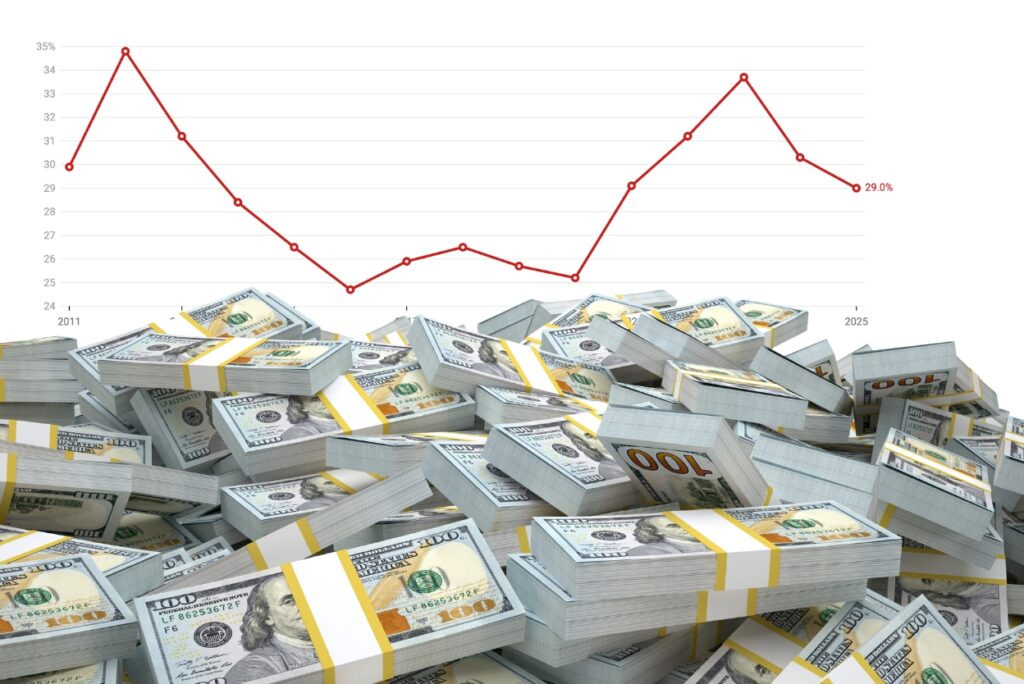

In 2023, all-cash purchases hit a record high, with close to 35% of buyers purchasing without a loan. But new data from Redfin shows that trend is declining.
In December 2025, fewer than one in three home purchases were all-cash deals. In addition, buyers who are financing are putting down slightly less upfront than they were a year ago, and the mix of loan types is shifting toward conventional financing.
That doesn’t mean cash buyers have lost their edge. But it does mean financed buyers have more room to compete than they did during the pandemic frenzy.
Byron Lazine broke it down on today’s Hot Sheet:

Cash Purchases Pull Back
A new Redfin report shows that 29% of U.S. homebuyers paid all cash in December 2025. That’s down slightly from 30.3% a year earlier and marks the lowest share for that month since 2020.
The high point came in late 2023, when mortgage rates climbed into the high-7% range. At the time, paying cash helped buyers avoid steep monthly payments and stand out in competitive bidding situations.
With the average 30-year fixed rate now just over 6%, financed offers have become more feasible again. At the same time, the national housing market has shifted into a buyer’s market, with sellers outnumbering buyers in many markets.
Of course, when a cash buyer shows up, the leverage is still real.
Agents on the ground are reporting that cash offers can still secure 10%–20% below appraised value in certain situations, especially in slower markets or where inventory is sitting.
And cash still shows up heavily in certain regions. Florida markets continue to lead the country. In December, West Palm Beach saw more than 47% of purchases made in cash. Jacksonville and Miami each hovered near 39%. On the other end of the spectrum, West Coast metros like Seattle and Oakland saw fewer than one in five buyers paying cash.
Down payments edge lower
A separate Redfin report shows another shift: buyers are putting less money down.
The typical down payment fell to $64,000 in December 2025, down 1.5% from a year earlier. In percentage terms, buyers put down 15.2% of the purchase price, compared with 16.7% the year before. It’s the first decline in five months and a sign that upfront costs are adjusting alongside buyer expectations.
The median home price ticked up slightly in December, but buyers appear to be adjusting how much cash they bring upfront. Redfin economists point to a combination of affordability pressure and increased negotiating power as inventory builds.
Of course, regional differences remain wide:
-
- Highest median down payments: San Francisco ($400,310), San Jose ($360,000), Anaheim ($270,800)
- Lowest median down payments: Virginia Beach ($8,700), Cleveland ($25,025), Cincinnati ($25,143)
- Largest decline in down payments year-over-year: Orlando (-23.9%), Cincinnati (-22.6%) and Atlanta (-18.9%)
Shifts in Loan Types
As cash usage and down payments adjust, loan composition is shifting as well.
Conventional loans accounted for 78.6% of mortgaged purchases in December, up slightly from a year earlier and the highest December share since 2021. VA loans represented about 7% of mortgaged purchases, up modestly year over year.
FHA loans, often associated with first-time buyers, made up 14.4% of mortgaged purchases. That’s down from 15.1% a year earlier and the lowest December share in four years.
Higher closing costs and overall affordability challenges appear to be influencing loan choices. FHA buyers, for example, often face not just a down payment but also prepaid taxes, insurance, and mortgage insurance premiums that can add tens of thousands to closing costs.
At the same time, lower mortgage rates compared with late 2023 may be helping more buyers qualify for conventional financing.
The Takeaway in the Data
Redfin’s latest reports point to three concurrent shifts:
- The share of all-cash purchases has eased from its 2023 peak
- Buyers are putting slightly less money down
- Conventional financing is taking a larger share of the market
Regional differences remain significant, with Florida metros still showing high cash usage and Sun Belt markets seeing some of the largest changes in down payment behavior. Loan type usage also varies widely depending on affordability and local price points.
Together, these trends offer a snapshot of how buyers structured purchases at the end of 2025, and how financing decisions continue to evolve alongside rates, inventory, and overall housing costs.