
Agents aren’t the only ones getting salty over misuse of AI.
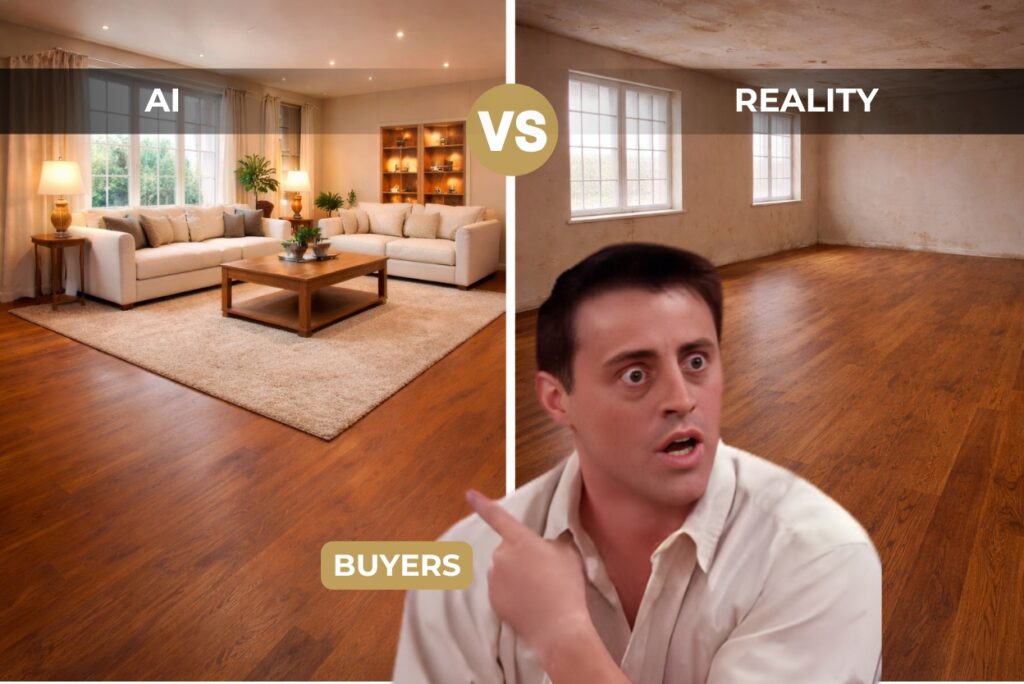
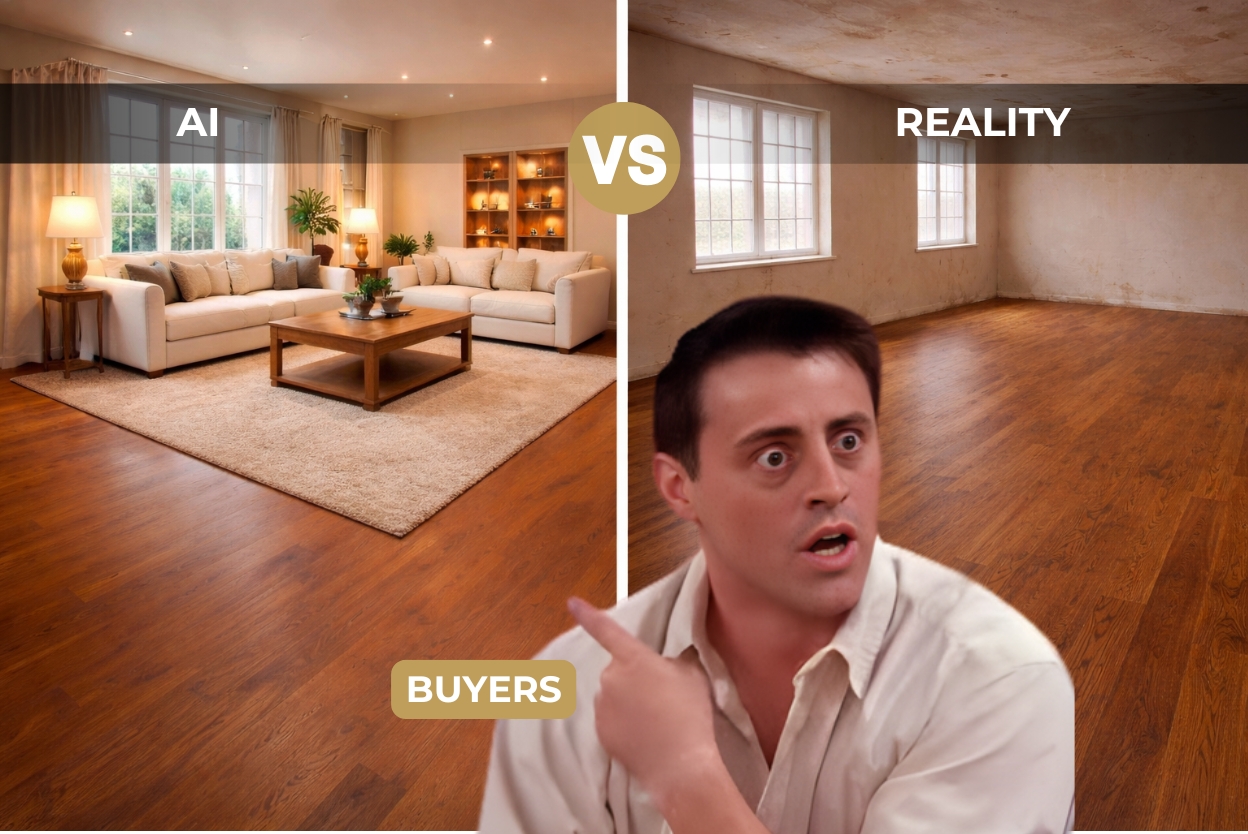
There’s a new trend in home staging that is raising hackles among homebuyers. Some are calling it “housefishing.”
If you’ve ever been on a dating app, this should sound familiar. Turns out some listings have left buyers feeling played. Because the listing photos they saw online did not reflect the reality they saw when they walked in.
In the dating world, this is called “catfishing.” And when someone is “catfished,” it leaves a lasting impression. They don’t look at dating profiles quite the same way after that.
That same reaction is showing up in real estate. A single bad showing can change how a buyer approaches every listing that follows. And word gets around.
Policymakers at the state level have noticed. And they’re already stepping in.
That’s where this starts to get uncomfortable for agents, because not every edit crosses the line.
But some clearly do.
When AI Staging Crosses the Line
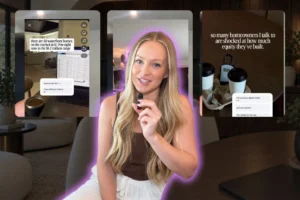
Kala Laos, CEO of Zoodealio, highlighted the “housefishing” trend in a recent Instagram reel, sharing an example where AI staging crosses the line from enhancement into misrepresentation.
“You look at the before and the after and it’s a startling difference.”
View this post on Instagram
And as Kala pointed out, state regulators are already taking corrective action.
“The state of California recently passed legislation in January requiring a disclosure on listings that have any sort of AI modifications.”
Wisconsin is set to follow with similar rules in 2027, covering everything from virtual staging to removing visual elements like stains or utility lines.
The National Association of REALTORS® (NAR) reported on the trend and is reinforcing existing standards. Agents are expected to present a true picture of a property and avoid misrepresentation under the Code of Ethics.
The pressure is building around how these tools are used, and the line between helpful staging and misleading marketing is getting more attention from both buyers and regulators.
Why This Is a Problem for Agents
Listing photos do a lot of the heavy lifting before a buyer ever steps foot inside a home.
NAR data shows 81% of buyers say photos are the most important factor when evaluating a property online.
That puts quite a bit of pressure on how listings are presented, especially when AI tools make it so easy, now, to clean things up, brighten rooms, or reimagine a space. Agents see the potential for the home, and they want buyers to see that.
The problems arise when that “vision” is presented as the only representation of the home.
That’s when edits change what a buyer expects to see when they show up for a tour.
Some of the most common issues show up in small decisions that add up quickly:
- Removing visible defects like stains or wear
- Brightening or recoloring rooms to hide condition issues
- Using staging or edits that make spaces feel larger than they are
- Altering views or surroundings, including nearby homes or obstructions
Each of these can reshape how a buyer pictures the home before they ever walk in.
Buyers walk in with a clear picture in their head. And when the home doesn’t match, they feel cheated. And things go downhill from there.
The mismatch also impacts the seller. When expectations are set too high online, buyers adjust in person. That often translates into weaker offers or none at all.
The effect carries into future showings. Buyers start approaching listings with more caution. They question what’s real and what’s been enhanced.
This is where your short-term marketing decisions can create friction for both sides during the showing. The listing might get the click, but the in-person experience still has to hold up.
And when it doesn’t, your client is the one who pays the price.
The Future of AI Staging in Real Estate Listings
AI staging isn’t going anywhere. If anything, it’s going to get faster, cheaper, and more convincing. Such is the way of technology.
The opportunity for agents is in how they use it. There’s a difference between helping a buyer see what a space could become and showing them something that isn’t there.
Buyers can handle potential. What they don’t respond well to is feeling misled.
Clear labeling and realistic edits go a long way. Photos should still hold up in person. This protects your credibility and keeps your client in a stronger position when offers come in.
Because at the end of the day, the goal is to get someone through the door and make sure the home they walk into feels like the one they already said yes to.