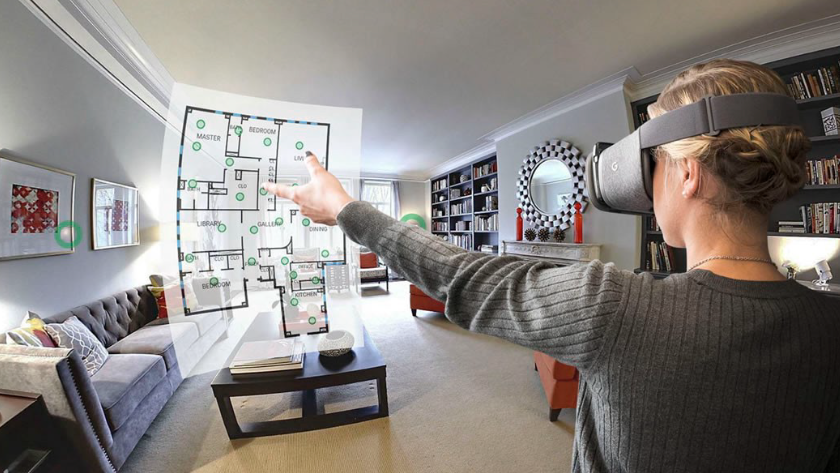

- Augmented reality is disrupting a variety of industries—including real estate.
- AR goes beyond 3D floor plans, allowing agents to increase their competitiveness and property managers to assess building conditions from afar.
When people think of augmented reality (AR), the first things that come to mind are probably gaming or entertainment. And although this may be the truth, there’s much more to augmented reality than meets the eye.
AR is one of the latest technological trends to disrupt various industries. It recreates a real-world environment by immersing the user in an interactive experience with the help of advanced technology.
1 – Visualize Properties Like Never Before
A huge advantage of augmented reality in the real estate industry is the ability to view properties in 3D. By following this approach, buyers are given the real deal without having to visit the actual property in person.
This goes beyond a virtual tour, as explained by Dan Weisman, NAR’s director of emerging technology, at November’s 2022 NAR NXT, The Realtor® Experience.

Through the use of a phone, augmented reality will allow us to scan rooms, get dimensions, detect objects, remove them and even replace them with a décor that may be more fitting to your client. This technology will create a totally different virtual experience for a potential buyer of a home.
2 – Increases Competitiveness
Real estate is an oversaturated industry. One way to stand out as an agent is by incorporating new forms of tech in your business.
There is power in this technology that ties into the real estate space. It could have an impact on renovation previews, listing photo modifications, and stock photo generation.
By harnessing the power of AR, agents can stand out from the rest of the pack. Consumers can quickly be desensitized to traditional marketing strategies. By switching up marketing and technology, agents position themselves as a top choice in the real estate market.
3 – User Data Analysis
One of the most powerful tools any company can use is data. The more you have, the better—just ask Zillow.
Teams and brokerages can access user data in AR software that can be useful in decision-making. For example, data can show which parts of a virtual tour excite customers the most. This information can improve their listings’ presentation and further customize a buyer’s experience.
But keep in mind, with every new technology comes a learning curve with copyright and other legal restrictions. Matt Troiani, NAR senior counsel, director legal affairs, shared this at NAR NXT:

The biggest takeaway is to be very mindful about how you use these tools. Ensure that you have copyright protection for the works that you are creating. Make sure you have a directive element over the generative AI and be careful not to infringe on someone else’s copyrighted work.
4 – Resource optimization
Time is a valuable resource, yet agents spend hours in the car, driving from property tour to property tour.
With the help of virtual tours, buyers can take their time going through as many properties as they want from home—and then go see their top picks in person. This implies huge savings in terms of time. Agents can allocate their resources elsewhere as AR software begins the home tour process.
5 – Remote Maintenance
Property managers all face the difficult task of managing their properties. What makes it particularly difficult is that these properties are spread far and wide. And when managers are flooded with multiple maintenance requests, they end up having too much on their plate.
Augmented reality software is capable of reading a property’s building conditions and predicting issues. This feature assists service technicians in assessing and addressing the building’s issues – easing the headaches these give to tenants.
Final Word
While it is still in the early stages of development, AR shows significant promise. With AR being one of the latest technological trends, it inevitably evolves from here – bringing new possibilities to the real estate industry as it does.