

Most agents know they should send a newsletter. Few actually do it. And even fewer send one that people actually look forward to reading.
Why? On the first count, as Chris Smith put it, “They don’t want to send crap.” On the second, few agents know how to create an email newsletter that won’t forfeit their readers’ attention, much less one that converts on a high level.
Chris is a founder of ella and author of The Conversion Code. He’s built his brand helping agents create high-converting content that sounds human, looks good, and drives real results.
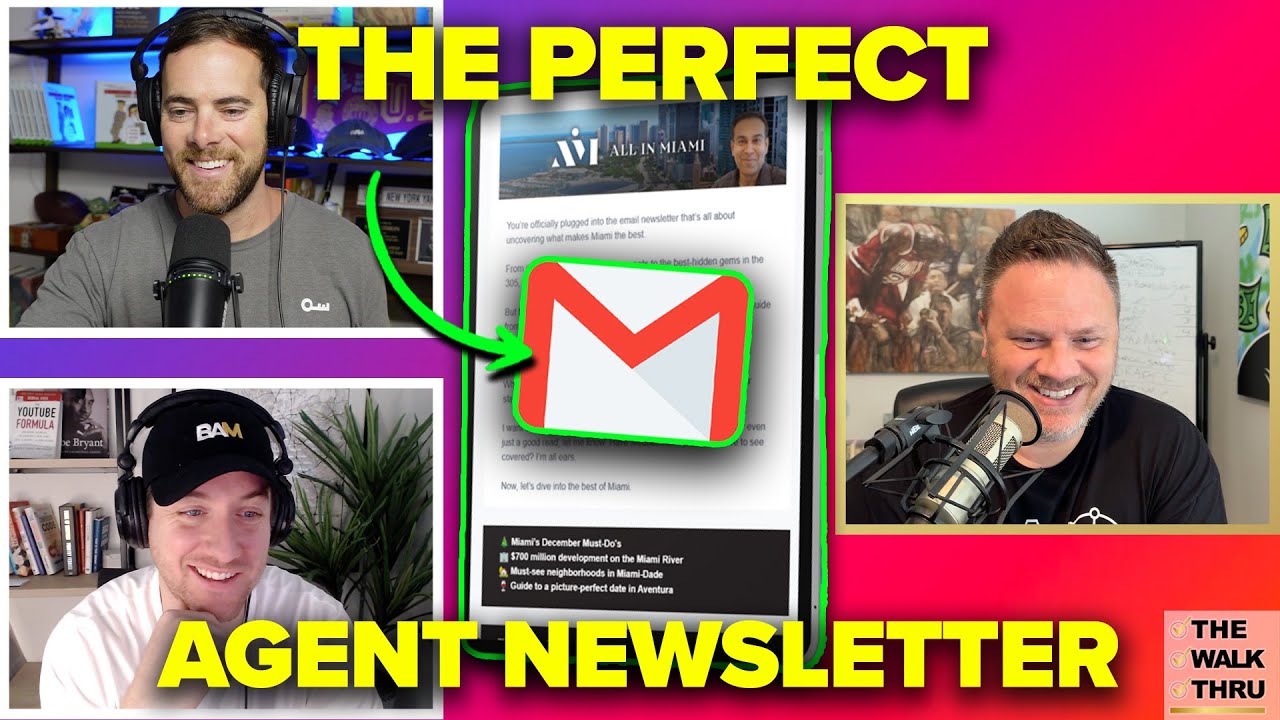
In his appearance on The Walk Thru, he broke down the exact five-section structure he uses in his own newsletter, The Chris List, and for the real estate agents his agency works with.
Here’s how it works and how you can use the same framework in your next email.
1. Content: Lead with Value
This doesn’t have to be earth-shattering stuff. Think of the last email newsletter you received that you actually read to the end. What was it that made you keep reading?
Everyone’s email marketing journey starts out a bit wobbly. And when it comes to putting content out there to a group of people who’ve given you permission to email them, putting out “crap” is still fear #1.
Chris says as much when he’s talking about his clients:
“Word for word, like 90% of them say, ‘I don’t want to send crap.’ Because when you’re emailing your list, you’re emailing your past clients, your sphere of influence, the people that send you business. And they’re very particular about what they’d send them.”
So, what do you do? Start with something helpful, interesting, or insightful. The goal is to get people engaged without immediately pushing a listing or sales pitch.
Need some ideas?
- A quick story with a takeaway
- A curated resource (local event, community spotlight, etc.)
- A short explainer or tip
Chris often uses this section for inspiration or personal commentary.
“I don’t even care about the research or the stats, but I know other people do. I love the inspiration stuff. I love the how-to stuff.”
You don’t need to overthink it. Lead with value, keep it relevant, and keep it brief.
2. How-To: Give Them Something They Can Use
The next section should show your expertise and provide tactical value. This is where you shift from casual value to helpful expert.
Examples of strong “How-To” sections include:
- A 3-step guide to winning in a multiple-offer situation
- How to contest your property tax assessment
- Tips for staging small spaces without hiring a pro
Chris recommended AI as a content assistant, with a caveat.
Tools like ChatGPT, Gemini and Perplexity are really good at helping you find stuff you should feature. And if you use ChatGPT’s customization feature, or a custom GPT, it’s great at making content that fits your brand and sounds local.
The Caveat: AI is not really that great at the summary and the writing itself. It’s gotten better, and it’ll keep evolving. But for now, iteration and editing are still essential for usable results.
So, here’s the takeaway:
Use AI to brainstorm, then rewrite in your own voice. Do not skip the edit.
3. Research: Use Local Data and Trending News
This is where you differentiate yourself from the average agent blasting out Zillow links.
People want to feel plugged in. They want to know what’s happening in their neighborhood, especially when it could affect their property value.
Chris emphasized that this type of content consistently performs best:
“The category that I think is the most exciting that most people overlook is urban and commercial development. People are insanely interested in… like, the iconic Macy’s in San Francisco is shutting down, and what’s going to replace it… those articles… those get like the most clickthroughs of anything that we cover.”
With that in mind, here are some ideas on what you can include:
- Local development news (store openings, road expansions, zoning updates)
- Market data specific to your zip code or county
- Big national headlines with local impact
You don’t have to write a think piece. Just find one article, add two sentences of context, and include a link. If you’re stuck on where to find this content, try tools like SparkToro to discover what people in your area are already reading and sharing.
4. Inspo: Show Your Human Side
If you’re only sending data and listings, your email feels transactional. This section reminds people why they like you.
Chris encourages agents to lean into their personal passions:
“We try to incorporate their passions when we can. One of our early adopter clients told me, ‘Chris, our most popular section is our Netflix and streaming recommendations.’ People really appreciate those.”
Some other ideas:
- A favorite restaurant (plus your go-to order)
- A quick personal win or lesson learned
- Recommendations for books, apps, or podcasts
- A community shoutout or client success story
The key here is consistency. If you’re known for great weekend picks or thoughtful reflections, people will start opening just to see what you’re sharing next.
5. Stats: Deliver the Numbers That Matter
Finally, close out with the information that directly ties back to your role as a trusted real estate expert. This is where you show people you know the market better than anyone else they follow.
Strong “Stats” content includes:
- A “Market Minute” with a quick snapshot of inventory, pricing, and DOM
- A graph or visual paired with a smart insight
- A short paragraph highlighting new listings, pending sales, or recent price shifts
Chris recommends anchoring this section with a clear takeaway or CTA:
“You’re a Realtor. It isn’t that you shouldn’t send listings or market info. It’s that you shouldn’t send only that.”
One idea: pair a stat with a soft ask. If you’re talking about rising home values, link to a CMA request form. If you’re highlighting low inventory, offer to send off-market opportunities. You’re not pitching; you’re guiding.
Chris noted that strong newsletters combine three key identities: the expert, the local, and the human. This final section reinforces the “expert” role.
Final Thoughts
This 5-part newsletter structure is about creating something that’s useful, relevant, and human. Something you’d actually want to open if it landed in your inbox.
Chris summed it up well when he said:
“Once you start getting in the groove with email, you’ll look at that metric more than any other metric on social or whatever. It’s just so much more fulfilling, because you put a lot of work into it, and it becomes kind of the heartbeat of your brand.”
Even if you’re only sending once a month, this framework helps you stay top of mind with the people most likely to send you business. Not because you’re always selling, but because you’re consistently showing up with value.
And in a world where agents are fighting for attention on social, a well-written newsletter might be your most underrated advantage.