
Today, RealScout announced AI Search – For Pros, a new tool designed to take what buyers actually say they want and translate it into precise, MLS-accurate property searches.
The new feature is designed to support the real work agents every day:
- Uncovering the right options when searching for a home
- Anticipating needs
- Sharpening search to match reality
Andrew Flachner, RealScout’s co-founder and CEO, explained the mission behind the launch:
“Existing platforms have done a great job giving everyone a place to browse properties. But when a client is serious, agents need tools that go beyond casual browsing. We built RealScout AI Search specifically for professionals so they can run complex searches that simply aren’t possible with other platforms.”
How “AI Search – For Pros” Works
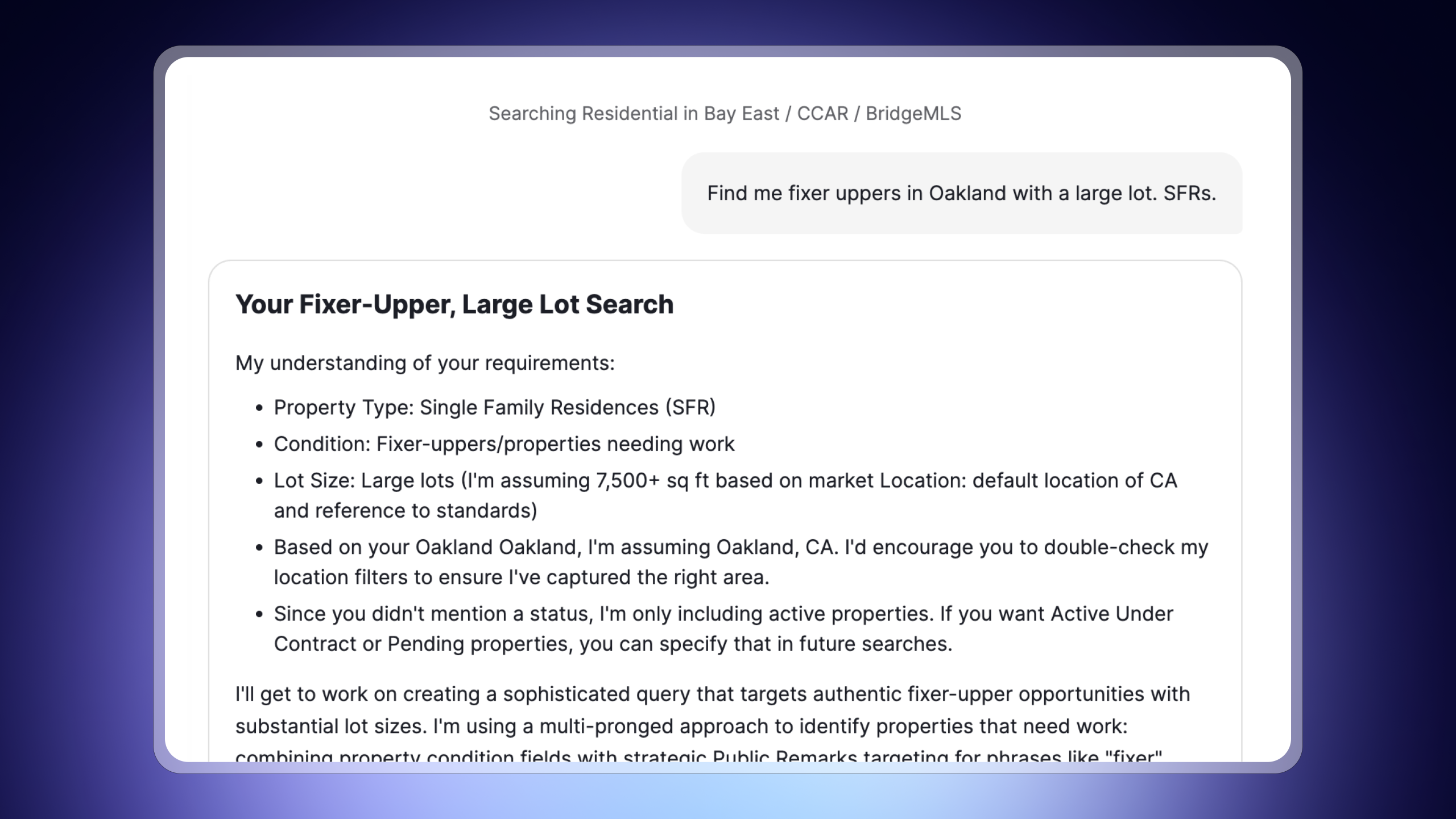
Instead of fitting into the constraints of drop-down filters or guessing which fields will surface the right home, you can simply describe what the buyer told you.
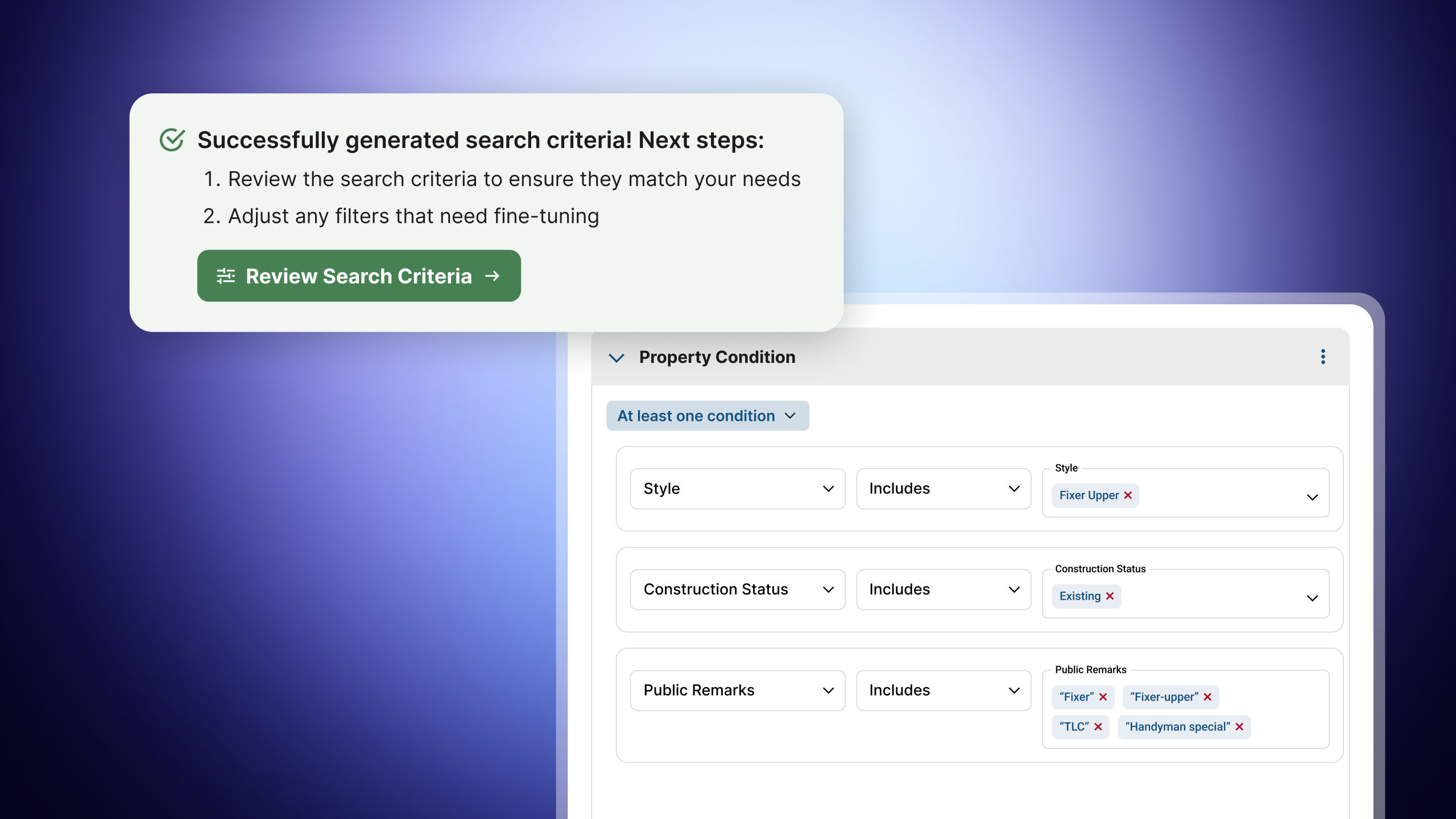
AI Search – For Pros converts natural language into MLS-ready criteria you can inspect and adjust. It shows every assumption and gives you full control before anything is sent out.
Here are just a few examples RealScout shared in its announcement:
- “Fixer-upper Victorians in Oakland under $700K on lots over 7,500 square feet.”
- “Corner-lot homes in Las Vegas with western exposure, at least three bedrooms, and room for solar.”
- “Spanish-style single-family homes in Scottsdale with pools and HOA fees under $200 per month.”
After typing in what the buyer is looking for in natural language, the system builds a fully structured search. From there, agents can approve it and convert the criteria into listing alerts or shareable links to help buyers stay active and engaged.

Closing the Gap Between How Clients Talk and How MLS Works
Buyers talk in stories. They tell you about their dog who needs a yard. A dream kitchen where they can finally host Thanksgiving. A neighborhood where kids ride their bikes to the park.

MLS databases don’t think that way.
That gap has always been your responsibility to bridge. AI Search – For Pros sits in the middle and helps bring both sides together with more accuracy and far less time wasted.
Beta testers have already seen the impact:
- Faster setup for detailed, dialed-in searches
- More inventory surfaced that standard filters would never catch
- Less time working around the MLS and more time advising clients
Tarasa Hurley, a beta user, summed up that difference:
“You couldn’t even make these searches in the MLS if you tried. There’s just no tool that lets you build a search like that right now, and with AI Search it was surprisingly easy.”
Every detail is visible and editable, which keeps your professional judgment at the center of the workflow. No black box. No guessing. Just cleaner, better searches that you control.
Built to Strengthen Teams and Raise the Bar on AI
The release comes at a time when many people feel overwhelmed by shiny objects in the AI space. RealScout is positioning this tool as part of a second wave, where AI becomes embedded in the daily work that already moves deals forward.
Seth Price, RealScout’s CMO, reinforced that stance:
“Most of the AI we’ve seen in real estate so far is either consumer-facing or a thin wrapper on an AI company’s chat interface. That might be fine for writing listing descriptions, but it’s not good enough for pro-grade property search.
“We’ve taken the opposite approach: start with the structure and nuance of the MLS, honor the agent’s workflow, and let AI do the heavy lifting in between.”
And as Flachner put it, the future isn’t about replacing anyone. It’s about amplifying what you already do best:
“The first wave was about proving that AI could do clever things. The next wave, the one we’re building for, is about embedding AI where it can quietly make professionals better at the work only they can do.
“In our case, that means helping agents translate consumer intent into the right homes faster and more accurately.”
To see how this can fit into your workflow, request a demo at www.realscout.com.