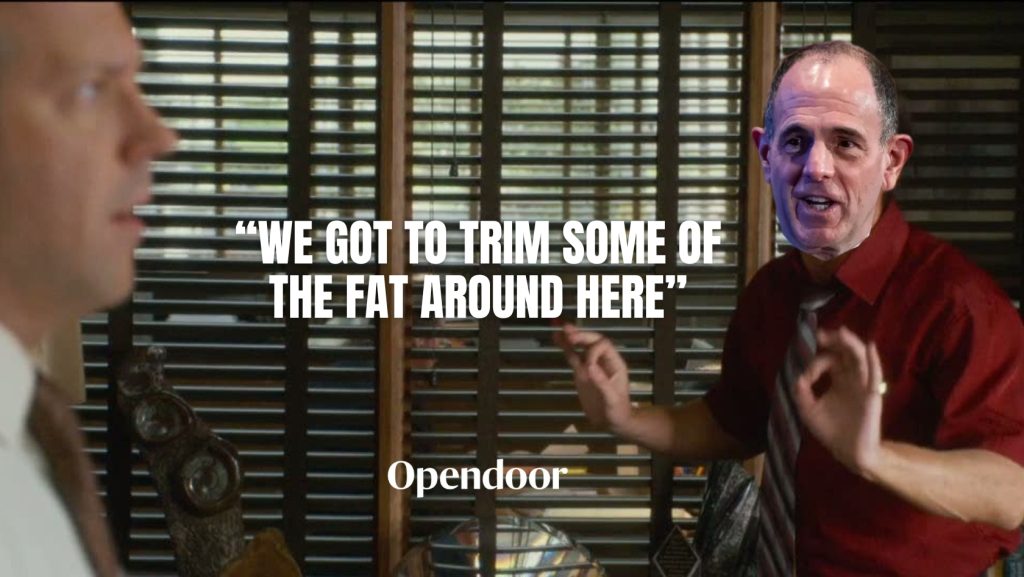
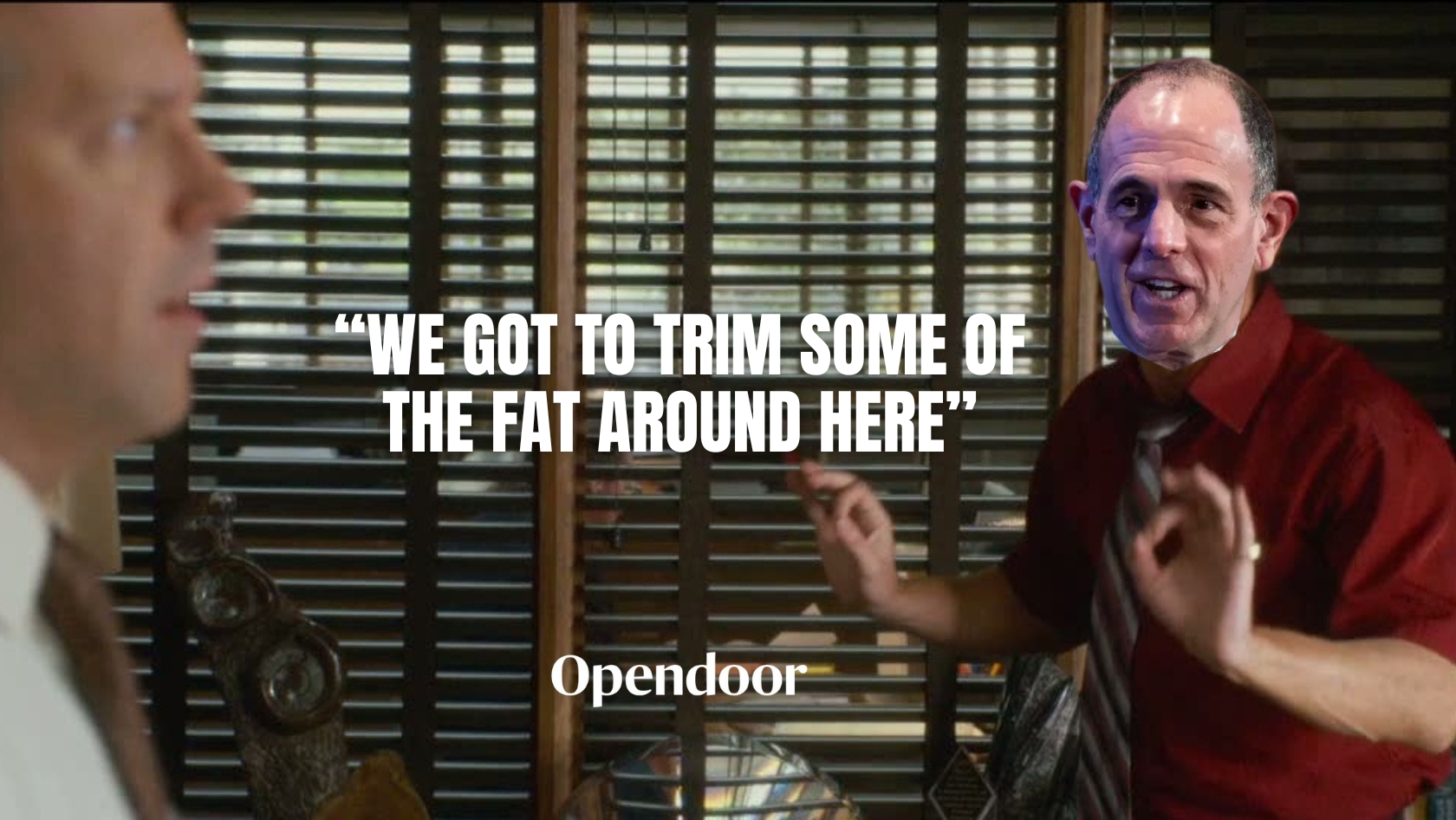

Forget subtle restructuring. Opendoor’s co-founder and newly reinstated board chair Keith Rabois says the company needs to cut 85% of its workforce.
According to CNBC’s latest report on Opendoor, Rabois described the company as “bloated” and suggested 1,200 of its 1,400 employees are not needed.
Opendoor stock, meanwhile, has whipsawed from a 78% surge to a 13% drop in two days and is still up nearly 500% this year.
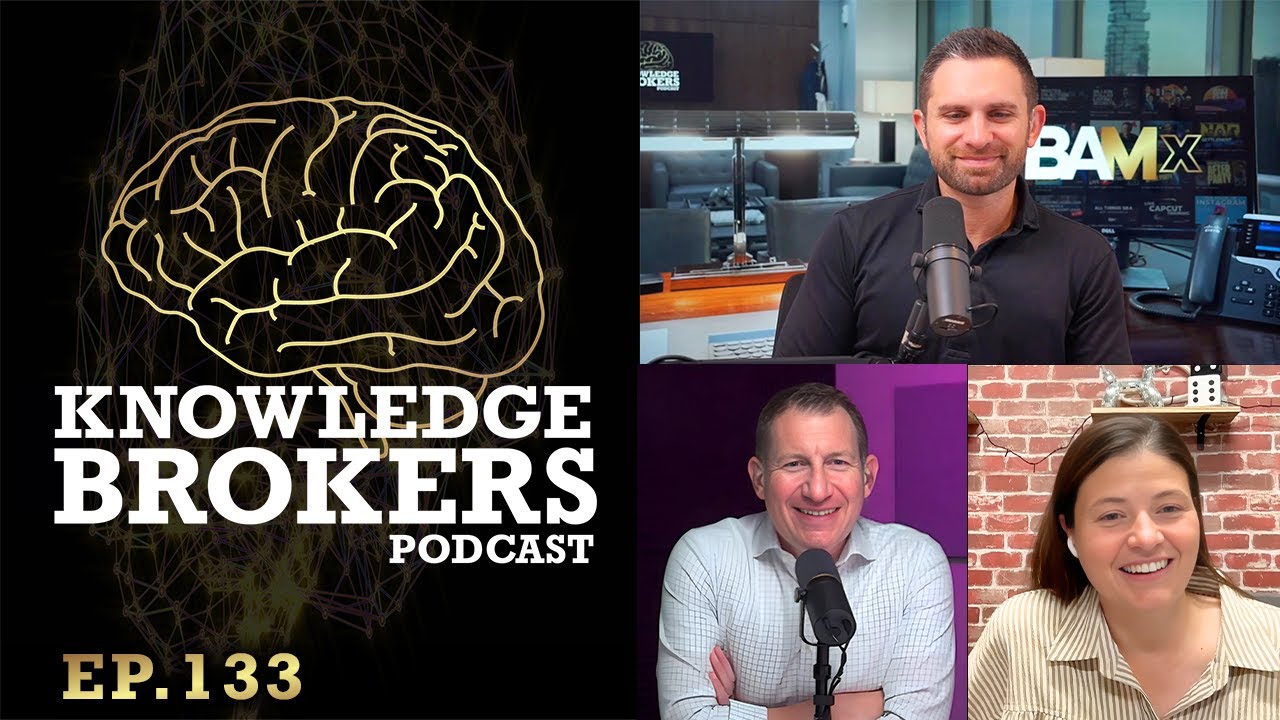
On last Friday’s Knowledge Brokers Podcast (KBP), Byron Lazine, Tom Toole, and Lisa Chinatti broke down the news, calling out the difference between investor hype and product reality.
Rabois’ Prescription: From 1,400 to 200
Rabois didn’t mince words in his CNBC interview.
“There’s 1,400 employees at Opendoor. I don’t know what most of them do. We don’t need more than 200 of them.”
Beyond cost-cutting, Rabois blamed remote work for a broken culture and promised a return to in-office collaboration.
“The culture was broken. These people were working remotely. That doesn’t work. This company was founded on the principle of innovation and working together in person. We’re going to return to our roots.”
His plan also takes aim at Opendoor’s diversity initiatives, with comments about fixing the company’s “DEI path.”
It’s a reset designed to satisfy activist investors and to signal a back-to-basics approach.
Leadership Shakeup
The cuts are only part of the story. Opendoor named Kaz Nejatian, a former Shopify executive, as its new CEO after pressure forced out Carrie Wheeler last month. Rabois stepped in as chair, while former CEO Eric Wu returned to the board.
Nejatian has already said he’ll be in the office “first thing Monday morning and first thing every Monday morning.”
The leadership reshuffle comes as the company continues to burn cash. CNBC described Opendoor as a “cash-burning, low-margin business with meager near-term growth prospects.”
Much will depend on what happens after cutting 85% of its workforce.
A Stock Fueled by Retail Hype
Even with shaky fundamentals, Opendoor’s stock has skyrocketed.
Shares were trading at 50–60 cents earlier this year. After the CEO announcement, the stock spiked 78% in one day, hit $10, then slid 13% the next. Year to date, it’s still up nearly 500%.
On KBP, the hosts compared the frenzy to AMC and GameStop, pointing to hedge fund manager Eric Jackson’s role in whipping up retail investor enthusiasm.
As Byron pointed out:
“The momentum has really come from the retail crowd rallying behind the stock.”
Tom Toole added skepticism about the company’s fundamentals:
“I’m fascinated that you see a stock go from 60 cents to where it is right now by naming one CEO. What’s going to change about their product? This is what mystifies me about the market because we know what the product is. The product’s garbage.”
The Agent Question
For agents, the bigger story may be Rabois’ six-point plan for “fixing” Opendoor, which he has posted publicly in recent months. An August 13 post on X spells it out:
Fix Opendoor:
1. Replace most of company G&A w AI; 2/ Innovate on buyers adoption w financing options (make every mortgage assumable or equivalent) 3/ Massively unlock supply of sellers via innovative value prop (won’t share product yet) 4/ kill agent partnership—aim to win…— Keith Rabois (@rabois) August 13, 2025
Byron called out one of Opendoor’s most consistent themes: ending partnerships with agents.
“The fibers inside of that company hate real estate agents. They don’t believe that real estate agents are a necessary part of the process.”
Still, if you’re working in core iBuyer markets like Phoenix or Atlanta, expect to see more consumer-facing offers promoted aggressively. That means more conversations with clients who think Opendoor provides an easier path to selling, even if the economics don’t always hold up.
Byron also called out Opendoor for essentially ripping off Zoodealio’s Cash-Plus offer:
“They stole Zoodealio’s product, which they have a trademark for: the Cash-Plus offer product.”
Zoodealio’s Cash+ offer is a program designed to protect the agent-client relationship while giving sellers the convenience of a cash-backed option.
Opendoor’s reset under Rabois raises more questions than answers.
- Can the company stabilize by cutting 85% of its staff?
- Can retail hype keep shares buoyant when the fundamentals haven’t changed?
- And will agents once again be positioned as obstacles rather than partners?
For agents, this story is less about betting on Opendoor’s future and more about preparing for consumer-facing offers in your market.
Keep sharpening your talking points on net proceeds, service, and trust. Opendoor may be chasing efficiency by cutting 85%, but agents can win by being 100% clear on value.