


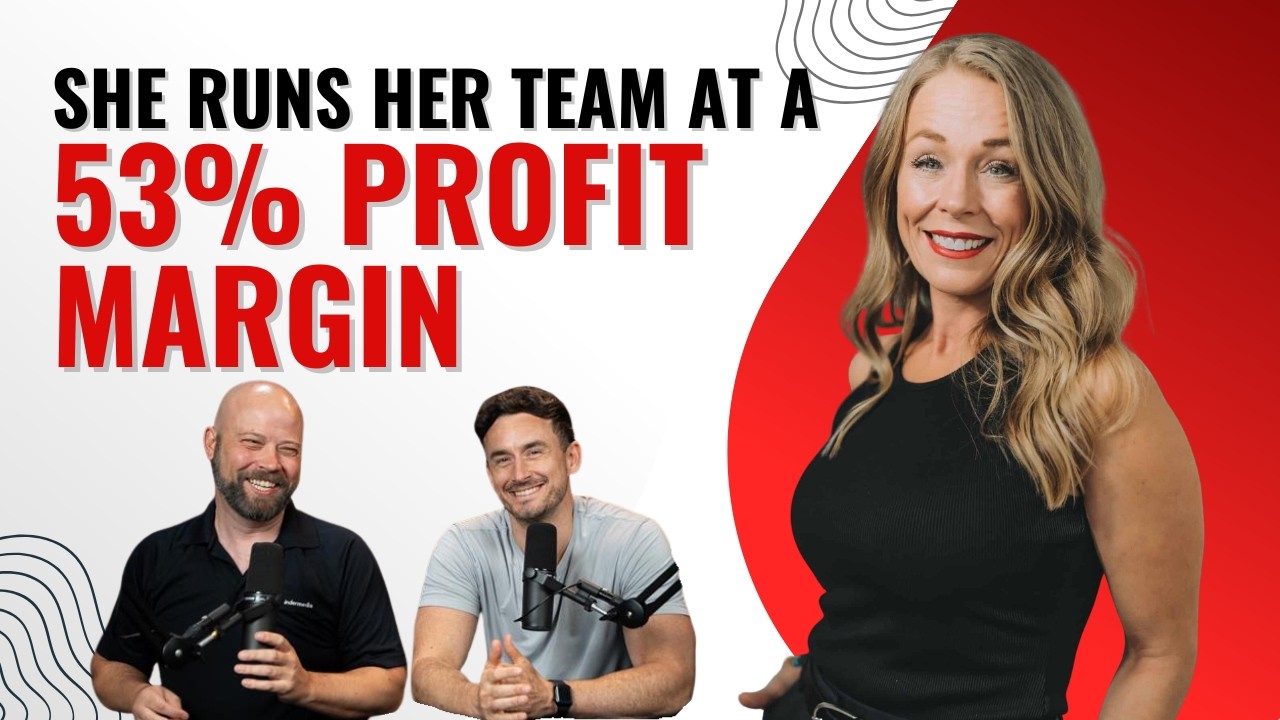
On a recent episode of the Stay Paid Podcast, co-hosts Luke Acree and Josh Stike sat down with Amy Stockberger, leader of the #1 team in South Dakota and #33 in the country.
Amy’s team has 23 agents. 358 clients last year. And a net profit margin of 53%.
How did that happen? For one, Amy built her entire business around knowing the return on every dollar she spends.
Here’s how her team is structured, how she recruits and trains, how she turns expenses into revenue, and how she handles splits and attrition without giving up margin.
Want the systems behind numbers like this? Join us at BAM Camp: Team Leaders, a two-day in-person workshop built for agents scaling past solo production into a real team, covering recruiting, onboarding, splits, and profitability from leaders who are already running the playbook. Amy Stockberger is one of them. (Get the details here before tickets sell out.)
4 Decisions that Shaped the Team Behind the Margin
Amy’s team has grown from 15 agents three years ago to 23 today. She runs it as her own brokerage, Amy Stockberger Real Estate, with her husband serving as responsible broker while she runs marketing and vision. Her team is smaller than the two biggest franchises in her market, which each run about 200 agents, and still leads the market in production per agent.
Amy highlighted four key decisions behind her teamerage’s success:
- Won’t hire part-time agents anymore. They rarely stick around long enough to become productive.
- Hires for culture fit first. Misalignment on core values up front has cost her more than any slow season.
- Runs a two-day onboarding bootcamp four times a year, plus 7.5 weeks of training annually, to get new agents producing fast. One agent, 20 years old and seven months in, has already closed 10 units.
- Uses $3 million in annual production as the benchmark for when a harder conversation about fit needs to happen.
A lean, highly selective team that ramps new agents up fast is what makes the 53% profit margin possible.
Turning Cost Centers Into Profit Centers
This is where the 53% comes from. Amy describes her approach as living off the Amazon model. Every dollar she spends has to do one of three things:
- Help her serve clients better
- Help her sell more
- Add recurring revenue
If it doesn’t, it gets cut.
She learned that lesson the expensive way. For eight years, she spent $30,000 a year on billboards that weren’t generating anything, a $240,000 mistake by her own count.
Because of that experience, she now treats accounting as a recruiting and leadership tool.
“A lot of agents, they’re a jack of many and a master of none. When they do that, they don’t even really understand where they’re throwing money at and what’s actually returning a profit for them… And I think that’s one big thing that’d be the first thing when you’re starting a team is set up your accounting process so you understand exactly what the ROI is for every dollar that you’re spending.”
In place of that billboard money is a vendor network that pays into her marketing and lead generation.
“So my vendor network works is that we are pouring into them. We are giving them, we are helping them build their business. We’re all serving the same ICP, ideal client profile.”
She runs monthly masterminds teaching vendors things like SEO and AEO, which positions her as the obvious referral source when those vendors run into a client who needs an agent. Amy shared a memorable line from one of her business partners that sums up why most agents miss this entirely:
“The real estate agent is often the buffet and everybody else brings the fork.”
What Happens When Agents Leave and Why the Business Still Wins
Amy has exited three bigger-producing agents over the last three years, all over culture. Two of them started as her assistants and had been with her for years. Losing production that size is hard to absorb, and she’s honest about what it cost her personally:
“What I found in my mistakes is that we have let bad attitudes affect our culture. And that has hurt us far more than this.”
What she’s found on the other side flips a rule that’s held in this industry for a hundred years. When an agent leaves, the relationship traditionally goes with them. Amy is seeing something different play out with her own clients.
“What we have found now when we exit people off of our team, the clients are calling us asking if they can stay with the brokerage.”
That’s the real proof of what she’s built: a business her agents can eventually sell, backed by a Lifetime Home Support model that makes the brand bigger than any one relationship.
“Our vision is to build big, juicy legacies for everybody in our ecosystem through our lifetime home support model. But that’s one of the things since we are so relationship-based and so service-centric, we are helping them build an asset that is going to have a multiplier that they’re going to be able to get money from when they walk away.”
For team leaders trying to build something similar, that’s the standard worth aiming for: a team where clients are loyal to the systems themselves.
BAM Camp: Team Leaders is where agents building toward that model go to learn the recruiting, onboarding, and profitability systems firsthand. If a 53% margin sounds like a stretch right now, this is the room where it starts to look possible.