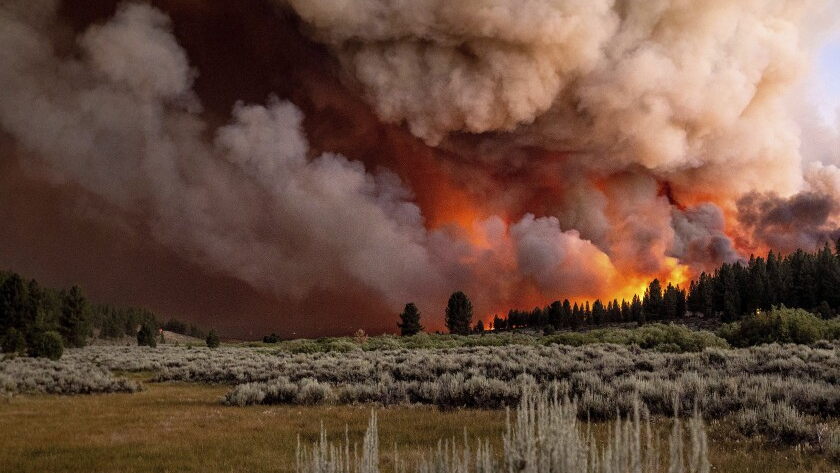

At this point, we almost expect certain areas to suffer more than others from drought. Some of these areas have replaced grassy lawns with more sustainable (i.e., less thirsty) landscape features.
But the lack of water is not deterring buyers.
According to Redfin, roughly 74% of U.S. metros that experienced severe drought in August have seen a net inflow of people in recent months.
In the more at-risk areas, there isn’t enough water to go around. And the summer heat makes that even more challenging. Yet more people are moving into these areas than leaving them.
Drought is becoming more of a problem
About $17 trillion worth of U.S. homes—or around 25 million properties—experienced severe drought this August. That’s a 42% increase from last year.
In 34 of the 129 U.S metros (26%) Redfin analyzed, over 50% experienced severe drought in mid-August. And in 25 of those 34 metros (74%), more people came in than moved out in the second quarter.
For context, only 23 of the 99 metros for which Redfin has data had over 50% of homes experiencing intense drought in mid-August 2021. Of those 23 metros, 16 (70%) saw net inflows in the second quarter.
In 13 U.S. metros analyzed by Redfin this year—including Las Vegas, Austin, and Sacramento—100% of households experienced intense drought in August. Yet all but two of these metros have seen more people moving in than out.
Behind the net inflow
That net inflow is partly due to the increase in home prices over the past year. In recent years, drought-prone areas in the Sun Belt have attracted many homebuyers priced out of expensive coastal metros.
The attraction also has to do with where these drought-prone homes are located. Los Angeles, San Jose, and New York, three of the most expensive housing markets in the U.S., were among the metros experiencing intense drought in mid-August.
Other popular Sun Belt metros like Dallas, San Antonio, and Sacramento—which have seen a surge in home prices—are also among the top 10 drought-prone areas.
So, while some are migrating away from areas prone to drought and intense heat, for many, the attraction to these places outweighs the climate risks.
Redfin bases this data on its analysis of approximately two million Redfin users who shopped for homes across more than 100 U.S metros in the second quarter of 2022—not counting searches unlikely to precede an actual home purchase or relocation.
Data from the U.S. Drought Monitor was used to calculate the numbers and shares of homes in each metro area that experienced “severe, extreme, or exceptional drought” (“intense” in their report) during the second week of August 2022.
Climate risk is (apparently) not a deterrent
Although a real and growing threat, climate risk is not a powerful enough deterrent for the metros seeing a net inflow.
From 2016 through 2020, Redfin research has shown more people moving into than out of areas with a high risk of not only drought but intense heat, wildfires, and flooding.
That trend intensified during the pandemic with the shift to remote work. So far, migration to these areas has continued throughout 2022.
While Redfin users shopping for homes are often aware of these risks, they’re weighing other, more attractive factors against them:
- Affordability
- Remote work and ease of travel
- Proximity to tech hubs
- Proximity to family
- Better access to the outdoors
In the 50 U.S. counties where the largest share of homes face a high risk of intense drought, populations have increased by an average of 3.5%, thanks to positive net migration.
Meanwhile, drought conditions in these areas have intensified due to climate change.

Many people take climate risk into consideration when deciding where to live, but other factors, like affordability, often take precedence given that rent costs are rising and monthly mortgage payments for homebuyers are up nearly 40% from a year ago.
Drought may also not be scaring people off to the same extent as fires or flooding, which can physically decimate homes. Still, homeowners and buyers should be aware that drought danger could ultimately dent their home’s value if a lack of water forces residents to leave en masse.
Climate data for real estate agents
Redfin.com now provides climate risk data for almost every U.S. home, except rentals, with risk scores for drought, wildfire, intense heat, flooding, and storm. You can use this information as an agent to help your clients make more informed decisions.