

Chris Voss answers a commission objection with a single sentence:
“Sounds like you’re reluctant about paying for results.”
No discount, no defense, no pitch about his marketing plan.
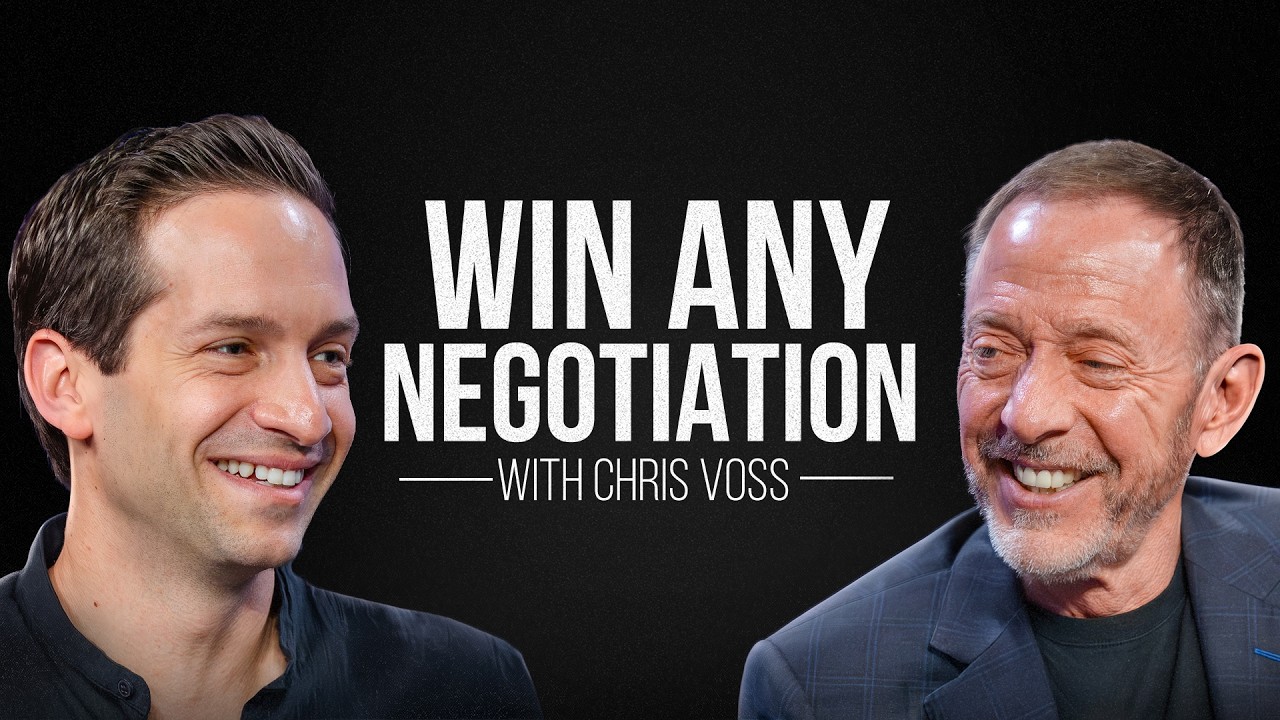
Voss spent 24 years at the FBI and finished as the bureau’s lead international kidnapping negotiator before writing Never Split the Difference. On a recent episode of the Playmakers Podcast, RealScout CEO Andrew Flachner ran a live role play, giving Voss objections agents are hearing the most right now. Voss answered in real time with the exact words agents can use.
Here are three scripts agents can take from the conversation.
#1: When a Seller Says Another Agent Will Charge Less
Flachner started with the following objection:
“We really like you, but another agent we’re interviewing would do it for less.”
Most agents immediately start defending their fee, but Voss recommends almost the opposite.
Voss’s first response:
“Sounds like you want to go with that agent.”
When Flachner pushed back and said they are still interviewing agents, Voss followed with:
“Sounds like you’re still shopping around.”
Then, once the real objection becomes clearer:
“Well, it sounds like you’re reluctant about paying for results.”
With each of these responses, Voss labels what he believes is happening and gives the seller space to respond.
The goal at this point isn’t to win the argument about compensation. It’s to uncover what the seller is weighing. So, before defending your fee, label the concern. You may discover the objection isn’t about commission at all.
#2: When a Buyer Says They’re Waiting for Rates to Drop
Agents have spent the past several years hearing some variation of:
“Rates are too high. I’m going to wait.”
Voss doesn’t recommend responding with a mortgage-rate forecast or explaining why now is actually a great time to buy. He asks a series of questions, like:
“What’s at stake if you wait?”
“How much is it going to cost you to sit on the sidelines?”
“What’s the criteria you need to move forward?”
Voss calls these calibrated questions. Calibrated questions begin with “what” or “how” and are designed to trigger thinking.
In this case, the buyer is focused on a short-term concern: today’s interest rate. The questions force them to compare that short-term concern against everything else involved in the decision.
What happens if home prices rise while they wait? What if their rent increases? What would actually need to happen for them to feel comfortable moving?
The buyers don’t need to give an immediate answer to calibrated questions. The important part of this is that the buyer makes the comparison themselves. Voss explains that this allows the agent to remain in the position of trusted advisor rather than someone trying to force the buyer into a decision.
#3: When a Prospect Ghosts You
This might be the simplest script in the entire episode.
If a warm prospect suddenly disappears, Voss says to send this text, word-for-word:
“Have you given up on working with me?”
This one question will help sort prospects into three categories:
- Roughly 20% may move forward almost immediately because the opportunity got buried in everything else happening in their life.
- Another 20% will tell you the deal is dead. That might sound like bad news, but it gives the agent something equally valuable: their time back.
- The remaining 60% may still be viable but require additional information, attention or nurturing.
The point of this text is to get clarity on where the prospect stands. Instead of following up indefinitely with “just checking in,” ask a question that helps determine whether the opportunity is alive, dead or needs nurturing.
The Negotiation Lesson for Agents
A common thread running through nearly every script Voss gives is to talk less. Here’s how it shows up in the scripts above:
- Instead of overcoming the commission objection, label it.
- Instead of arguing about rates, ask calibrated questions.
- Instead of chasing the ghosted prospect, ask whether they’ve given up.
Voss’s frameworks are designed to create the conditions where the client tells you what is going on. Earlier in the conversation, Voss explains why that matters:
“The commodity in all negotiations is information.”
Agents already negotiate constantly, between buyers and sellers, with other agents, during inspections, around commission and sometimes with their own clients. The advantage doesn’t typcially go to the agent who talks the most. It goes to the one who uncovers the most information.
The full episode goes deep into negotiation, covering everything from why yes-oriented questions backfire, the best way to deliver bad news, how to read a stalled deal, and more. Watch it all here.