
Americans can’t agree on where the economy, interest rates, or the housing market are headed.
A new Realtor.com survey of 1,000 active and recent buyers and sellers shows sharp generational divides. Younger adults, especially Gen Z, lean optimistic, while Gen X and Baby Boomers are far more likely to expect decline.
The Economic Outlook: A Generational Divide
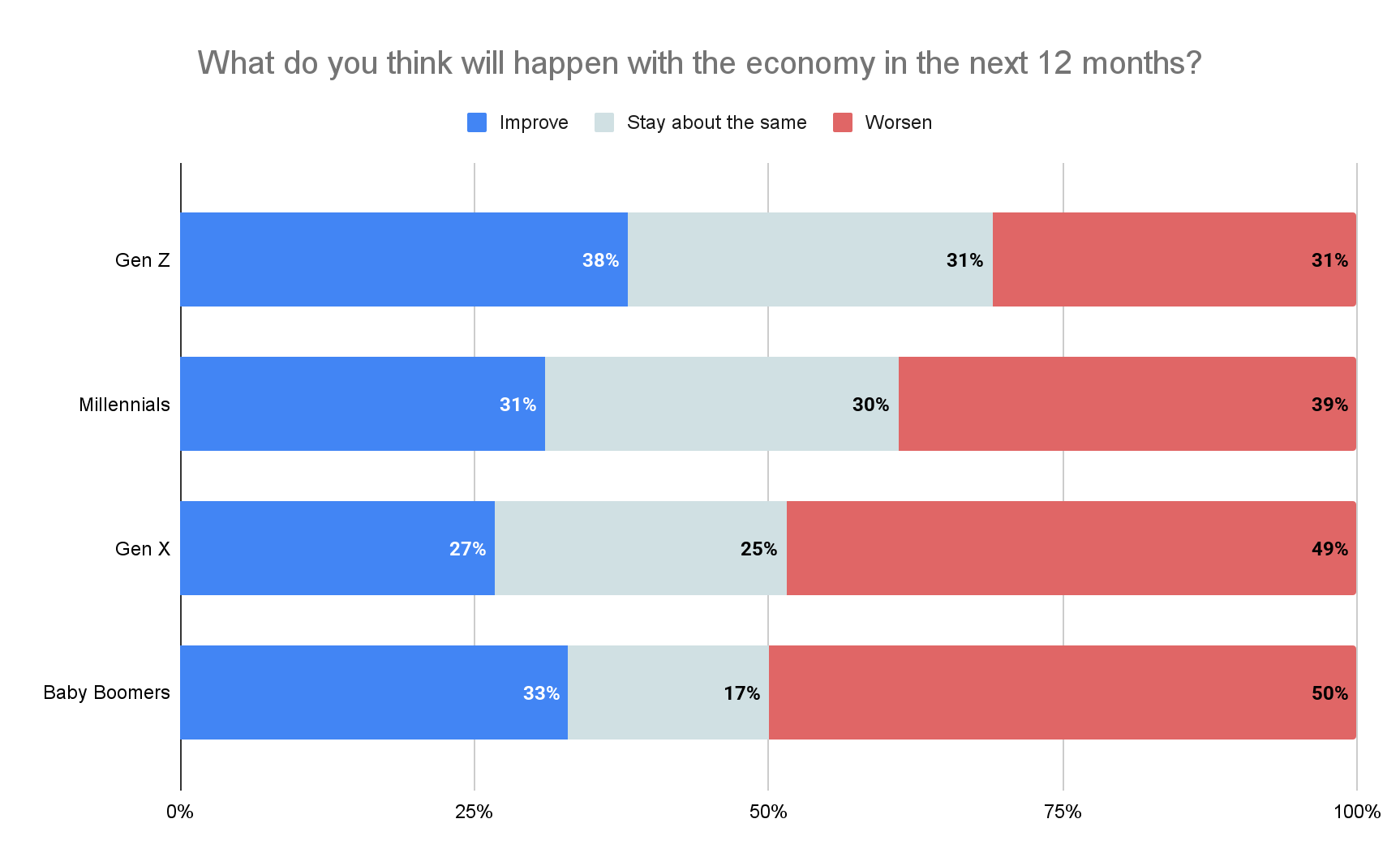
Across all respondents, 42% expect the economy to go downhill in the next 12 months. But break it down by generation, and you see stark differences.
- Gen Z: 38% say the economy will improve, 31% expect stability, and only 31% foresee decline.
- Millennials: 31% predict improvement, 30% stability, and 39% decline.
- Gen X: Just 27% expect improvement, 25% stability, and nearly half (49%) predict decline.
- Baby Boomers: 33% see improvement, 17% stability, and 50% expect the economy to worsen.
Younger generations are clearly more upbeat. Gen Z in particular seems less rattled by uncertainty, while nearly half of Gen X and Boomers are bracing for impact.
Interest Rates: Evenly Split, With 1 Group Standing Out
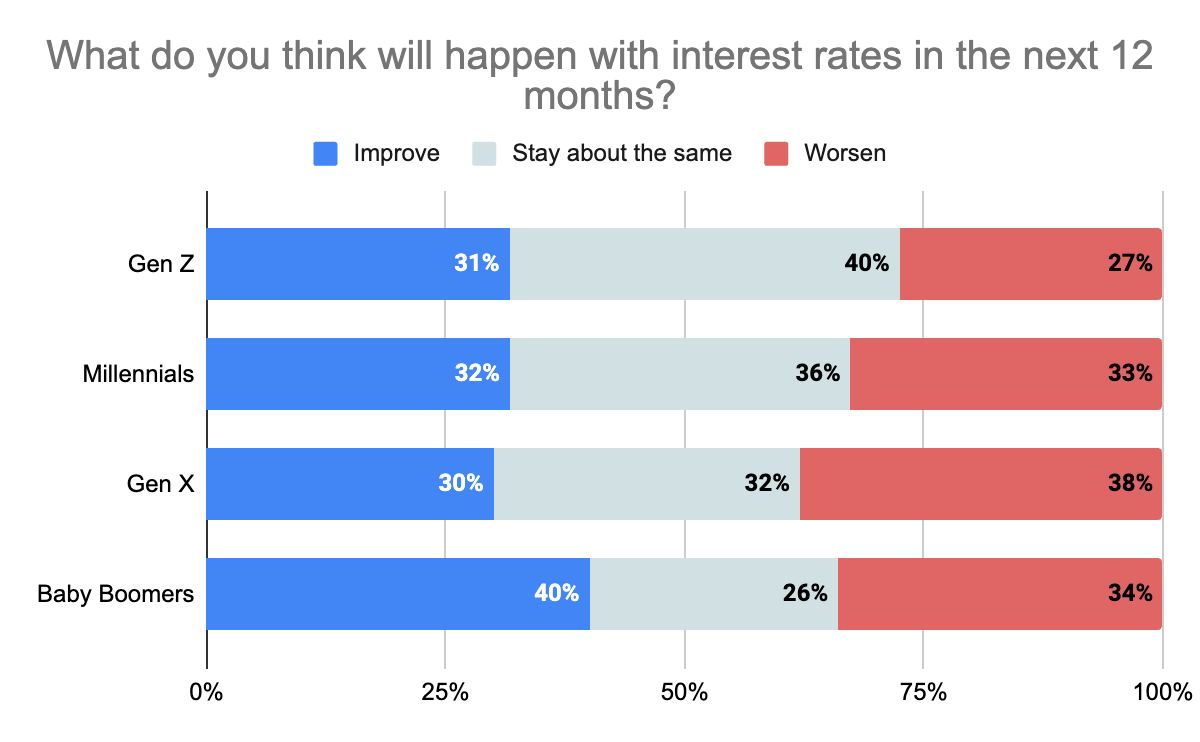
On interest rates, Americans are torn right down the middle. Overall, 33% think rates will improve, 34% think they’ll stay about the same, and 33% expect them to worsen.
By generation, though, the split gets interesting:
- Gen Z: 31% expect improvement, 40% stability, and 27% decline.
- Millennials: 32% improvement, 36% stability, 33% decline.
- Gen X: 30% improvement, 32% stability, 38% decline.
- Boomers: A full 40% expect rates to improve, the most optimistic of any group, despite also being the most pessimistic about the economy overall.
It’s a bit of a paradox. Baby Boomers are gloomy on the economy but hopeful on mortgage rates.
Gen Z and Millennials lean more toward neutral, perhaps having learned that 3% mortgage rates aren’t a realistic baseline. That or major life events overruled their earlier inclination to “wait and see.
Housing Market Expectations: Younger Buyers Hold Steady
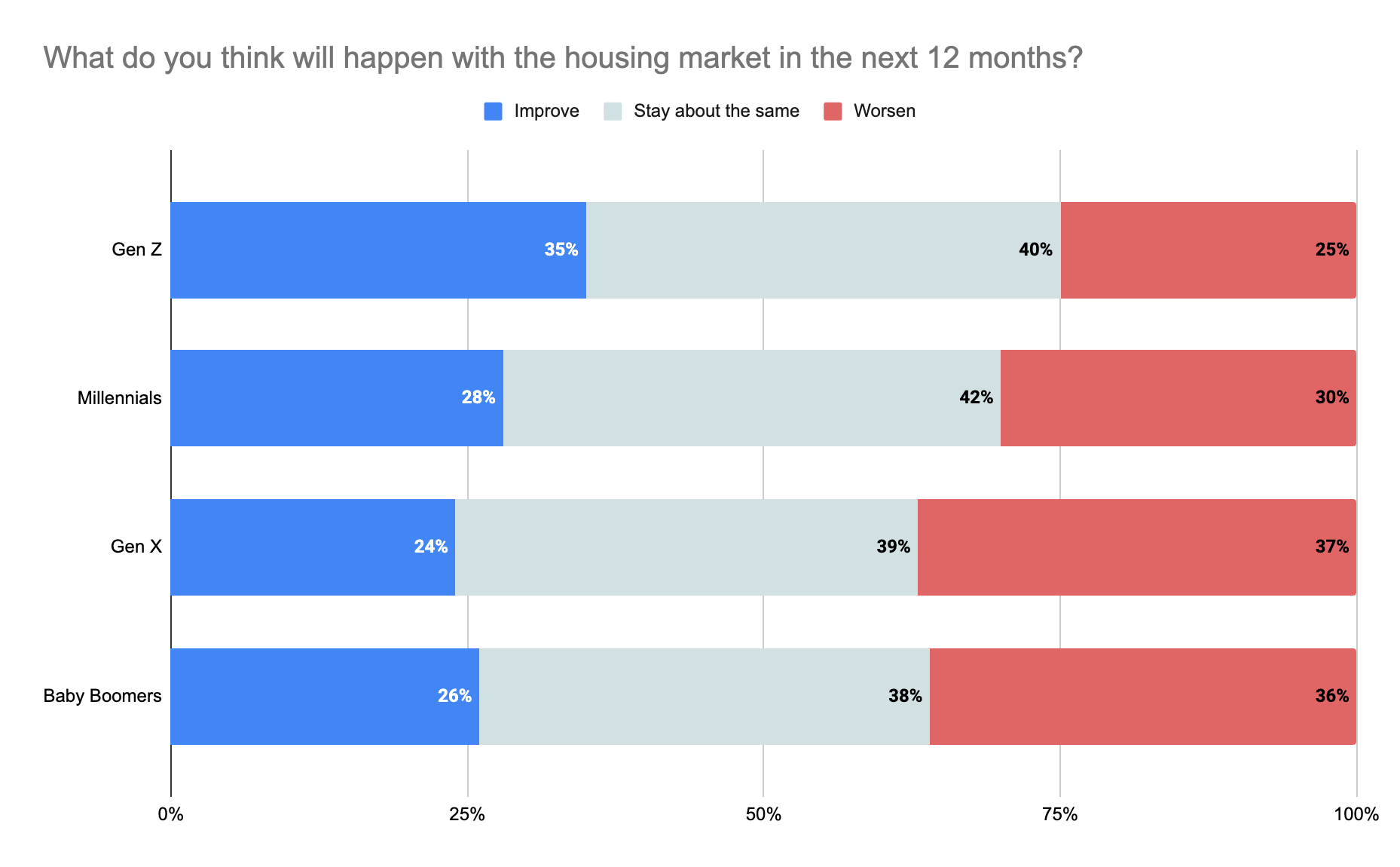
When it comes to housing, the splits look a little less dire. Overall, 28% expect improvement, 40% see stability, and 32% expect decline.
What each generation expects:
- Gen Z: 35% improvement, 40% stability, 25% decline.
- Millennials: 28% improvement, 42% stability, 30% decline.
- Gen X: 24% improvement, 39% stability, 37% decline.
- Boomers: 26% improvement, 38% stability, 36% decline.
Younger Americans are more likely to see the housing market holding steady or improving. Only one in four Gen Z respondents thinks the market will worsen, compared to more than a third of Boomers and Gen X.
Why Generational Optimism Matters
Joel Berner, senior economist at Realtor.com, summed it up this way:
“Americans are clearly divided when it comes to the outlook for the economy and housing market, but what stands out is the optimism among younger generations. Gen Z and Millennials have largely come of age in a period of high housing costs and volatile mortgage rates, yet they are more likely than older generations to believe conditions will hold steady or even improve. That optimism could be a powerful driver of housing demand in the years ahead.”
Takeaways for Real Estate Professionals
So what does this mean for your business? Here are three insights you can use right now:
- Leverage generational optimism: When working with younger buyers, acknowledge their outlook. Position yourself as the guide who helps turn their optimism into smart decisions.
- Prepare for generational tension: Sellers and buyers may see the world differently. Boomers worried about economic decline may set higher hurdles, while younger buyers might be more willing to act.
- Use the data in your marketing: Share survey results to show you’re tuned into market sentiment. It’s a way to build trust while framing yourself as the local expert who knows how national attitudes translate to your market.
Generational divides won’t decide where mortgage rates land or how inventory shifts. But they do shape how people approach real estate decisions. Agents who understand those perspectives, and tailor their conversations accordingly, will be better equipped to serve both cautious Boomers and optimistic Gen Z buyers.