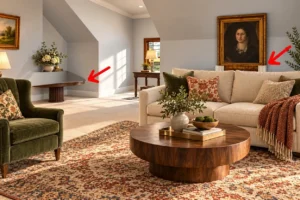


Nearly 7 in 10 homeowners are renovating to make their homes work better, not to maximize their resale value.
Block Renovation’s How America Renovates 2026 report is showing that resale value has taken a back seat to making the space fit real life for the current residents.
More households are adapting their homes to support multiple generations, and a growing share of homeowners are using AI to plan layouts and estimate renovation costs. They’re making decisions before they ever talk to a contractor (or an agent).
These choices are influencing how long people stay put and how they evaluate their options when they consider a move.
Here’s how functionality, multigenerational living, and AI are shaping renovation decisions and what it means for agents working with today’s buyers and sellers.
Functionality Is Now the Primary Driver of Renovation
The data shows homeowners aren’t renovating with resale as the main goal. They’re making changes based on how their homes need to work day to day.
Nearly 7 in 10 homeowners are renovating for functionality. You can see this in the types of projects getting done and the way budgets are being allocated. Big, all-in remodels are rare. Most homeowners are focusing on specific spaces that impact daily life the most.
Here’s what that looks like in practice:
- 68% of homeowners are renovating to improve functionality over resale value
- 47% are tackling bathroom renovations
- 39% are updating kitchens
- 35% are replacing or upgrading flooring
- Only 8% are completing full-home renovations
- 53% are budgeting $25K or less, with an average project budget of $41,500
Budget pressure plays a role in these decisions. With 42% of homeowners adjusting plans due to the economy, many are choosing to phase projects or prioritize one room at a time. The goal is to improve how the home functions without taking on unnecessary cost or risk.
The urgency to sell fades:
- When the kitchen works better
- When the bathroom feels updated
- When the layout supports daily routines
Renovation becomes the alternative to relocation.
This trend shows up in fewer listings and more selective sellers. Homeowners are fixing what’s not working instead of moving.
Because of that, the conversation is changing from what upgrades will boost value to what changes will make the home work better for the people living in it.
Multigenerational Living Is Expanding Housing Needs
Household structure is driving renovation decisions in a way that wasn’t as visible a few years ago. More families are living under one roof, and that changes what a home needs to provide.
More than 1 in 5 homeowners now live in a multigenerational household. This includes aging parents and adult children sharing space for financial or practical reasons. Renovation projects are being shaped around that reality.
Here’s how that demand is showing up in the data:
- More than 20% of homeowners report multigenerational living arrangements
- 17% are considering or actively planning an ADU
- 39% of those interested in ADUs would use the space for family care, including relatives or caregivers
Privacy becomes a bigger priority. Layout features like separate entrances and finished basements carry more weight than cosmetic upgrades. Homes need to support different routines and levels of independence.
This also changes how buyers evaluate properties. Square footage still gets attention, but layout is a more pressing issue. A home with the right configuration can support multiple generations without requiring major changes.
This opens up a different way to position listings:
- Highlight flexible spaces that can serve multiple purposes
- Call out ADU potential, even if one doesn’t exist yet (check local zoning laws first)
- Focus on layout and livability, not just finishes
Parents of adult children may also be more likely to favor homes with the potential to accommodate multigenerational living, even on a short-term basis.
AI Is Starting to Shape How Renovation Decisions Get Made
AI is moving from curiosity to practical use in renovation planning. A growing share of homeowners are using it to make decisions before a project even starts
- Nearly 25% of homeowners are using AI tools during renovation planning (up from 9% the previous year)
- 42% of Millennials report using AI tools
- 84% of AI users say it influenced at least one renovation decision
Homeowners are using AI to answer questions they used to bring to a contractor or designer. They’re testing layout ideas and estimating costs ahead of time. They may already be working through options before reaching out to a professional.
The result is a more informed homeowner. They show up with ideas and expectations. They have a clearer sense of what they want. In some cases, they’ve already ruled out options before the first conversation happens.
For agents, this shows up in client expectations:
- Buyers expect better visualization of potential changes
- Sellers may have already explored renovation scenarios before listing
- Clients are more confident in their decisions
Agents who can bring the same level of clarity into their process will stand out. Showing what a space could become, not just what it is, lines up with how clients are already thinking.
What This Means for Housing Supply and Agent Strategy
Renovation activity is holding steady even with economic pressure. Many homeowners are choosing to improve what they have instead of entering the market.
The data points in that direction:
- Only 8% of homeowners are completing full-home renovations
- 30% say finding a trustworthy contractor is the biggest barrier
- 24% cite renovation costs as a barrier
- 20% say unclear project costs create hesitation early in the process
This behavior affects inventory. When homeowners focus on targeted updates instead of full overhauls, they’re extending the life of their current home. Fewer homeowners feel pressure to list, and more are adapting their space to fit changing needs.
Homes are also becoming more personalized. Renovations are tied to how people live, not what a future buyer might want. This can make pricing and positioning more nuanced, especially when features reflect specific household setups.
All this points to a different approach:
- Position homes based on how they function, not just how they look
- Highlight flexible spaces and potential for adaptation
- Ask better questions about household needs early in the process
- Prepare for clients who have already done research and explored options
Clients are thinking in terms of functionality and flexibility to determine long-term fit, possibly with multigeneration living or caregiving in mind. Agents who can speak to those priorities will be better positioned in a market where fewer homeowners feel pressured to move.